Physio Hub:
Evidence-Based Article
The Overlooked Engine: Why Cyclists Need to Care for Their Hamstrings
Introduction: The Hidden Weak Link in Cycling Performance
Cycling has exploded in popularity in recent years, from casual weekend riders to serious endurance athletes. But with increased participation comes a rise in overuse injuries — especially in the hips, knees, and lower back.
When it comes to strength training, most cyclists emphasize their quads, glutes, and calves, believing these are the main power producers for pedaling. While that’s true, there’s one major muscle group often forgotten — the hamstrings.
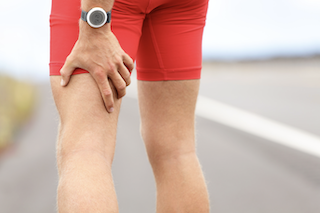
Your hamstrings are two-joint muscles that run from the pelvis to below the knee. They extend the hip and flex the knee — meaning they’re constantly active while cycling. Because of the hip-knee position during pedaling, the hamstrings are rarely stretched fully, staying in a semi-contracted state throughout the ride. Over time, this leads to stiffness, limited range of motion, and higher injury risk.
Why Hamstrings Matter More Than You Think
The hamstrings play a critical role in cycling mechanics, influencing everything from power output to bike fit and aerodynamics.
- Research by Holliday et al. (2020) showed that hamstring flexibility strongly correlates with cycling performance, power generation, and bicycle configuration. In follow-up research, improved flexibility allowed riders to adopt a more aerodynamic position — increasing both comfort and efficiency.
- Muscle activation studies reveal that the hamstrings work dynamically throughout the pedal stroke, not just during the pull phase as many assume.
- More recently, Vicari et al. (2024) found that hamstring flexibility even affects saddle pressure distribution, meaning tight hamstrings can alter how a rider’s weight is supported — impacting both performance and comfort.
In short, flexible, well-conditioned hamstrings are essential for efficient, pain-free cycling.
How to Strengthen and Protect Your Hamstrings
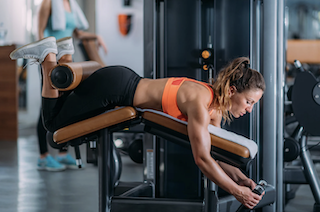
Stretching alone helps, but the strongest evidence supports a multifaceted approach — especially emphasizing eccentric strength training (lengthening contractions).
- Eccentric exercises such as Nordic hamstring curls or Romanian deadlifts can reduce injury incidence by 8%–70%, increase muscle fascicle length, and correct strength imbalances.
- Dynamic warm-ups like low-intensity cycling before training can decrease muscle stiffness by 3% and improve range of motion by 2.9%.
- Early rehabilitation after strain — ideally within 48 hours — dramatically shortens recovery time and promotes better tissue healing.
Cyclists should focus on progressive eccentric strengthening, consistent warm-ups, and active recovery protocols. Together, these strategies keep the hamstrings resilient, balanced, and ready for high-mileage rides.
Conclusion: Don’t Let the Forgotten Muscle Hold You Back
Your quads may get all the attention, but your hamstrings are the stabilizers and power transmitters that keep your ride smooth and efficient. Tight or weak hamstrings not only limit your power but also contribute to saddle discomfort, knee pain, and back strain.
For peak cycling performance and long-term joint health, treat your hamstrings as seriously as your pedals:
- Train them eccentrically.
- Stretch and mobilize regularly.
- Rehabilitate quickly after injury.
Taking care of your hamstrings isn’t just injury prevention — it’s performance optimization.



< Reference >
- Holliday, Wendy, and Jeroen Swart. “Performance Variables Associated with Bicycle Configuration and Flexibility.” Journal of Science and Medicine in Sport 24, no. 3 (2021): 312–17. https://doi.org/10.1016/j.jsams.2020.09.015.
- Holliday, Wendy, and Jeroen Swart. “Anthropometrics, Flexibility and Training History as Determinants for Bicycle Configuration.” Sports Medicine and Health Science 3, no. 2 (2021): 93–100. https://doi.org/10.1016/j.smhs.2021.02.007.
- Da Silva, Julio Cézar Lima, O. Tarassova, M. M. Ekblom, E. Andersson, G. Rönquist, and A. Arndt. “Quadriceps and Hamstring Muscle Activity during Cycling as Measured with Intramuscular Electromyography.” European Journal of Applied Physiology 116, no. 9 (2016): 1807–17. https://doi.org/10.1007/s00421-016-3428-5.
- Vicari, Domenico Savio Salvatore, Antonino Patti, Valerio Giustino, et al. “Hamstring and Lower Back Muscles Flexibility as Predictor of Saddle Pressures in Young Off-Road Cyclists.” Frontiers in Sports and Active Living 6 (October 2024): 1472550. https://doi.org/10.3389/fspor.2024.1472550.
- Rudisill, Samuel S., Nathan H. Varady, Michael P. Kucharik, Christopher T. Eberlin, and Scott D. Martin. “Evidence-Based Hamstring Injury Prevention and Risk Factor Management: A Systematic Review and Meta-Analysis of Randomized Controlled Trials.” The American Journal of Sports Medicine 51, no. 7 (2023): 1927–42. https://doi.org/10.1177/03635465221083998.
- Morales‐Artacho, A. J., L. Lacourpaille, and G. Guilhem. “Effects of Warm‐up on Hamstring Muscles Stiffness: Cycling vs Foam Rolling.” Scandinavian Journal of Medicine & Science in Sports 27, no. 12 (2017): 1959–69. https://doi.org/10.1111/sms.12832.
- Verplancke, B., S. Adam, G. Naessens, A. Vermeersch, and G. Stassijns. “Behandeling van Hamstringblessures Bij Sporters: Een Narratieve Review.” Tijdschrift Voor Geneeskunde En Gezondheidszorg, ahead of print, September 17, 2025. https://doi.org/10.47671/TVG.81.25.010.
Stay Informed with Physio Hub
Unlock a world of knowledge with our expertly curated articles on fitness, rehabilitation, and health & diet. Stay ahead with the latest evidence-based insights and practical advice. Subscribe now to receive updates and never miss out on new content!