Physio Hub:
Evidence-Based Article
Ultrasound Therapy: Science or Just Sound?
A Clear, Evidence-Based Look for Today’s Athletes and Patients
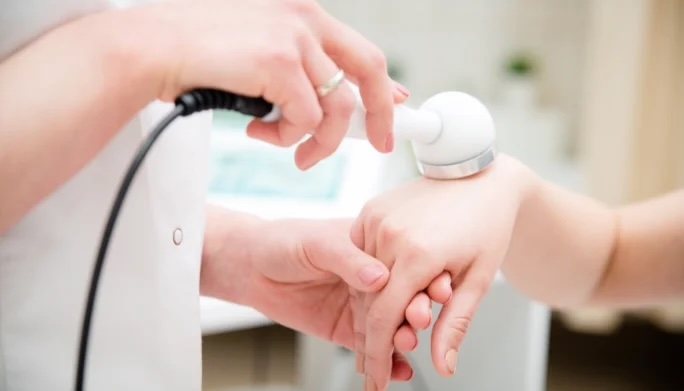
If you’ve ever been to physical therapy, you’ve probably seen the small handheld ultrasound wand gently moving over a painful muscle or tendon. Some clinicians consider it a helpful healing tool. Others think it’s outdated and barely more than a warm massage.
So what does the research actually say? Is ultrasound therapy meaningful—or just noise?
What Is Ultrasound Therapy?
Therapeutic ultrasound uses high-frequency sound waves to create mechanical vibrations inside tissues. These vibrations can influence circulation, cellular activity, and tissue repair.
There are two main modes:
✔ Continuous Ultrasound (100% duty cycle)
-
Produces heat
-
Often used for chronic stiffness or tight soft tissue
✔ Pulsed Ultrasound (usually 50% duty cycle)
-
Minimizes heat
-
Often used for acute irritation or inflammation
But does one work better?
Research shows no meaningful difference between continuous and pulsed ultrasound in common conditions such as:
-
Knee osteoarthritis
-
Lateral epicondylitis (tennis elbow)
Both modes improved pain and function, but neither consistently outperformed the other.
Animal research suggests continuous ultrasound may slightly increase muscle fiber size, but not enough to change clinical outcomes.
👉 Bottom line: For most musculoskeletal conditions, both modes perform similarly.
Does Ultrasound Actually Work?
The answer depends on the type of ultrasound and what you’re treating.
The strongest evidence supports Low-Intensity Pulsed Ultrasound (LIPUS)—a different category used mostly in orthopedics.
What LIPUS can do:
-
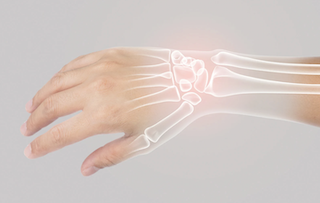
Promote bone healing and reduce recovery time after fractures
-
Increase angiogenesis (new blood vessel formation)
-
Enhance collagen synthesis
-
Improve tendon tensile strength
-
Boost cell proliferation during soft-tissue repair
These effects come from activation of:
-
Integrins
-
Mechanotransduction pathways
which stimulate tissue regeneration.
However, research remains mixed. In deeper conditions—such as osteoporosis—ultrasound may not penetrate effectively enough to make meaningful changes.
👉 Ultrasound isn’t a cure-all, but it may help under specific conditions, especially in soft tissue healing and bone recovery.
Conclusion: Useful Tool—With the Right Expectations
Ultrasound therapy is not “BS,” but it’s also not a miracle treatment. The evidence suggests:
-
It can reduce pain and support tissue repair
-
It works best as a supportive modality, not a standalone solution
-
It should be paired with exercise therapy, manual therapy, and proper load management
Think of ultrasound as a supplemental tool—not the main intervention.
When used appropriately, it still has a place in modern, science-based rehabilitation.
< Recommendation by Our Experts>
✔ Use Ultrasound as a Complement, Not the Main Treatment
It can support tissue healing, but most progress comes from exercise-based rehab.
✔ Know Its Strengths
LIPUS has the strongest evidence—especially for fracture healing and soft-tissue repair.
✔ Keep Expectations Realistic
Ultrasound can reduce pain and assist recovery, but it isn’t a magic fix and shouldn’t replace active rehabilitation.


< Reference >
- Cakir, Serap, Simin Hepguler, Cihat Ozturk, Murat Korkmaz, Banu Isleten, and Funda Calis Atamaz. “Efficacy of Therapeutic Ultrasound for the Management of Knee Osteoarthritis: A Randomized, Controlled, and Double-Blind Study.” American Journal of Physical Medicine & Rehabilitation 93, no. 5 (2014): 405–12. https://doi.org/10.1097/PHM.0000000000000033.
- Ünver, Hasan Hüseyin. “Comparing the Efficacy of Continuous and Pulsed Ultrasound Therapies in Patients with Lateral Epicondylitis: A Double-Blind, Randomized, Placebo-Controlled Study.” Turkish Journal of Physical Medicine and Rehabilitation 67, no. 1 (2021): 99–106. https://doi.org/10.5606/tftrd.2021.4789.
- Vásquez, Bélgica, Javiera Navarrete, Emilio Farfán, and Mario Cantín. “Effect of Pulsed and Continuous Therapeutic Ultrasound on Healthy Skeletal Muscle in Rats.” International Journal of Clinical and Experimental Pathology 7, no. 2 (2014): 779–83.
- Zhang, Ning, Simon Kwoon-Ho Chow, Kwok-Sui Leung, and Wing-Hoi Cheung. “Ultrasound as a Stimulus for Musculoskeletal Disorders.” Journal of Orthopaedic Translation 9 (April 2017): 52–59. https://doi.org/10.1016/j.jot.2017.03.004.
- Draper, David. “Low Intensity Ultrasound for Promoting Soft Tissue Healing: A Systematic Review of the Literature and Medical Technology.” Internal Medicine Review 2, no. 11 (2016). https://doi.org/10.18103/imr.v2i11.271.
- Papadopoulos, Emmanuel S., and Raj Mani. “The Role of Ultrasound Therapy in the Management of Musculoskeletal Soft Tissue Pain.” The International Journal of Lower Extremity Wounds 19, no. 4 (2020): 350–58. https://doi.org/10.1177/1534734620948343.
Stay Informed with Physio Hub
Unlock a world of knowledge with our expertly curated articles on fitness, rehabilitation, and health & diet. Stay ahead with the latest evidence-based insights and practical advice. Subscribe now to receive updates and never miss out on new content!