Physio Hub:
Evidence-Based Article
Strong Athletes Still Get Injured — Here’s Why
Why “Inner Muscle” Strength Matters More Than You Think
You’ve probably seen it before.
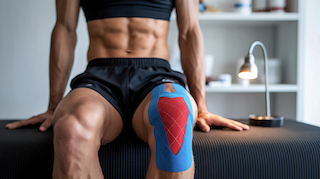
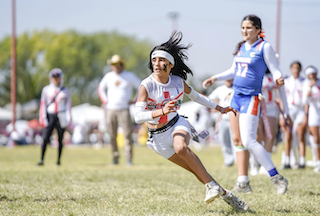
An athlete looks powerful. Big legs. Strong shoulders. Explosive performance.
And yet — they keep getting injured.
Sometimes injuries happen because of bad luck or contact. But more often, injuries occur despite impressive strength levels. This paradox confuses athletes, coaches, and even clinicians.
The missing link?
👉 Inner muscle strength and kinetic chain control.
Outer Strength vs. Inner Stability
Most athletes train what they can see and feel:
- Quads
- Hamstrings
- Chest
- Deltoids
These muscles generate force.
But injury prevention depends just as much on how force is transferred, controlled, and absorbed — a role dominated by deeper “inner” muscles of the:
- Shoulder complex (rotator cuff, scapular stabilizers)
- Trunk (deep core, multifidus, obliques)
- Hips (gluteus medius, deep hip rotators)
When these systems are weak or poorly coordinated, strong outer muscles can actually increase joint stress, not reduce it.
What the Science Says About Injury Risk
Strength Training Reduces Injuries — But Only When It Improves Stability
A large review by Szewczyk et al. (2024) confirmed that strength training plays a key role in injury prevention by:
- Enhancing joint stability
- Improving muscular endurance
- Correcting strength imbalances
Importantly, injury reduction was linked not just to “getting stronger,” but to how strength supported joint control across the body.
The Hip–Trunk Connection: A Hidden Risk Factor
Research by Hajek et al. (2023) revealed a critical finding:
Athletes with lower trunk and hip extensor strength had:
- Higher risk of hamstring injuries
- Increased knee ligament injury risk
Interestingly, simply having large trunk muscles was not protective. What mattered was:
- Force production
- Endurance
- Load transfer capacity
This helps explain why athletes with strong legs still suffer non-contact injuries.
Shoulder Injuries Aren’t Just a Shoulder Problem
In overhead athletes, shoulder injuries are often blamed on the rotator cuff alone.
But the evidence tells a different story.
A systematic review by Moiroux-Sahraoui et al. (2024) showed that shoulder injury risk decreases when athletes improve:
- Core stability
- Lower limb strength
- Kinetic chain efficiency
Why?
Because the shoulder is often the end point of force, not the origin. When the trunk and hips fail to contribute, excessive stress shifts upward to the shoulder.
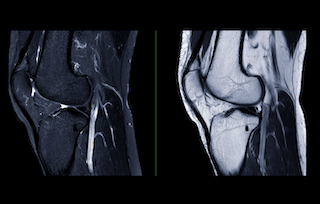
ACL Injuries: A Trunk and Hip Problem in Disguise
ACL injuries are a classic example of this concept.
A comprehensive review by Lucas et al. (2017) identified:
- Hip and trunk muscle weakness
- Poor motor control during dynamic tasks
as modifiable risk factors for ACL injury.
Modern ACL prevention programs now emphasize:
- Trunk control
- Hip strength
- Movement quality
—not just quad or hamstring strength.
Why Strong Athletes Still Break Down
In short:
- Strong outer muscles can overpower weak stabilizers
- Poor inner control leads to joint overload
- Repeated stress accumulates until injury occurs
This is why athletes can:
- Squat heavy
- Sprint fast
- Jump high
…and still tear a ligament, strain a muscle, or develop chronic pain.
Conclusion: Strength Is Not Enough
Being strong does not automatically mean being resilient.
The evidence is clear across multiple sports and injury types:
👉 Inner muscle strength of the shoulder, trunk, and hips is critical for injury prevention.
The most effective programs don’t chase muscle size alone — they build:
- Stability before power
- Control before speed
- Integration before isolation
< Recommendation by Our Experts>
✔ Train deep shoulder stabilizers, not just prime movers
✔ Prioritize trunk and hip strength for force transfer and control
✔ Integrate kinetic chain training, not isolated muscle work
✔ Strong athletes stay healthy when strength supports movement — not when it replaces it.


< Reference >
- Szewczyk, Julia, Michał Świta, and Anna Szuciak. “Impact of Strength Training on the Prevention of Orthopedic Injuries in Sports: A Literature Review.” Quality in Sport 31 (November 2024): 55268. https://doi.org/10.12775/QS.2024.31.55268.
- Hajek, Martin, Morgan D. Williams, Matthew N. Bourne, et al. “Hamstring and Knee Injuries Are Associated with Isometric Hip and Trunk Muscle Strength in Elite Australian Rules and Rugby League Players.” Journal of Science and Medicine in Sport 27, no. 3 (2024): 172–78. https://doi.org/10.1016/j.jsams.2023.10.019.
- Moiroux–Sahraoui, Ayrton, Jean Mazeas, Numa Delgado, et al. “Prevention of Overhead Shoulder Injuries in Throwing Athletes: A Systematic Review.” Diagnostics 14, no. 21 (2024): 2415. https://doi.org/10.3390/diagnostics14212415.
- Hickey Lucas, Kathryn C., Paul W. Kline, Mary Lloyd Ireland, and Brian Noehren. “Hip and Trunk Muscle Dysfunction: Implications for Anterior Cruciate Ligament Injury Prevention.” Annals of Joint 2 (May 2017): 18–18. https://doi.org/10.21037/aoj.2017.05.07.
Stay Informed with Physio Hub
Unlock a world of knowledge with our expertly curated articles on fitness, rehabilitation, and health & diet. Stay ahead with the latest evidence-based insights and practical advice. Subscribe now to receive updates and never miss out on new content!