Physio Hub:
Evidence-Based Article
Steroid Injections for Pain
Do the Benefits Outweigh the Risks?
When pain doesn’t go away, many people eventually hear the same recommendation:
“Let’s try a steroid injection.”
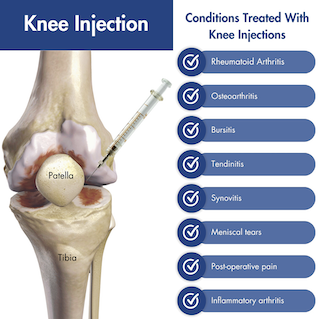
For knee arthritis, shoulder pain, back pain, or tendon issues, corticosteroid injections are commonly offered because they can reduce pain quickly. For some patients, that temporary relief feels worth it — even if the pain comes back weeks later.
But what many people don’t fully understand is what steroid injections actually do, and more importantly, what they may do to the tissues underneath the pain.
What Are Steroid Injections Designed to Do?
Corticosteroid injections are powerful anti-inflammatory treatments. When injected into or around joints, tendons, or soft tissue, they:
- Suppress inflammatory signaling
- Reduce swelling and chemical pain mediators
- Decrease pain sensitivity
This is why they often work quickly.
A large narrative review by Stone et al. (2021) confirms that corticosteroid injections provide moderate short-term pain relief and functional improvement, typically lasting several weeks.

How Long Do the Benefits Actually Last?
The pain relief is real — but temporary.
For example, in knee osteoarthritis:
- Pain reduction is significant at 1 week
- Some benefit remains at 3–4 weeks
- By 6–8 weeks, pain levels are no different from those who didn’t receive the injection
This pattern was consistently demonstrated in randomized trials summarized by Godwin et al. (2004).
👉 Steroid injections do not change the underlying condition — they mainly reduce symptoms for a short window of time.
What Happens to Tendons, Cartilage, and Ligaments?
This is where the conversation becomes more important — especially for athletes and active individuals.
Effects on Tendons
A systematic review by Puzzitiello et al. (2020) showed that corticosteroid injections:
- Suppress tendon cell activity
- Reduce collagen production
- Increase programmed cell death (apoptosis)
- Decrease tendon stiffness and load-to-failure strength
These changes can appear within 24 hours, last 2–3 weeks, and are dose- and frequency-dependent.
This helps explain why repeated steroid injections are associated with higher risk of tendon rupture, particularly in the rotator cuff, Achilles, and patellar tendons.
Effects on Cartilage and Joints
Steroids can also be toxic to articular cartilage, accelerating joint degeneration in some cases.
According to Stone et al. (2021) and Kamel et al. (2023), repeated intra-articular injections may contribute to:
- Accelerated osteoarthritis progression
- Osseous (bone) injury
- Reduced long-term joint health
Local and Systemic Risks You Should Know
Steroid injections don’t just affect the injection site.
Local Risks
- Post-injection flare
- Skin thinning or hypopigmentation
- Infection
- Tendon rupture
- Joint cartilage damage
Systemic Risks
- Elevated blood glucose (especially in diabetics)
- Immune suppression
- Increased infection risk
- Adrenal suppression
- Hypertension and osteoporosis with repeated use
Importantly, there are no clear lifetime or frequency guidelines, making overuse a real concern (Kamel et al., 2023).
Special Considerations for Athletes
A 2023 review by Bloch et al. highlights several athlete-specific concerns:
- Steroids interfere with normal tendon and ligament healing
- They negatively affect angiogenesis (blood vessel formation)
- Epigenetic changes may cause long-term connective tissue alterations
- High-load tendons are particularly vulnerable
- Doping regulations may still apply after local injections
For athletes, steroids may reduce pain — but increase structural risk if used during active training or early healing phases.
So When Are Steroid Injections Appropriate?
Steroid injections are not inherently bad — but they should be used strategically, not repeatedly or reflexively.
They may be reasonable when:
- Pain is severely limiting function short-term
- A temporary “window” is needed to engage in rehab
- Surgery is being delayed or avoided
- The tissue is not under high mechanical load
They are less appropriate when:
- Used repeatedly without rehab
- Injected into heavily loaded tendons
- Given during early healing phases
- Used as a long-term pain management strategy
Conclusion
Steroid injections can provide short-term pain relief, but they do not heal tissues — and may compromise tendon, ligament, and cartilage health when overused.
Pain reduction alone does not equal recovery.
For long-term outcomes, injections should be paired with rehabilitation, load management, and tissue-specific strengthening, and used only when the benefits clearly outweigh the risks.
< Recommendation by Our Experts>
✔ Understand that steroid injections are a short-term symptom management tool — not a cure
✔ Avoid repeated injections into tendons or high-load structures due to weakening effects
✔ Use injections strategically to support rehabilitation, not replace it


< Reference >
- Stone. “Corticosteroids: Review of the History, the Effectiveness, and Adverse Effects in the Treatment of Joint Pain.” Pain Physician S1;24, no. 1;S1 (2021): S233–46. https://doi.org/10.36076/ppj.2021.24.S233-S246.
- Godwin, Marshall, and Martin Dawes. “Intra-Articular Steroid Injections for Painful Knees. Systematic Review with Meta-Analysis.” Canadian Family Physician Medecin De Famille Canadien 50 (February 2004): 241–48.
- Puzzitiello, Richard N., Bhavik H. Patel, Enrico M. Forlenza, et al. “Adverse Impact of Corticosteroids on Rotator Cuff Tendon Health and Repair: A Systematic Review of Basic Science Studies.” Arthroscopy, Sports Medicine, and Rehabilitation 2, no. 2 (2020): e161–69. https://doi.org/10.1016/j.asmr.2020.01.002.
- Kamel, Sarah I., Humberto G. Rosas, and Tetyana Gorbachova. “Local and Systemic Side Effects of Corticosteroid Injections for Musculoskeletal Indications.” American Journal of Roentgenology 222, no. 3 (2024): e2330458. https://doi.org/10.2214/AJR.23.30458.
Stay Informed with Physio Hub
Unlock a world of knowledge with our expertly curated articles on fitness, rehabilitation, and health & diet. Stay ahead with the latest evidence-based insights and practical advice. Subscribe now to receive updates and never miss out on new content!