Physio Hub:
Evidence-Based Article
Does a Compression Sleeve Actually Work for Athletes?
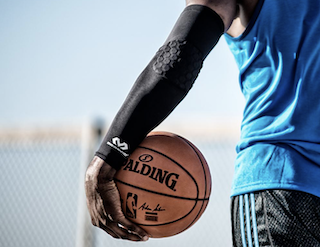
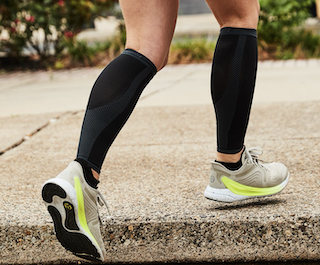
You’ve probably seen it everywhere — basketball players wearing arm sleeves, soccer players with calf sleeves, runners fully kitted out in compression gear.
It looks athletic. It looks professional. But does it actually do anything?
Athletes often wear compression sleeves hoping to improve performance, reduce fatigue, or speed up recovery. But when we look past the aesthetics and into the research, the answer becomes more nuanced.
So what does science really say about compression sleeves?
What Are Compression Sleeves Supposed to Do?
Compression sleeves apply graduated external pressure to muscles and surrounding tissues. The proposed benefits include:
- Improving venous blood return
- Enhancing muscle temperature and proprioception
- Reducing muscle oscillation during movement
- Supporting recovery by limiting swelling and soreness
In theory, these effects could help athletes perform better and recover faster. But theory and real-world outcomes don’t always match.
Do Compression Sleeves Improve Athletic Performance?
Short answer: usually not in a meaningful way.
Multiple systematic reviews and controlled trials show little to no direct performance enhancement when compression sleeves are worn during exercise.
Across running, sprinting, and endurance tasks, research consistently reports no significant improvements in:
- Race or sprint times
- VO₂ max or oxygen uptake
- Heart rate or cardiac output
- Blood lactate levels
- Strength or power output
A large review by Engel et al. (2016) found no statistically significant effects on running performance across distances ranging from 400 m sprints to marathons.
Similarly, Mota et al. (2020) concluded that only a small number of studies showed performance improvements — and even then, effects were modest and inconsistent.
👉 Bottom line: Wearing compression sleeves is unlikely to make you faster or stronger during competition.
Where Compression Sleeves May Actually Help: Recovery
This is where the evidence becomes more encouraging.
While performance effects are limited, compression sleeves show more consistent benefits during recovery.
Across multiple reviews:
- Athletes report reduced muscle soreness (DOMS)
- Perceived muscle fatigue is lower
- Subsequent performance (next-day output) may improve slightly
- Markers of muscle damage and inflammation tend to decrease
Reviews by Pérez-Soriano et al. (2019) and Beliard et al. (2015) both found a clear trend:
👉 Compression garments worn after exercise appear to support recovery, even if the mechanisms aren’t fully understood.
Interestingly, studies also show no clear relationship between pressure level and benefit — meaning higher compression doesn’t necessarily equal better results.
Why Might Compression Help Recovery but Not Performance?
Several mechanisms may explain this mismatch:
- Improved venous return may help clear metabolic byproducts post-exercise
- External pressure may reduce swelling and tissue irritation
- Enhanced proprioceptive feedback may reduce perceived discomfort
- Muscle warmth may support relaxation rather than output
However, these effects are subtle, and likely work best as supportive tools, not primary recovery methods.
So… Should Athletes Wear Compression Sleeves?
Compression sleeves aren’t useless — but they’re also not magic.
If you expect a direct boost in speed, strength, or endurance, you’ll likely be disappointed.
If you use them strategically for comfort, soreness reduction, and recovery, they may offer value.
As with many recovery tools, benefits are individual-dependent and often perceptual — but that doesn’t mean they’re irrelevant.
Conclusion
Compression sleeves do not reliably enhance athletic performance during exercise, according to current evidence. However, they may help reduce muscle soreness and support recovery, especially when worn after training or competition.
They work best as part of a broader recovery strategy — alongside sleep, nutrition, smart training load management, and active recovery — rather than as a standalone solution.
< Recommendation by Our Experts>
✔ Don’t expect performance boosts during play — evidence does not support meaningful improvements in speed or strength
✔ Use compression sleeves during recovery to help reduce soreness and perceived muscle fatigue
✔ Treat compression as a supportive tool, not a replacement for proper sleep, nutrition, and training management


< Reference >
- Engel, Florian Azad, Hans-Christer Holmberg, and Billy Sperlich. “Is There Evidence That Runners Can Benefit from Wearing Compression Clothing?” Sports Medicine 46, no. 12 (2016): 1939–52. https://doi.org/10.1007/s40279-016-0546-5.
- Mota, Gustavo R, Mário Antônio De Moura Simim, Izabela Aparecida Dos Santos, Jeffer Eidi Sasaki, and Moacir Marocolo. “Effects of Wearing Compression Stockings on Exercise Performance and Associated Indicators: A Systematic Review.” Open Access Journal of Sports Medicine Volume 11 (January 2020): 29–42. https://doi.org/10.2147/OAJSM.S198809.
- Pérez-Soriano, P, Á García-Roig, R Sanchis-Sanchis, and I Aparicio. “Influence of Compression Sportswear on Recovery and Performance: A Systematic Review.” Journal of Industrial Textiles 48, no. 9 (2019): 1505–24. https://doi.org/10.1177/1528083718764912.
- Beliard, Samuel, Michel Chauveau, Timothée Moscatiello, François Cros, Fiona Ecarnot, and François Becker. “Compression Garments and Exercise: No Influence of Pressure Applied.” Journal of Sports Science & Medicine 14, no. 1 (2015): 75–83.
Stay Informed with Physio Hub
Unlock a world of knowledge with our expertly curated articles on fitness, rehabilitation, and health & diet. Stay ahead with the latest evidence-based insights and practical advice. Subscribe now to receive updates and never miss out on new content!