Physio Hub:
Evidence-Based Article
Do Spine Decompression Devices Actually Work?
What the Science Says—and How to Recreate the Benefits at Home
Spinal decompression and distraction treatments are often described as “the most comfortable therapy ever.”
Patients lie down, feel their spine gently unload, and walk away feeling lighter and less compressed.
The downside?
You usually need to visit a clinic and pay per session.
So the real questions are:
- Does spinal decompression actually work?
- And if so… can you replicate some of the benefits at home with affordable tools?
Let’s break it down using the science first — then talk practical solutions.
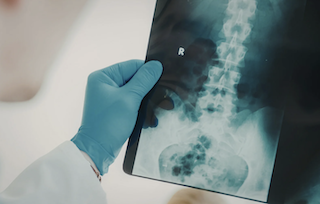
What Is Spinal Decompression / Distraction Therapy?
Spinal decompression (also called distraction therapy) aims to:
- Reduce compressive forces on spinal joints and discs
- Temporarily increase intervertebral space
- Reduce nerve root irritation
- Improve spinal mobility
Clinically, this is done using:
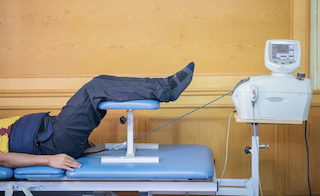
- Mechanical traction tables
- Flexion–distraction chiropractic tables
- Interspinous distraction devices (surgical or semi-invasive)
The goal is not “fixing” the spine, but improving the mechanical environment around irritated tissues.
What Does the Evidence Actually Say?
★ Pain Reduction & Disc Space Changes
A randomized controlled trial by Pi et al. (2021) found that flexion–distraction therapy:
- Increased intervertebral disc height
- Reduced pain significantly (VAS ↓ ~21 mm)
- Improved lumbar mobility and straight-leg raise range
This shows that mechanical unloading can meaningfully change symptoms and function, at least short-term.
★ Better Than Exercise Alone (Sometimes)
In patients with chronic lumbar disc prolapse, Gaowgzeh et al. (2020) showed:
- Spinal decompression + core stabilization
→ greater pain and disability reduction - Compared to core exercises alone
This suggests decompression works best as a complement, not a standalone fix.
★ Short-Term Benefits Are Clear — Long-Term Less Certain
Reviews by Cheng et al. (2016) and Hong et al. (2015) show a consistent pattern:
- Decompression and distraction treatments:
- Work better than basic conservative care short term
- Perform similarly to surgical decompression for symptom relief
- BUT:
- Long-term durability is unclear
- Re-intervention rates can be higher with passive-only approaches
👉 Translation:
Spinal decompression helps — but it doesn’t replace movement, strength, and load management.
So… Can You Recreate Decompression at Home?
You cannot fully replicate a $30,000 clinic table at home — and you shouldn’t try.
But you can safely recreate the key principles:
- Gentle spinal unloading
- Controlled traction
- Reduced joint compression
- Temporary symptom relief
This is where low-cost decompression tools come in.
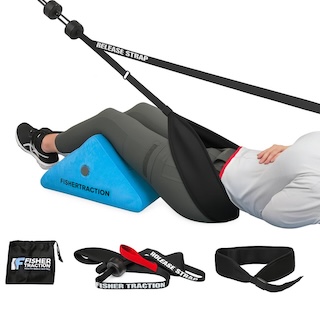
1. Lumbar Traction / Back Stretchers
- Encourage gentle lumbar extension
- Reduce posterior disc pressure temporarily
- Best for stiffness and low-grade disc irritation
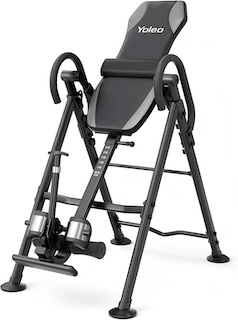
2. Inversion Tables
- Use body weight for spinal unloading
- Can significantly reduce axial compression
- Not for everyone (blood pressure, glaucoma, vertigo risks)
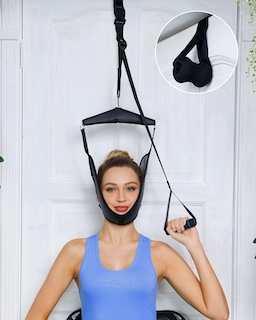
3. Cervical Door Traction Devices
- Provide mild neck distraction
- Helpful for neck pain and arm symptoms
- Must be used conservatively
4. Foam Roll + Positioning Tools
- Can offload the spine when used correctly
- Lower risk, lower intensity
- Useful for daily decompression routines
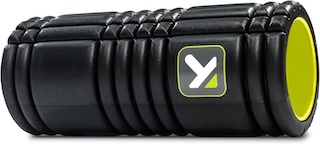
👉 These tools don’t heal discs — they create space and symptom relief, allowing movement and exercise to work better.
Important Reality Check
Spinal decompression is best viewed as:
- A symptom modifier
- A way to reduce irritation
- A window to move better and train smarter
It should not be:
- The only treatment
- A replacement for strengthening
- Used aggressively or daily without progression
Conclusion: Worth It — If Used Correctly
The science is clear on one thing:
✔️ Spine decompression can reduce pain
✔️ It can improve mobility
✔️ It works best short-term
✔️ It’s most effective when paired with active rehab
Low-cost at-home tools can be a smart, affordable way to access these benefits — if used responsibly and with the right expectations.
< Recommendation by Our Experts>
✔ Use decompression tools for symptom relief, not as a cure
✔ Combine decompression with core and hip strengthening
✔ Start gently — more force is not better
✔ Decompression creates space. Movement teaches the body how to use it.

< Reference >
- Pi, Taejin, and Yijung Chung. “Immediate Effect of Flexion-Distraction Spinal Manipulation on Intervertebral Height, Pain, and Spine Mobility in Patients with Lumbar Degenerative Disc Disease.” Physical Therapy Rehabilitation Science 10, no. 2 (2021): 235–43. https://doi.org/10.14474/ptrs.2021.10.2.235.
- Gaowgzeh, Riziq Allah Mustafa, Mohamed Faisal Chevidikunnan, Ejlal Abdullah BinMulayh, and Fayaz Khan. “Effect of Spinal Decompression Therapy and Core Stabilization Exercises in Management of Lumbar Disc Prolapse: A Single Blind Randomized Controlled Trial.” Journal of Back and Musculoskeletal Rehabilitation 33, no. 2 (2020): 225–31. https://doi.org/10.3233/BMR-171099.
- Cheng, Fei, Changchun Zhang, Kun Zhu, and Gang Xu. “[RESEARCH PROGRESS OF INTERSPINOUS DISTRACTION DEVICES FOR TREATMENT OF DEGENERATIVE LUMBAR SPINAL STENOSIS].” Zhongguo Xiu Fu Chong Jian Wai Ke Za Zhi = Zhongguo Xiufu Chongjian Waike Zazhi = Chinese Journal of Reparative and Reconstructive Surgery 30, no. 10 (2016): 1301–5. https://doi.org/10.7507/1002-1892.20160264.
Stay Informed with Physio Hub
Unlock a world of knowledge with our expertly curated articles on fitness, rehabilitation, and health & diet. Stay ahead with the latest evidence-based insights and practical advice. Subscribe now to receive updates and never miss out on new content!