Physio Hub:
Evidence-Based Article
Ankle Sprains: What You Should Really Do for Faster Recovery
Why early movement—not rest—is now considered best practice.
Ankle sprains are among the most common injuries in sports. Roughly 85% involve the lateral ligaments, usually when the ankle rolls inward. While many people treat ankle sprains as “minor injuries,” research shows they can lead to chronic instability and a recurrence rate above 70% in athletes if not managed properly.
Here’s what the science says about how to identify a sprain, when to suspect a fracture, and—most importantly—how to rehab an ankle sprain the right way.
Sprain or Fracture? How to Tell the Difference
Common signs of an ankle sprain
-
swelling
-
bruising
-
tenderness on the outside of the ankle
-
pain with walking
-
a “pop” at the moment of injury
-
reduced range of motion
These symptoms vary, and not everyone will experience all of them.
When it might be a fracture
-
sharp, severe pain
-
inability to bear weight immediately after injury
-
visible deformity or misalignment
-
significant swelling or bruising
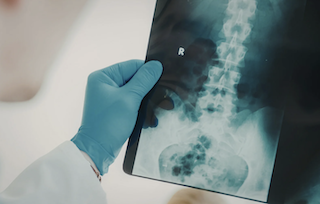
A healthcare professional should evaluate any suspected fracture. Imaging such as X-ray, ultrasound, CT, or MRI may be required to confirm the diagnosis.


PRICE vs. POLICE — Which Protocol Is Better?
For many years, RICE and PRICE were the standard approaches to acute injury care. Modern evidence, however, supports a more active approach.
PRICE (Protection, Rest, Ice, Compression, Elevation)
Useful in the first 24–72 hours, PRICE helps control swelling and pain.
But…
Rest is now considered less effective when used alone. Too much rest may slow recovery and increase joint stiffness.
POLICE: The Updated Gold Standard
Protection
Limit excessive strain but avoid complete immobilization. Crutches or braces may be used briefly.
Optimal Loading (the key difference)
Gentle, guided movement stimulates tissue healing and restores mobility. This is supported by mechanotherapy research and is essential for proper ligament recovery.
Ice
Helps reduce pain and swelling, especially when used intermittently (10–15 minutes per session).
Compression
Elastic wraps help control swelling and provide mild support.
Elevation
Encourages fluid drainage and decreases discomfort.
Why POLICE Works Better
Studies show early, controlled mobilization helps:
-
restore dorsiflexion faster
-
improve stride length
-
reduce stiffness
-
speed up overall recovery
In short: Movement heals.
Is Early Mobilization Really Better? (Evidence Says Yes)
A randomized controlled trial by Green et al. found that adding passive joint mobilization to early movement protocols led to:
-
fewer sessions needed to regain pain-free dorsiflexion
-
greater improvements in ROM
-
faster walking speed
Another study by Tran et al. confirmed that early movement and strengthening are crucial components of effective ankle sprain rehab.
What About Icing? Does It Slow Healing?
Ice remains useful for pain management, but research is mixed on how it affects healing timelines.
Key findings:
-
Thain et al. showed that cryotherapy does not impair neuromuscular control, meaning it is safe to use before rehabilitation.
-
Bleakley et al. found that intermittent icing (short repeated bouts) reduces pain more effectively than one long application.
Bottom line:
Ice helps with pain, but optimal loading is what drives recovery.
< Recommendation by Our Experts>
✔ Prioritize Early Mobilization with the POLICE Protocol
Shift away from strict immobilization. Begin guided, gentle movement early to restore mobility, reduce stiffness, and accelerate healing.
✔ Use Ice Strategically, Not Excessively
Apply intermittent cryotherapy (10–15 minutes) for pain control, especially in the first 48–72 hours, while continuing controlled movement as tolerated.
✔ Always Seek Professional Evaluation
Rule out fractures or high-grade ligament injuries. A clinician can guide proper loading progression and provide manual therapy or exercises tailored to your recovery.


< Reference >
- Bleakley CM, Glasgow P, MacAuley DC. PRICE needs updating, should we call the POLICE? Br J Sports Med. 2012;46(4):220-221. doi:1136/bjsports-2011-090297
- Green T, Refshauge K, Crosbie J, Adams R. A randomized controlled trial of a passive accessory joint mobilization on acute ankle inversion sprains. Phys Ther. 2001 Apr;81(4):984-94. PMID: 11276181.
- Singh DP, Barani Lonbani Z, Woodruff MA, Parker TJ, Steck R, Peake JM. Effects of Topical Icing on Inflammation, Angiogenesis, Revascularization, and Myofiber Regeneration in Skeletal Muscle Following Contusion Injury. Front Physiol. 2017;8. doi:3389/fphys.2017.00093
- Tran K, McCormack S. Exercise for the Treatment of Ankle Sprain: A Review of Clinical Effectiveness and Guidelines [Internet]. Ottawa (ON): Canadian Agency for Drugs and Technologies in Health; 2020 Apr 3. PMID: 33074633.
- Fong DT, Hong Y, Chan LK, Yung PS, Chan KM. A systematic review on ankle injury and ankle sprain in sports. Sports Med. 2007;37(1):73-94. doi: 10.2165/00007256-200737010-00006. PMID: 17190537.
- Doherty C, Delahunt E, Caulfield B, Hertel J, Ryan J, Bleakley C. The incidence and prevalence of ankle sprain injury: a systematic review and meta-analysis of prospective epidemiological studies. Sports Med. 2014 Jan;44(1):123-40. doi: 10.1007/s40279-013-0102-5. PMID: 24105612.
- Erdurmuş ÖY, Oguz AB, Genc S, Koca A, Eneylı MG, Polat O. Comparison of the effects PRICE and POLICE treatment protocols on ankle function in patients with ankle sprain. Ulus Travma Acil Cerrahi Derg. 2023 Aug;29(8):920-928. doi: 10.14744/tjtes.2023.29797. PMID: 37563900; PMCID: PMC10560804.
- Thain PK, Bleakley CM, Mitchell AC. Muscle Reaction Time During a Simulated Lateral Ankle Sprain After Wet-Ice Application or Cold-Water Immersion. J Athl Train. 2015 Jul;50(7):697-703. doi: 10.4085/1062-6050-50.4.05. Epub 2015 Jun 11. PMID: 26067429; PMCID: PMC4532180.
- Bleakley CM, McDonough SM, MacAuley DC, Bjordal J. Cryotherapy for acute ankle sprains: a randomised controlled study of two different icing protocols. Br J Sports Med. 2006 Aug;40(8):700-5; discussion 705. doi: 10.1136/bjsm.2006.025932. Epub 2006 Apr 12. PMID: 16611722; PMCID: PMC2579462.
Stay Informed with Physio Hub
Unlock a world of knowledge with our expertly curated articles on fitness, rehabilitation, and health & diet. Stay ahead with the latest evidence-based insights and practical advice. Subscribe now to receive updates and never miss out on new content!