Physio Hub:
Evidence-Based Article
Rotator Cuff Tendinopathy
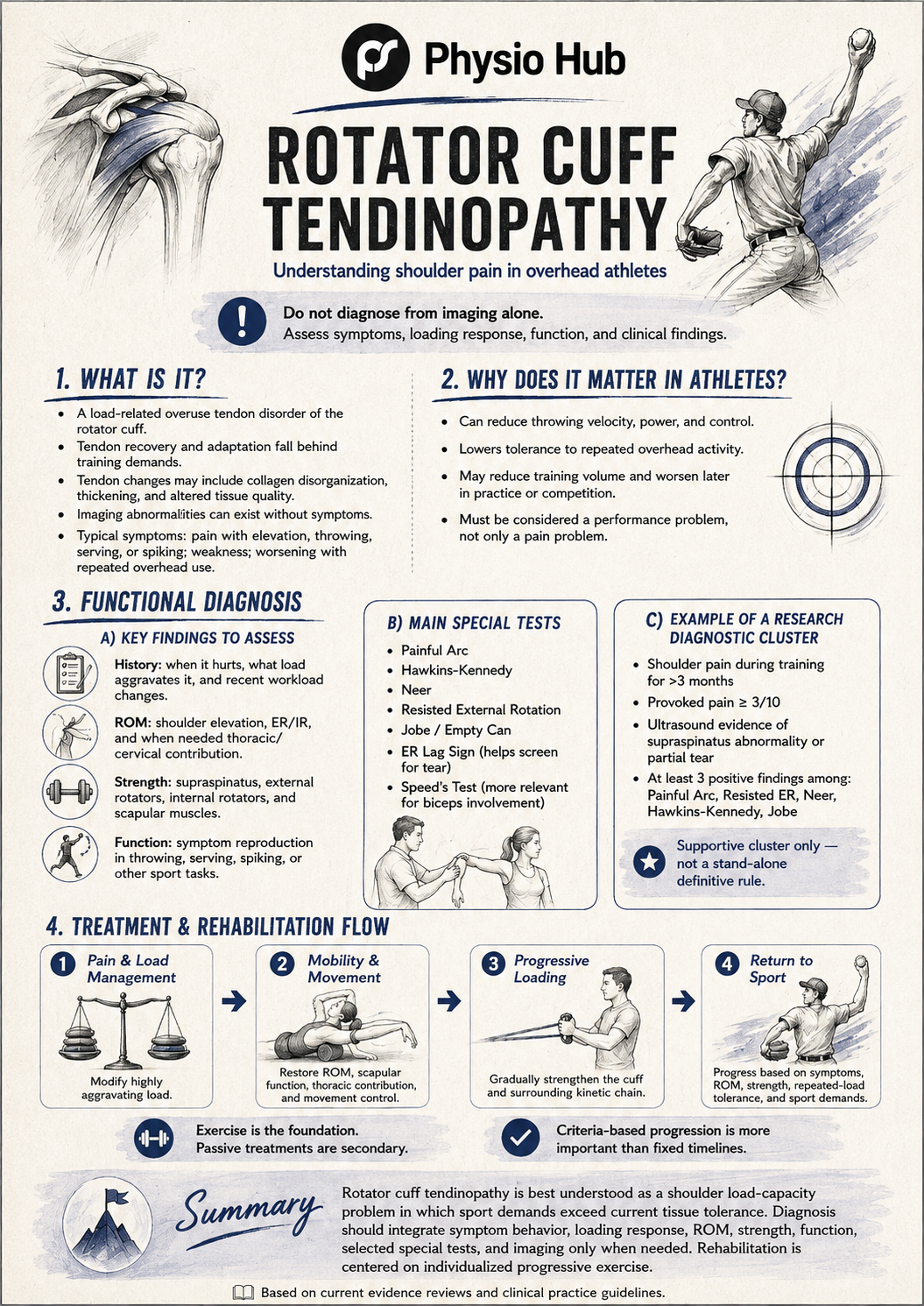
Rotator cuff tendinopathy is one of the most common causes of shoulder pain and can be particularly important in athletes participating in overhead sports such as baseball, volleyball, tennis, swimming, and throwing events.
Current evidence suggests that rotator cuff tendinopathy should not simply be viewed as inflammation or as a tendon being mechanically “impinged.” Instead, it is better understood as a load-related tendon disorder in which the demands placed on the tendon exceed its current capacity to adapt and recover.¹⁻³
What Is Rotator Cuff Tendinopathy?
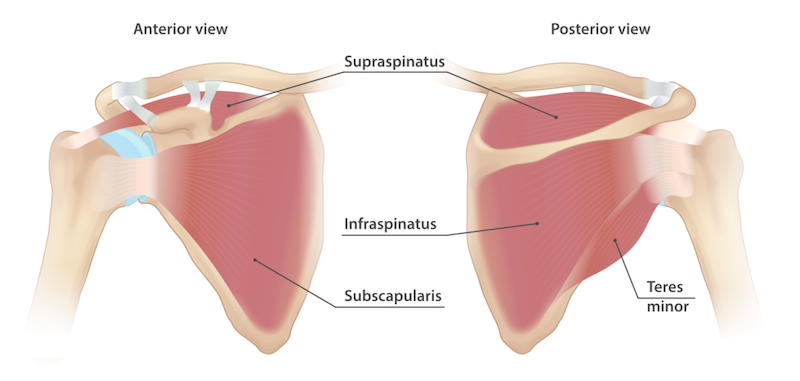
The rotator cuff consists of four muscles and their tendons:
- Supraspinatus
- Infraspinatus
- Teres minor
- Subscapularis
Together, they contribute to shoulder movement, dynamic stabilization of the humeral head, and control of the shoulder during high-speed athletic activities.
Rotator cuff tendinopathy is characterized by tendon-related shoulder pain, reduced function, and decreased tolerance to exercise or loading.¹,²
At the tissue level, tendinopathy may involve changes such as:
- Collagen disorganization
- Increased tendon thickness
- Altered extracellular matrix composition
- Changes in tendon mechanical properties
- Altered vascularity and sensory innervation
However, structural tendon abnormalities do not necessarily equal pain.
Tendon abnormalities are commonly identified in asymptomatic individuals, meaning that an abnormal ultrasound or MRI by itself does not establish that the tendon is responsible for an athlete’s symptoms. Diagnosis must therefore integrate imaging findings with the clinical presentation and functional examination.⁴,⁵
Emerging research also suggests that tendinopathy may contain biologically distinct subtypes with different molecular characteristics, which may partially explain why individuals with apparently similar tendon disorders respond differently to treatment.³
Typical Symptoms
Athletes may report:
- Pain with overhead elevation
- Pain during throwing, serving, or spiking
- Pain with resisted shoulder movements
- Pain while lowering the arm
- Reduced shoulder strength
- Reduced tolerance to repetitive or high-intensity activity
- Declining performance as training volume increases
- Difficulty completing normal practice or competition
An important feature is therefore not simply whether shoulder pain exists, but which loads and activities reproduce the symptoms.⁴
Why Is It Important in Athletes?
The rotator cuff does more than create shoulder movement.
During overhead sports, it contributes to dynamic control of the humeral head and helps manage the tremendous forces generated during acceleration and deceleration of the arm.
Rotator cuff tendinopathy may therefore contribute to:
- Reduced throwing velocity
- Reduced serving or spiking power
- Decreased accuracy or control
- Reduced tolerance to repeated overhead activity
- Lower training volume
- Progressive symptoms later in practices or competition
Research in overhead athletes has identified potential risk factors including reduced external- and internal-rotation strength, limited external-rotation range of motion, supraspinatus weakness, and altered ER/IR strength ratios. However, the strength of evidence for these individual factors varies, and no single impairment reliably predicts future injury on its own.⁷,⁸
For athletes, the clinical question should therefore extend beyond:
“Is the tendon painful?”
and include:
“Can the athlete’s shoulder tolerate the loads required by the sport?”
Functional Diagnosis of Rotator Cuff Tendinopathy
There is no single special test that definitively diagnoses rotator cuff tendinopathy.
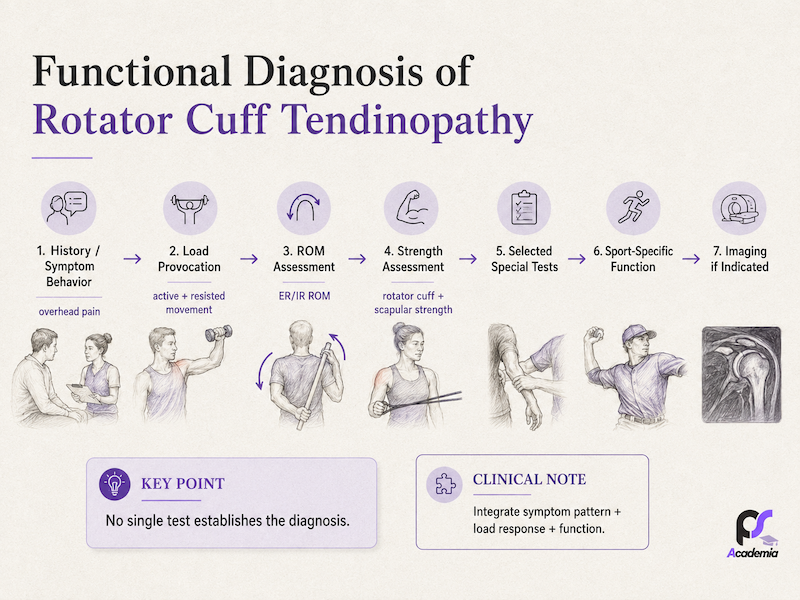
An international Delphi consensus found greater agreement for clinical characteristics such as symptom reproduction with loading, symptoms during overhead activity, and findings during active and resisted movement than for any individual named special test.⁴
Functional diagnosis should therefore use pattern recognition and probability, rather than relying on one positive test.
Step 1: Identify the Symptom-Load Relationship
The history should establish:
- Onset and duration of symptoms
- Acute versus gradual onset
- Which athletic movements reproduce symptoms
- Current training volume and intensity
- Recent changes in workload
- Whether symptoms increase during or after training
- Which meaningful activities or sport tasks have become limited
A common clinical pattern is pain reproduced during activities that increase rotator cuff loading, particularly overhead and resisted movements.⁴,⁵
Step 2: Assess ROM, Strength, and Function
The physical examination should generally include:
- Active shoulder ROM
- Passive shoulder ROM
- External- and internal-rotation ROM
- Shoulder elevation and abduction
- Rotator cuff strength
- ER and IR strength
- Relevant scapular muscle performance
- Cervical and neurological examination when indicated
When possible, shoulder strength should be quantified objectively with a handheld dynamometer rather than relying exclusively on manual muscle testing.⁵
For athletes, examination should also progress toward the activity that actually causes the problem, such as:
- Throwing
- Serving
- Spiking
- Swimming strokes
- Overhead lifting
The goal is to determine not only whether an impairment exists, but whether it limits the athlete’s primary sport function and load tolerance.
Special Tests
Special tests should be used to modify diagnostic probability and assist with differential diagnosis—not as stand-alone proof of tendinopathy.
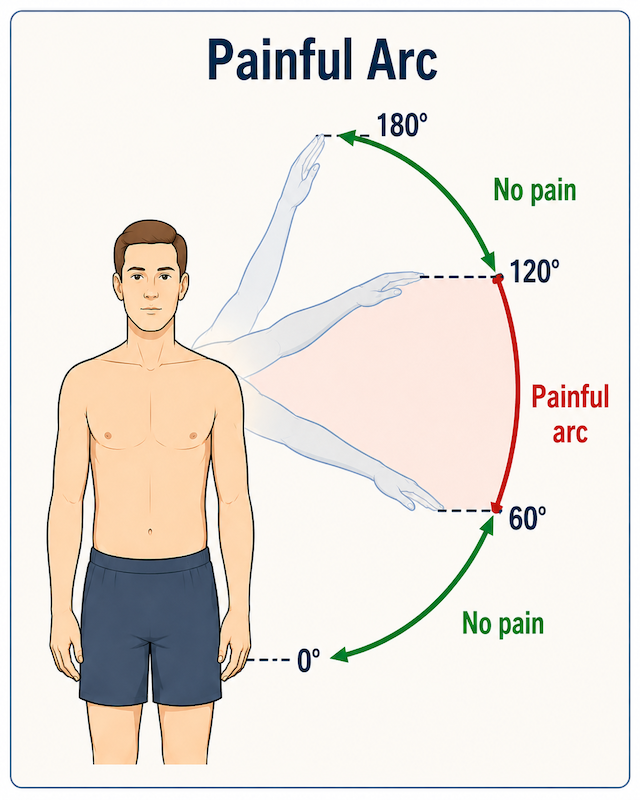
Painful Arc Test
Symptoms are assessed during active shoulder elevation or abduction.
The painful arc has relatively greater specificity and is identified in the current clinical practice guideline as a test that may help confirm suspected rotator cuff tendinopathy.⁵,⁶
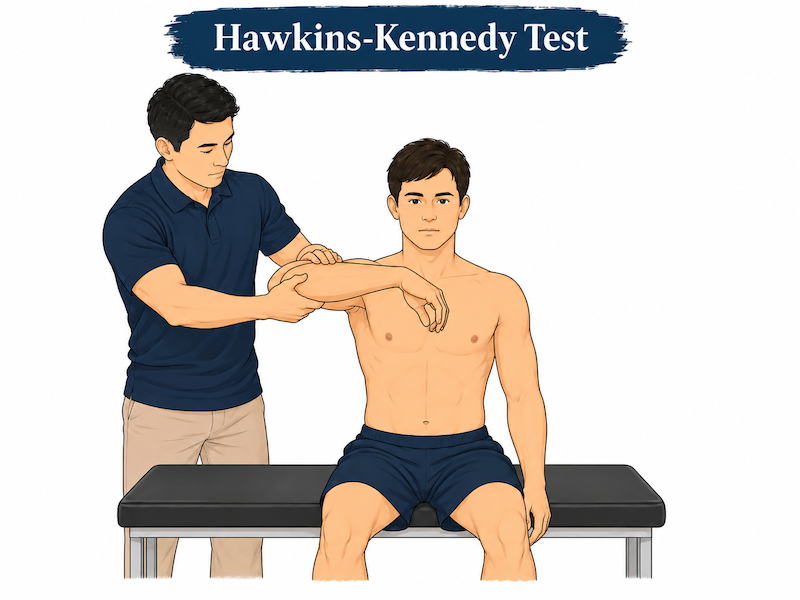
Hawkins-Kennedy Test
The shoulder is positioned to apply a provocative internal-rotation load.
The Hawkins-Kennedy test has relatively greater sensitivity, and a negative result may help reduce the probability of rotator cuff-related shoulder pain.⁵,⁶
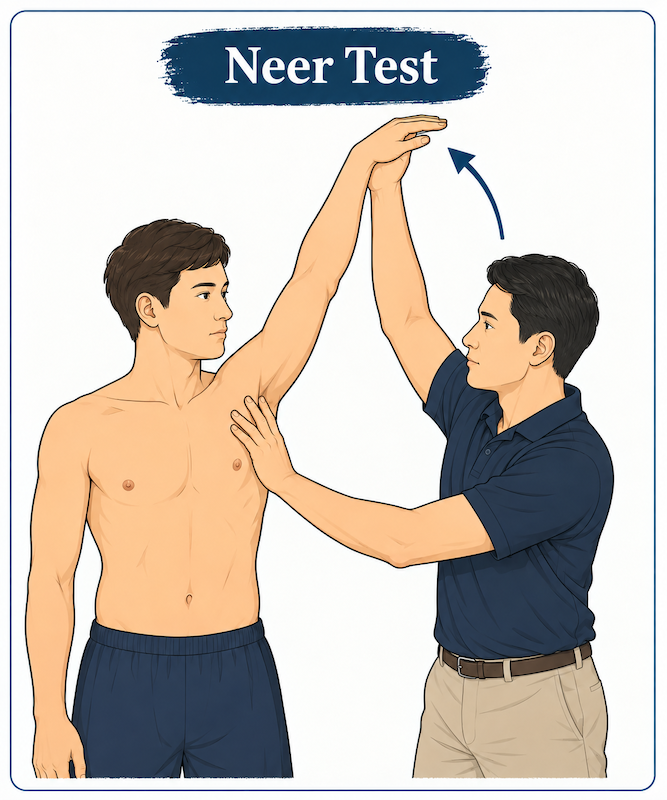
Neer Test
Passive shoulder elevation is used to provoke symptoms.
The Neer test is relatively sensitive but is not specific to rotator cuff tendinopathy.⁶
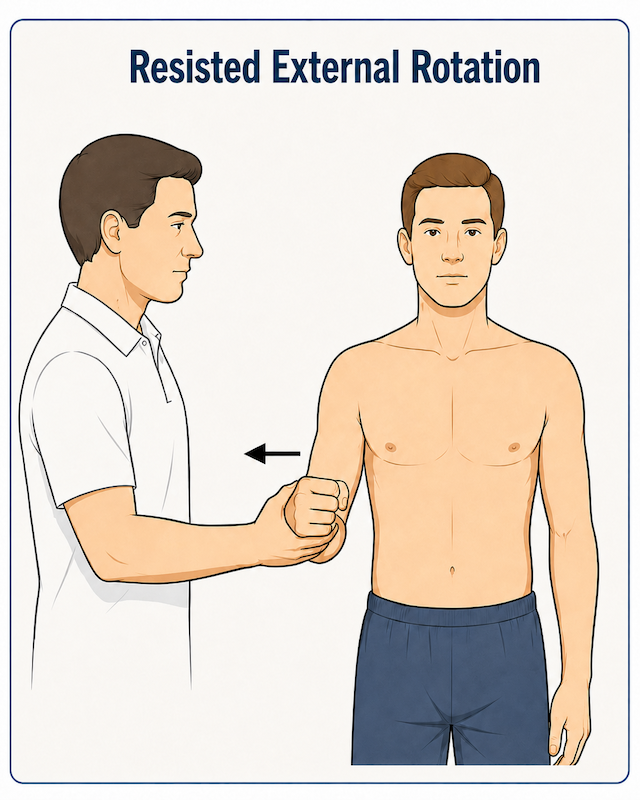
Resisted External Rotation
Pain and/or weakness during resisted external rotation may demonstrate reduced loading tolerance of the posterior rotator cuff, particularly the infraspinatus and teres minor.
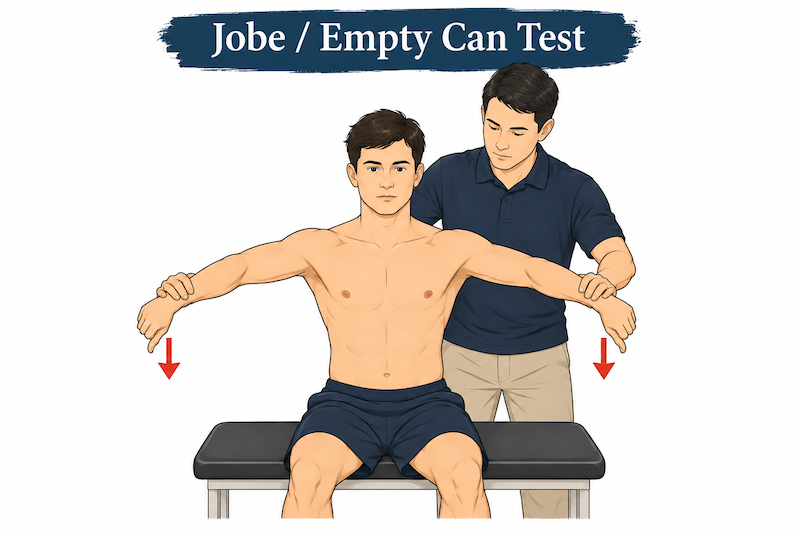
Jobe / Empty Can Test
This test challenges the supraspinatus and may reproduce pain or weakness.
It may be useful in the broader rotator cuff examination and is also relevant when supraspinatus tearing is suspected.⁶
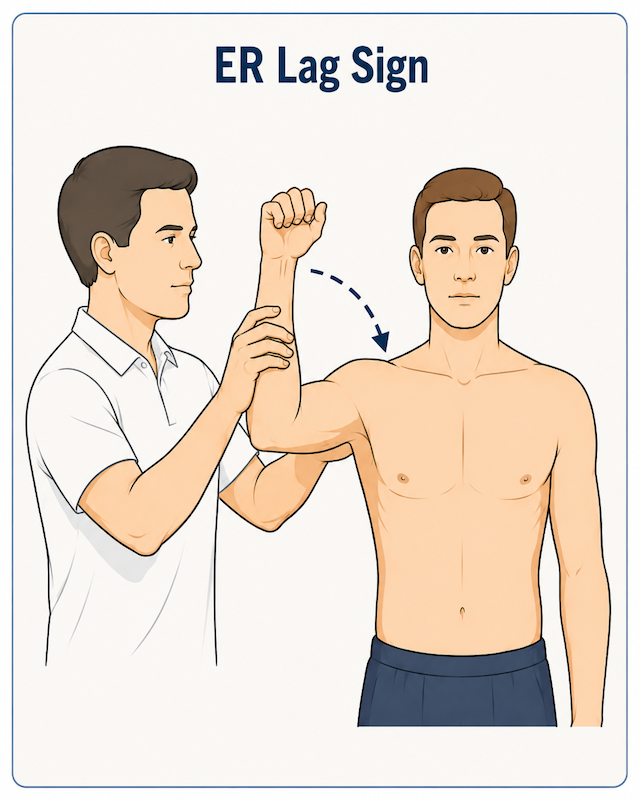
External Rotation Lag Sign
The lag sign is particularly relevant when a full-thickness supraspinatus/infraspinatus tear is suspected rather than uncomplicated tendinopathy.
High diagnostic accuracy has been reported for combined full-thickness supraspinatus and infraspinatus tears, making it useful when substantial weakness is present.⁶
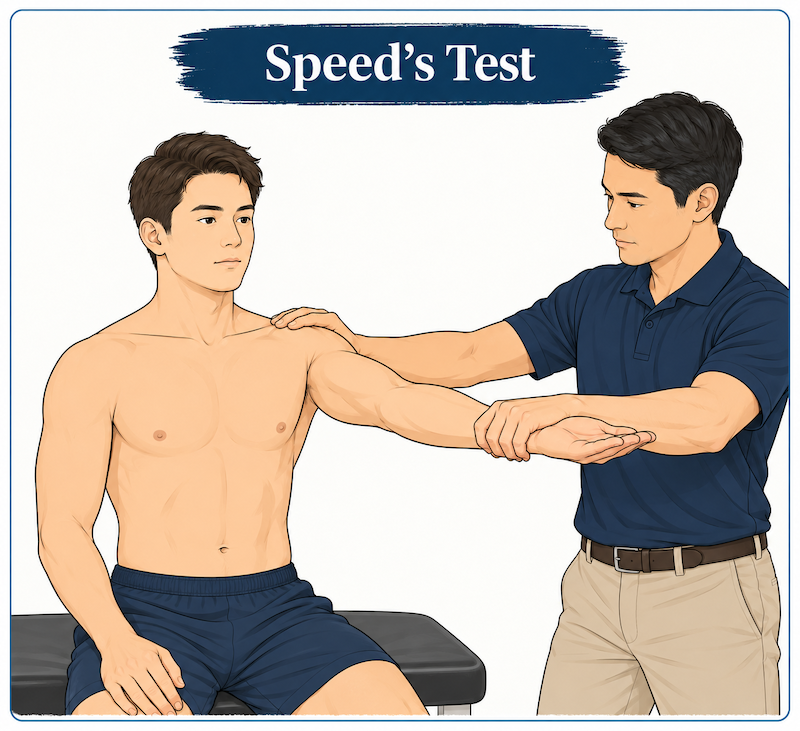
Speed’s Test
Speed’s test is more relevant to potential long-head biceps involvement than to isolated rotator cuff tendinopathy and may therefore assist with differential diagnosis.⁶
Using a Test Cluster
In research involving overhead athletes, Leong and colleagues used a clinical classification that included:
- Shoulder pain during training lasting more than 3 months
- Provoked pain of at least 3/10
- Ultrasound evidence of supraspinatus abnormality or partial tearing
- At least 3 of 5 positive findings:
- Painful arc
- Pain or weakness with resisted external rotation
- Neer test
- Hawkins-Kennedy test
- Jobe test⁷
This can provide a useful example of how multiple findings may be combined in athletes.
However, it should not be interpreted as a universally validated diagnostic prediction rule. It was used as a research case definition rather than a diagnostic rule that must be applied to every patient.
The stronger clinical approach remains:
**symptom behavior + loading response + ROM + strength + functional performance + selected special tests + imaging when appropriate.**⁴,⁵
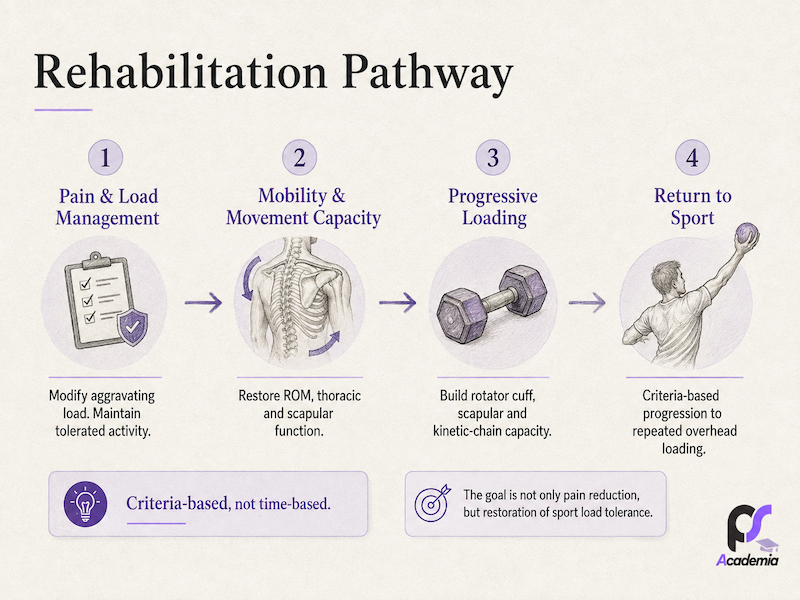
Treatment and Rehabilitation Overview
For most athletes, conservative rehabilitation is the first-line approach.
Exercise and progressive loading form the foundation of treatment rather than relying on passive modalities alone.²,⁵,¹⁰⁻¹²
Phase 1: Pain and Load Management
Early rehabilitation commonly focuses on identifying and modifying loads that are substantially exceeding the athlete’s current shoulder capacity.
This may include:
- Temporarily modifying training volume
- Adjusting intensity or frequency
- Reducing highly provocative activities
- Maintaining tolerated activity rather than complete rest
The goal is not necessarily to eliminate all shoulder loading.
The goal is to identify how much load the shoulder can currently tolerate and begin rebuilding from that level.
Phase 2: Mobility and Movement Capacity
Once symptoms become manageable, rehabilitation should address relevant physical impairments identified during the examination.
These may include:
- Shoulder ROM
- Thoracic and shoulder-girdle mobility when relevant
- Scapular muscle performance
- Neuromuscular control
- Movement strategies associated with the athlete’s symptoms
There is no need to force every athlete toward one theoretical “perfect” scapular movement pattern. Intervention should instead target impairments that are clinically relevant to the individual athlete.
Phase 3: Progressive Loading
Progressive loading of the rotator cuff and surrounding shoulder musculature is the central component of rehabilitation.
Research supports improvements with many types of exercise, including:
- Eccentric exercise
- Concentric exercise
- Conventional resistance training
- Open-chain exercise
- Closed-chain exercise
- Supervised rehabilitation
- Home-based exercise
Current evidence does not identify one exercise program as clearly superior for all patients.
The more consistent finding is that appropriately progressed exercise improves pain and function.¹⁰
Motor-control-focused exercise may also be valuable.
The mechanisms through which exercise improves rotator cuff tendinopathy are likely broader than muscle strengthening alone and may involve changes in tendon properties, neuromuscular performance, pain and sensorimotor processing, confidence, fear of movement, and self-efficacy.²
Phase 4: Return to Sport
Resolution of pain alone does not mean that an athlete is ready to return to unrestricted sport.
Return-to-sport decisions should consider:
- Symptoms
- ROM
- Strength
- Endurance
- Power
- Functional performance
- Tolerance to repeated loading
- Sport-specific movements
- Ability to tolerate normal training demands⁵,¹¹
For a pitcher, this eventually means tolerating throwing.
For a volleyball athlete, it means tolerating repeated serving and spiking.
For a swimmer, it means tolerating the repeated stroke volume required for training and competition.
Therefore, criteria-based progression is preferable to returning an athlete solely because a predetermined number of weeks has passed.
Adjunctive Treatment Options
NSAIDs, corticosteroid injections, and platelet-rich plasma may be considered in selected patients, but these approaches should generally be viewed as adjuncts rather than replacements for an appropriate rehabilitation program.⁵,¹²,¹³
Some systematic-review evidence suggests that PRP may provide longer-term improvements in pain and function for some rotator cuff disorders, although considerable heterogeneity exists between studies and treatment protocols.¹³
Calcific rotator cuff tendinopathy also represents a somewhat different clinical presentation from non-calcific tendinopathy.
When clinically appropriate, interventions may include:
- Extracorporeal shockwave therapy
- Ultrasound-guided needling or aspiration
- PRP
- Other image-guided interventions¹⁴,¹⁵
These options should be selected according to the individual presentation rather than routinely applied to all rotator cuff tendinopathy.
< Summary >
Rotator cuff tendinopathy should not simply be considered an inflammatory disorder or a tendon being “pinched” underneath the acromion.
Especially in athletes, it is more useful to view the condition as a situation in which:
the capacity of the tendon, shoulder musculature, and neuromuscular system is insufficient for the loads currently required by the athlete’s sport.
Diagnosis should not rely on a single special test or imaging abnormality.
A functional evaluation should progress through:
symptom pattern → response to loading → ROM and strength → selected special tests → functional performance → imaging when indicated.
Rehabilitation should then progress through appropriate load management, restoration of relevant mobility and movement capacity, progressive strengthening, neuromuscular training, kinetic-chain integration, and eventually sport-specific loading.
The ultimate goal is therefore not simply to create a pain-free shoulder.
It is to restore a shoulder that can tolerate the demands of the athlete’s sport again.
<PDF file>
Read More
< Reference >
- Millar NL, Silbernagel KG, Thorborg K, et al. Tendinopathy. Nat Rev Dis Primers. 2021;7(1):1. doi:10.1038/s41572-020-00234-1
- Vila-Dieguez O, Heindel MD, Awokuse D, Kulig K, Michener LA. Exercise for rotator cuff tendinopathy: proposed mechanisms of recovery. Shoulder Elbow. 2023;15(3):233-249. doi:10.1177/17585732231172166
- Tang C, Wang Z, Xie Y, et al. Classification of distinct tendinopathy subtypes for precision therapeutics. Nat Commun. 2024;15:9460. doi:10.1038/s41467-024-53826-w
- Requejo-Salinas N, Lewis J, Michener LA, et al. International physical therapists consensus on clinical descriptors for diagnosing rotator cuff related shoulder pain: a Delphi study. Braz J Phys Ther. 2022;26(2):100395. doi:10.1016/j.bjpt.2022.100395
- Desmeules F, Roy JS, Lafrance S, et al. Rotator cuff tendinopathy diagnosis, nonsurgical medical care, and rehabilitation: a clinical practice guideline. J Orthop Sports Phys Ther. 2025;55(4):235-274. doi:10.2519/jospt.2025.13182
- Cotter EJ, Hannon CP, Christian D, Frank RM, Bach BR Jr. Comprehensive examination of the athlete’s shoulder. Sports Health. 2018;10(4):366-375. doi:10.1177/1941738118757197
- Leong HT, Hug F, Fu SN. Increased upper trapezius muscle stiffness in overhead athletes with rotator cuff tendinopathy. PLoS One. 2016;11(5):e0155187. doi:10.1371/journal.pone.0155187
- Kwan CK, Ko MC, Fu SC, et al. Are muscle weakness and stiffness risk factors of the development of rotator cuff tendinopathy in overhead athletes: a systematic review. Ther Adv Chronic Dis. 2021;12:20406223211026178. doi:10.1177/20406223211026178
- Ujsasi D, Filipović K, Zvekić-Svorcan J, et al. The applicability of provocative functional tests in the diagnosis of rotator cuff muscle injuries of the best university athletes. Biomed Res Int. 2022;2022:7728277. doi:10.1155/2022/7728277
- Dominguez-Romero JG, Jiménez-Rejano JJ, Ridao-Fernández C, Chamorro-Moriana G. Exercise-based muscle development programmes and their effectiveness in the functional recovery of rotator cuff tendinopathy: a systematic review. Diagnostics (Basel). 2021;11(3):529. doi:10.3390/diagnostics11030529
- Liaghat B, Pedersen JR, Husted RS, et al. Diagnosis, prevention and treatment of common shoulder injuries in sport: grading the evidence—a statement paper commissioned by the Danish Society of Sports Physical Therapy. Br J Sports Med. 2023;57(7):408-416. doi:10.1136/bjsports-2022-105674
- Weiss LJ, Wang D, Hendel M, Buzzerio P, Rodeo SA. Management of rotator cuff injuries in the elite athlete. Curr Rev Musculoskelet Med. 2018;11(1):102-112. doi:10.1007/s12178-018-9464-5
- A Hamid MSA, Sazlina SG. Platelet-rich plasma for rotator cuff tendinopathy: a systematic review and meta-analysis. PLoS One. 2021;16(5):e0251111. doi:10.1371/journal.pone.0251111
- Patel HP, Patel S, Zalin M, Agrawal DK. Calcified vs. non-calcified tendinopathy of the rotator cuff: clinical presentations, prognostic implications, and emerging therapeutic strategies. J Orthop Sports Med. 2025;7(3):379-391. doi:10.26502/josm.511500218
- Moggio L, Marotta N, de Sire A, et al. Efficacy of conservative approaches on pain relief and function in patients with rotator cuff calcific tendinopathy: which is the best option? A systematic review and network meta-analysis. Orthop Surg. 2025;17(11):3048-3066. doi:10.1111/os.70175
Stay Informed with Physio Hub
Unlock a world of knowledge with our expertly curated articles on fitness, rehabilitation, and health & diet. Stay ahead with the latest evidence-based insights and practical advice. Subscribe now to receive updates and never miss out on new content!