
Front Plank
A Foundational Isometric Exercise for Trunk Endurance and Lumbopelvic Control
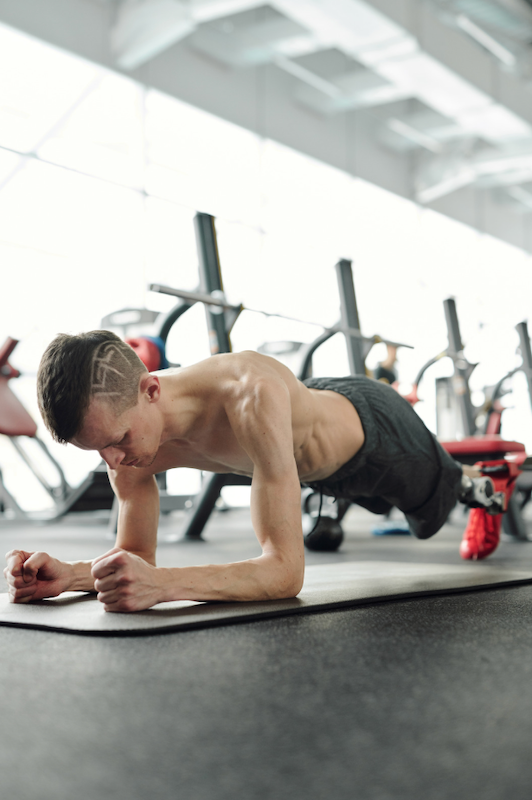
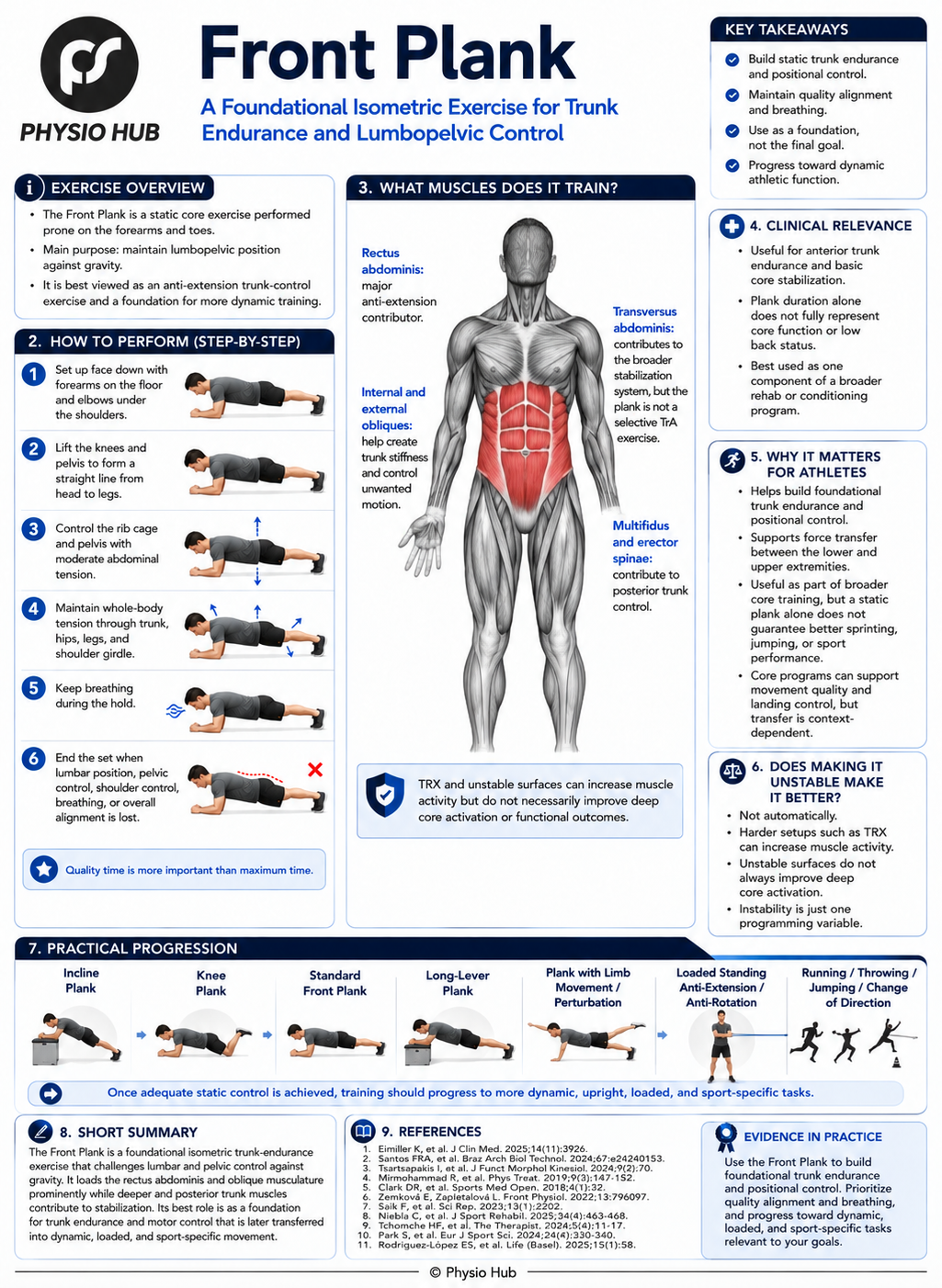
The Front Plank, often called the Forearm Plank, is a static core exercise performed in a prone position with the body supported on the forearms and toes while maintaining control of the head, trunk, pelvis, and lower extremities.¹
Its primary purpose is not repeated spinal movement.
Instead, the athlete must:
maintain lumbopelvic position against gravity for a sustained period of time.
The exercise recruits the rectus abdominis and oblique musculature prominently, while deeper abdominal and posterior trunk muscles also contribute to stabilization.²⁻⁴
For athletes, this makes the Front Plank useful for developing a foundation of trunk endurance and motor control, but the exercise remains static and should not be considered a complete representation of the dynamic, multiplanar trunk function required in sport.⁵˒⁶
Exercise Overview
In a standard Front Plank, the athlete:
- Supports the body on the forearms
- Places the elbows near or underneath the shoulders
- Supports the lower body on the toes
- Maintains alignment through the head, trunk, pelvis, and legs
- Holds the position without excessive lumbar or pelvic movement
Mechanically, gravity creates an extension demand on the trunk.
The athlete must therefore resist excessive lumbar extension, making the Front Plank primarily an anti-extension trunk-control exercise.
The goal is not simply to survive the position for as long as possible.
It is to:
maintain high-quality whole-body control for the intended duration.
How to Perform the Front Plank
Step 1 | Set Up
Lie face down.
Place the forearms on the floor with the elbows positioned approximately underneath the shoulders.
Place the toes on the floor.
Step 2 | Lift the Body
Lift the knees and pelvis away from the ground.
Create an approximately straight line from the:
head → trunk → pelvis → legs.
Avoid allowing the pelvis to sag toward the floor or excessively rise toward the ceiling.
Step 3 | Control the Rib Cage and Pelvis
Create moderate abdominal tension and maintain control of the rib cage relative to the pelvis.
The goal is not to maximally contract every abdominal muscle.
Instead, develop the amount of stiffness required to maintain the desired position.
Step 4 | Maintain Whole-Body Tension
Use the trunk, hips, legs, and shoulder girdle together to support the position.
Avoid allowing the load to collapse exclusively into the lumbar spine or shoulders.
Step 5 | Keep Breathing
Continue breathing throughout the hold.
Do not automatically equate trunk bracing with prolonged breath holding.
The athlete should ideally be able to maintain trunk control while continuing to breathe.
Step 6 | End the Set When Technique Is Lost
Stop or regress the exercise when you can no longer maintain:
- Lumbar control
- Pelvic position
- Shoulder-girdle control
- Normal breathing
- Overall body alignment
For training purposes:
quality time is more important than maximum time.
What Muscles Does the Front Plank Train?
The Front Plank primarily develops isometric capacity and muscular endurance, rather than training muscles through large ranges of motion.
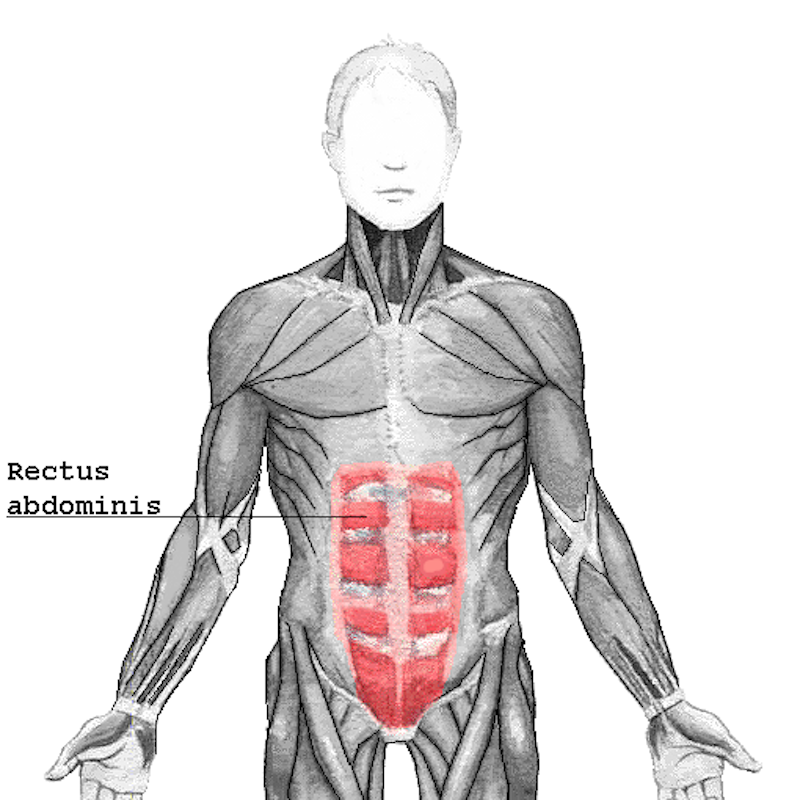
Rectus Abdominis
The rectus abdominis is one of the major contributors.
It helps resist the extension moment placed on the trunk and maintain the relationship between the rib cage and pelvis.
In a study using TRX Front Plank variations, rectus abdominis activity was very high and increased as suspension height decreased and the exercise became more demanding.²
Rectus abdominis activation was also substantially greater than multifidus activation in those conditions, illustrating why the Front Plank should not simply be described as a “deep-core” exercise.²
Internal and External Obliques
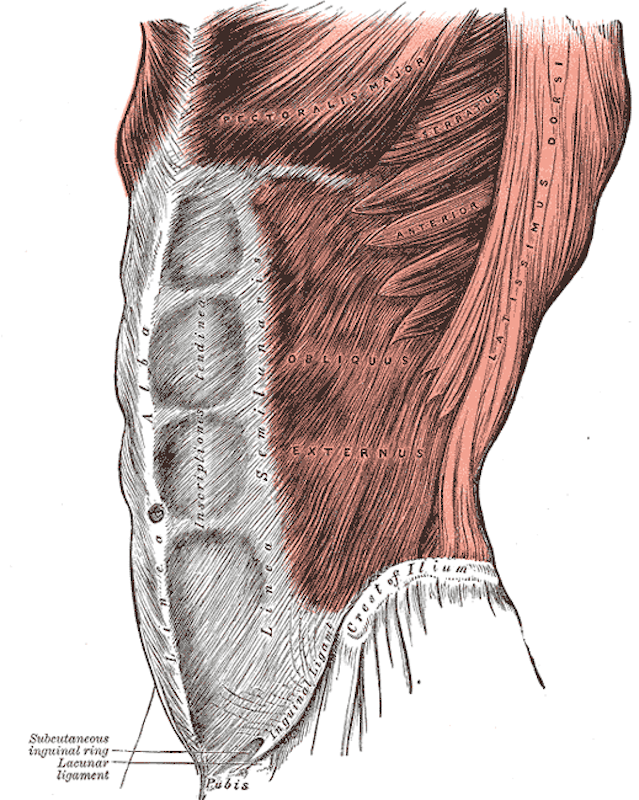
The oblique muscles help create abdominal-wall stiffness and control unwanted trunk or pelvic motion.
Their activity also increased as the mechanical challenge increased in suspension-plank conditions.²
Transversus Abdominis
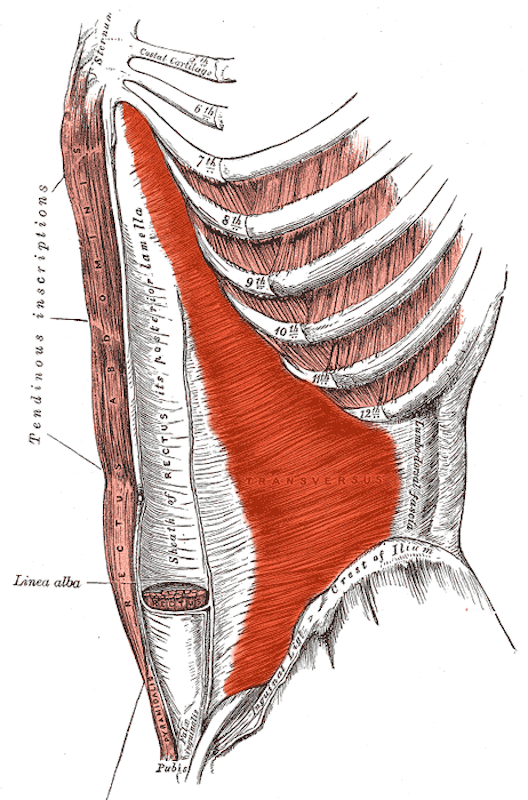
The transversus abdominis contributes to the broader trunk-stabilization system.
However:
Front Plank ≠ selective TrA strengthening.
When several common core exercises were compared, hollowing generally produced greater ultrasound thickness changes in the transversus abdominis, internal oblique, and lumbar multifidus than bracing, while exercises such as Bird Dog and Side Plank sometimes generated greater deep-muscle responses than the standard Plank.³
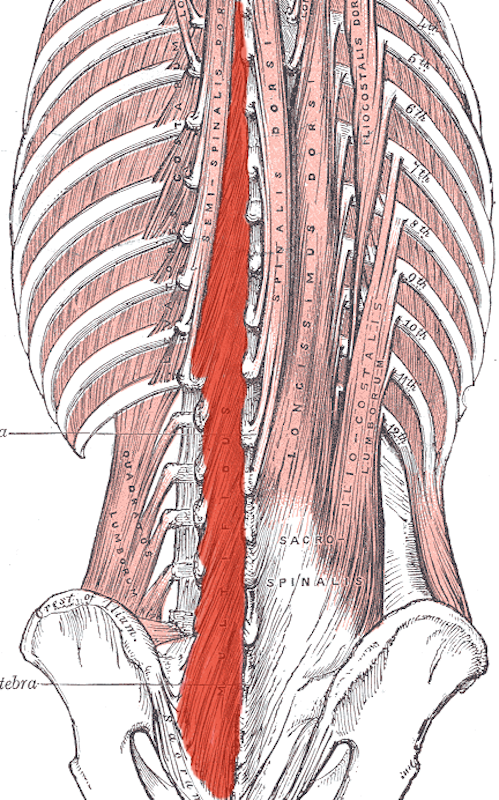
Multifidus and Erector Spinae
Posterior trunk muscles also contribute to maintaining spinal position.
However, the Front Plank is not necessarily the best exercise when the primary objective is maximal multifidus recruitment.²˒³
A complete trunk program may therefore also include tasks such as Bird Dogs, Side Planks, carries, hinges, and progressively loaded dynamic exercises.
Clinical Relevance
Core Endurance
A major use of the Front Plank is training and assessing anterior trunk endurance.
However, plank duration should not be interpreted as a complete measure of “core strength.”
A 2025 study examining plank performance and low-back pain found that simply being able to hold a Front Plank longer did not clearly represent lower pain or disability. The balance between anterior and posterior trunk endurance may be more informative than anterior plank time alone.¹
Therefore:
A 2-minute plank does not automatically mean excellent functional core performance.
Rehabilitation
The Front Plank can be valuable because its difficulty can be scaled and the exercise provides a relatively controlled environment for developing trunk endurance.
However, daily life and athletic tasks ultimately require the trunk to:
- Move
- Rotate
- Accept external load
- Control perturbations
- Coordinate with the extremities
For this reason, static planking is better viewed as one stage of rehabilitation, not the final endpoint.⁵˒⁶
Does an Unstable Plank Work Better?
Not automatically.
TRX research demonstrated that lowering the suspension height increased activity of the rectus abdominis, obliques, and erector spinae.²
However, a study in female athletes comparing stable-floor and Swiss-ball plank conditions found no significant difference in thickness changes of the internal and external obliques, quadratus lumborum, or multifidus.⁴
Therefore:
more instability does not automatically mean a better training stimulus.
Instability is simply another programming variable.
Why It Matters for Athletes
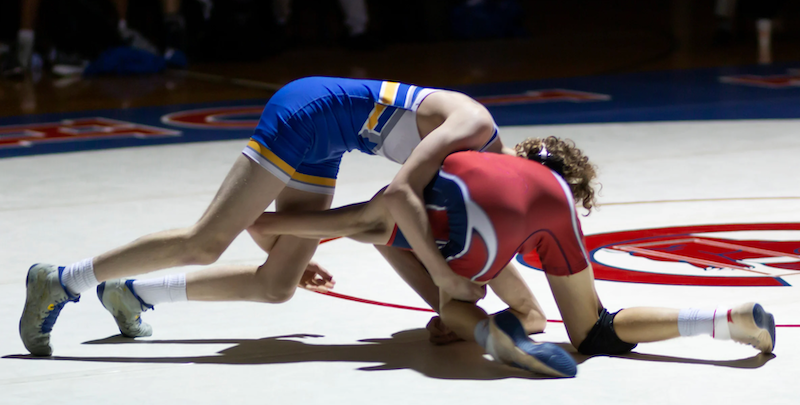
The athletic trunk is not supposed to remain rigid at all times.
It must provide enough stability to transfer and control force while still allowing the movement required for running, jumping, throwing, striking, and changing direction.⁵˒⁶
The Front Plank trains one component of this system:
static trunk endurance and positional control.
It should not be assumed that increasing plank time by itself will directly improve sprint speed, jump height, or sport skill.
Core Training and Athletic Function
Broader core-training programs that include planks and other exercises have demonstrated improvements in outcomes such as balance and movement quality.⁷˒⁸
For example, athletes following ACL reconstruction who completed an 8-week core-stabilization program demonstrated improvements in core endurance, hip strength, and landing mechanics, including reduced knee valgus.⁷
Importantly, these findings reflect a multi-exercise core program, not an isolated Front Plank intervention.
This distinction matters when interpreting exercise research.
Practical Progression
Incline Plank
↓
Knee Plank
↓
Standard Front Plank
↓
Long-Lever Plank
↓
Plank With Limb Movement or Perturbation
↓
Loaded Standing Anti-Extension / Anti-Rotation Tasks
↓
Running, Throwing, Jumping, and Change of Direction
Once an athlete demonstrates adequate static trunk control, continuing to chase longer and longer plank times may be less useful than progressing toward dynamic, loaded, upright, and sport-specific tasks.⁵˒⁶
< Take-Home Message >
The Front Plank is a foundational isometric trunk-endurance exercise designed to challenge control of the lumbar spine and pelvis against gravity.
It places substantial demand on the rectus abdominis and oblique musculature, while deeper and posterior trunk muscles contribute to the overall stabilization strategy.²˒³
It is useful in fitness, rehabilitation, and athletic development—but it represents only one component of core function.
A long Front Plank hold does not necessarily equal excellent athletic trunk function.¹˒⁵˒⁶
For athletes, the best use of the Front Plank is as a:
foundation for trunk endurance and positional control that is progressively transferred into dynamic, loaded, and sport-specific movement.
< PDF file>
< Reference >
- Eimiller K, LeFevre L, Robarge C, Strano C, Tarbrake K, Wittmann I. The core of the issue: plank performance and pain in the lower back. J Clin Med. 2025;14(11):3926. doi:10.3390/jcm14113926.
- Santos FRA, Macêdo AS, de Oliveira LR, et al. Electromyographic analysis of core muscles during front plank exercises using the TRX® system at different heights. Braz Arch Biol Technol. 2024;67:e24240153. doi:10.1590/1678-4324-2024240153.
- Tsartsapakis I, Bagioka I, Fountoukidou F, Kellis E. A comparison between core stability exercises and muscle thickness using two different activation maneuvers. J Funct Morphol Kinesiol. 2024;9(2):70. doi:10.3390/jfmk9020070.
- Mirmohammad R, Minoonejhad H, Sheikhhoseini R. Ultrasonographic comparison of deep lumbopelvic muscles activity in plank movements on stable and unstable surface. Phys Treat Specific Phys Ther J. 2019;9(3):147-152. doi:10.32598/ptj.9.3.147.
- Clark DR, Lambert MI, Hunter AM. Contemporary perspectives of core stability training for dynamic athletic performance: a survey of athletes, coaches, sports science and sports medicine practitioners. Sports Med Open. 2018;4(1):32. doi:10.1186/s40798-018-0150-3.
- Zemková E, Zapletalová L. The role of neuromuscular control of postural and core stability in functional movement and athlete performance. Front Physiol. 2022;13:796097. doi:10.3389/fphys.2022.796097.
- Saki F, Shafiee H, Tahayori B, Ramezani F. The effects of core stabilization exercises on the neuromuscular function of athletes with ACL reconstruction. Sci Rep. 2023;13(1):2202. doi:10.1038/s41598-023-29126-6.
- Niebla C, Carson R, Mangum LC. Impact of core training on Functional Movement Screen scores in athletes: a critically appraised topic. J Sport Rehabil. 2025;34(4):463-468. doi:10.1123/jsr.2024-0204.
- Tchomche HF, Bingquan L, Shoukat S. Impact of core stability training on football-specific performance and injury prevention: a review. The Therapist (J Ther Rehabil Sci). 2024;5(4):11-17. doi:10.54393/tt.v5i04.243.
- Park S, Kim YC, Jee YS. Plank exercise improves respiratory capacity through positive changes in body composition, abdominis function, and autonomic nerves’ activities. Eur J Sport Sci. 2024;24(3):330-340. doi:10.1002/ejsc.12086.
- Rodríguez-López ES, Martín-Márquez LM, Acevedo-Gómez MB, López-Illescas Á, Benito-de-Pedro M, Ojedo-Martín C. Which positions optimize pelvic floor activation in female athletes? Life (Basel). 2025;15(1):58. doi:10.3390/life15010058.