Physio Hub:
Evidence-Based Article
Understanding Pain During Rehabilitation
When Is Pain Acceptable—and When Should Exercise Be Modified?
Key Points
- Pain does not directly equal tissue damage.
- At the same time, pain should not simply be ignored.
- Some discomfort during rehabilitation may be acceptable and does not necessarily prevent recovery.
- Pain is not required for exercise or rehabilitation to be effective.
- Decisions should consider more than a 0-to-10 pain score—including function, movement quality, response after exercise, and how symptoms behave over time.
Pain Is Not a Direct “Damage Meter”
Many people understandably think:
“If it hurts, I must be damaging something.”
Pain is more complex than that.
The International Association for the Study of Pain defines pain as an unpleasant sensory and emotional experience associated with, or resembling that associated with, actual or potential tissue damage.¹
Importantly, pain and nociception are not the same thing.¹
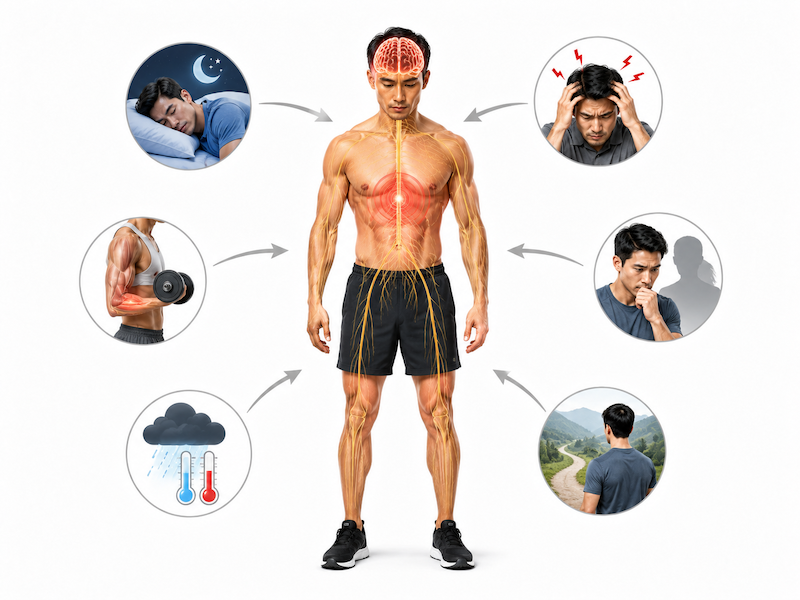
Signals related to tissue threat contribute to pain, but the pain experience can also be influenced by:
- Previous experiences
- Sleep
- Stress
- Fear and expectations
- Beliefs about the injury
- The context in which movement occurs
- Biological changes in the nervous system
Pain is therefore meaningful information, but it is not a precise measurement of how much tissue damage exists.
Pain During Rehabilitation Is Not Unusual
Rehabilitation often asks people to do things that have become difficult:
Move a stiff joint.
Load a recovering muscle or tendon.
Begin walking after surgery.
Restore strength after injury.
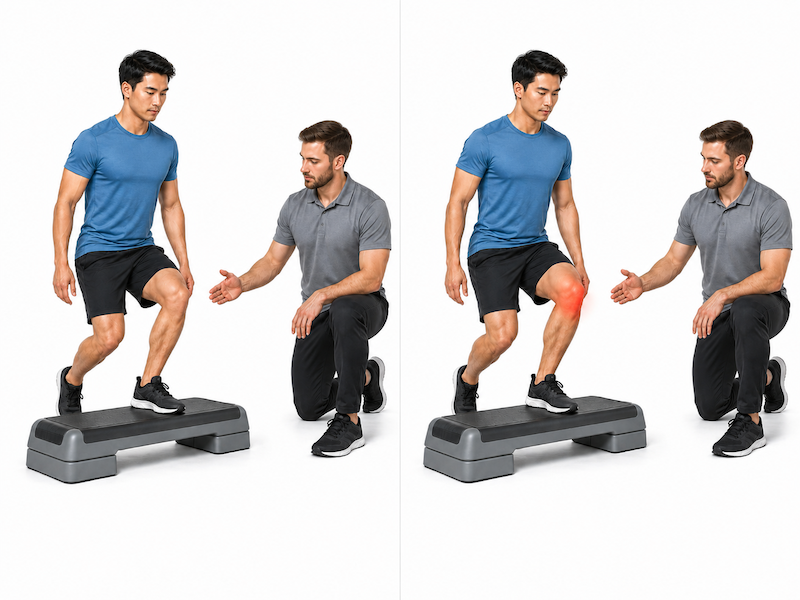
Some temporary discomfort may occur during this process.
An exploratory study of people undergoing rehabilitation after orthopedic trauma described care-related pain as common. Interestingly, some patients considered a certain amount of this pain understandable or acceptable when they believed it was associated with progress.²
This does not mean that rehabilitation should hurt.
It means:
Pain occurring during rehabilitation does not automatically mean that the exercise is harmful.
“No Pain, No Gain” Is Not a Rehabilitation Requirement
The fitness phrase “No Pain, No Gain” is not a useful universal rule for rehabilitation.
A 2025 updated systematic review and meta-analysis examined 16 trials comparing exercises that allowed or encouraged pain with exercises intended to remain nonpainful in adults with chronic musculoskeletal pain.³
The review found no clear difference between painful and nonpainful exercise for pain, disability, or other patient-reported outcomes across short-, medium-, or long-term follow-up. Certainty of evidence was very low to low.³
The practical conclusion is important:
You may not need to completely avoid pain during exercise—but you also do not need to create pain for rehabilitation to work.
Pain is neither automatically dangerous nor a treatment goal.
Do Not Judge Rehabilitation by the Pain Score Alone
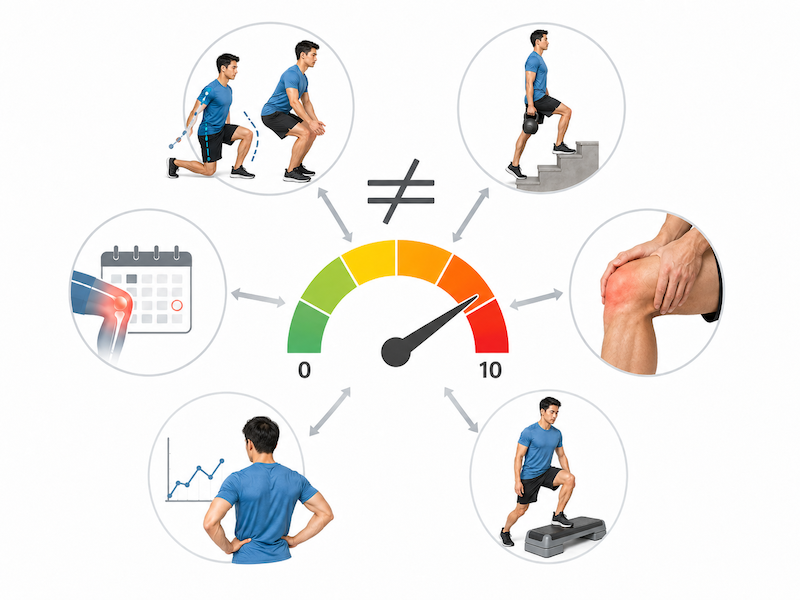
Pain is often measured on a 0-to-10 scale.
That can be useful for tracking symptoms.
But one number does not tell the whole story.
A study involving more than 9,000 postoperative patients found that some people with relatively high pain scores still considered their pain acceptable and were able to perform necessary activities, while others with lower scores did not consider their pain acceptable.⁴
In other words:
Pain Intensity ≠ Function
A more useful assessment also asks:
- Can the person perform the movement?
- Is movement quality deteriorating?
- Is pain acceptable to the individual?
- Does pain interfere with daily activities?
- What happens after the exercise?
- Is function improving over time?
How Much Pain Is “Acceptable”?
There is no universal number such as:
“Anything under 3/10 is safe.”
or
“5/10 is always acceptable.”
Different conditions have different tissue-healing requirements, precautions, and loading tolerances.
Instead of relying only on the number, clinicians and patients can consider the overall symptom response.
During Exercise
- Is the discomfort tolerable?
- Can movement quality be maintained?
- Is pain rapidly escalating?
Immediately After
- Does the symptom begin to settle?
- Is there new substantial swelling or loss of function?
Later and the Next Day
- Are symptoms moving back toward their usual baseline?
- Can the person still manage normal daily activity?
- Is rehabilitation progressing overall rather than repeatedly causing worsening flares?
These are practical monitoring questions—not universal validated cutoffs.
The appropriate response still depends on the diagnosis, stage of healing, procedure, and individual patient.
Chronic Pain Changes the Conversation
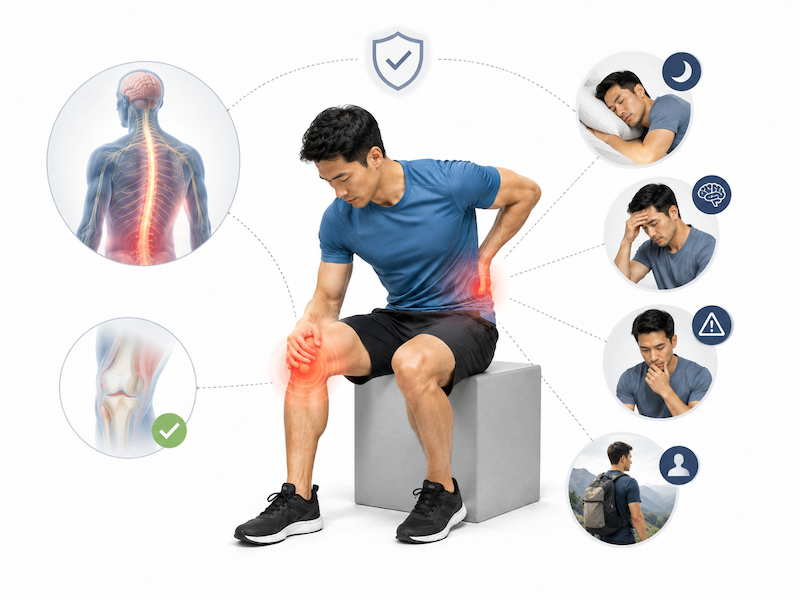
When pain persists for months or years, pain may become less closely related to the current condition of the tissues.
Chronic pain can be influenced by changes in nervous-system sensitivity as well as sleep, stress, fear, previous experiences, and other biological and psychosocial factors.⁵
This does not mean the pain is imagined.
Pain is always a real experience.¹
But it does mean:
Persistent pain does not automatically mean that tissue is continuing to be damaged.
For some people with chronic pain, rehabilitation therefore involves gradually rebuilding safe activity, function, confidence, and tolerance rather than waiting for pain to reach zero before moving.⁵˒⁶
“Working Through Pain” Is Not the Same as Appropriate Loading
Allowing some pain during rehabilitation should never become:
“Just push through it no matter what.”
Exercise should be adjusted according to the person’s response.
Reassessment may be appropriate when pain:
- Rapidly and progressively escalates
- Causes increasing loss of movement or function
- Is accompanied by new major swelling or warmth
- Occurs with new numbness or clear weakness
- Follows a new traumatic event and prevents normal use of the limb
- Continues to worsen from day to day rather than settling with appropriate recovery
The purpose of symptom monitoring is not to create fear.
It is to determine whether the current dose of loading is appropriate.
Acute Injury and Chronic Pain Are Not the Same Situation
Advice such as “it is okay to exercise with some pain” should never be applied blindly.
Following:
- A fracture
- Recent surgery
- Acute ligament injury
- Tendon repair
- Other injuries with specific healing precautions
tissue-protection guidelines and medical restrictions may be extremely important.
By contrast, in persistent musculoskeletal pain, avoiding every activity that causes any discomfort may unnecessarily restrict movement and function.
Therefore:
The meaning of pain depends on the diagnosis, healing stage, and individual context.
There is no single pain rule that works for every rehabilitation patient.
What We Know
Current evidence supports several useful principles:
- Pain and tissue damage are related but are not the same phenomenon.¹
- Temporary pain during rehabilitation is not uncommon.²
- Pain during exercise does not necessarily prevent improvement in chronic musculoskeletal pain.³
- Painful exercise has not been shown to be clearly superior to nonpainful exercise.³
- Pain intensity alone does not adequately describe pain acceptability or physical function.⁴
- Exercise for chronic pain should be individualized and should consider symptom flares and recovery.⁵˒⁶
What We Still Don’t Know
There is no universal answer for:
- The exact pain score that is “safe” for every condition
- How much pain every person should tolerate during rehabilitation
- Who specifically benefits from exercising into pain
- The optimal amount of pain during exercise for an individual
- One universal time rule for how quickly symptoms must settle after exercise
This is why monitoring the individual’s response matters.
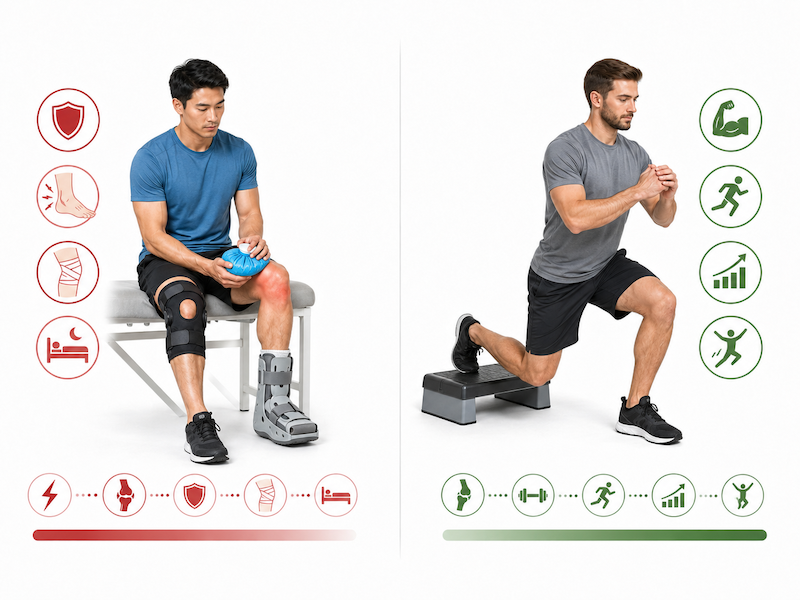
What Athletes, Parents, Coaches, and Trainers Should Know
Some pain during rehabilitation does not automatically mean:
“The injury is getting worse.”
But there is also no reason to assume:
“If it hurts more, the exercise is working better.”
Instead ask:
Is the pain tolerable?
Can the person still move well?
How does the body respond afterward and the next day?
Is function gradually improving over time?
Those questions are usually more meaningful than the pain number alone.
< Take-Home Message >
Pain during rehabilitation is neither something that must always be avoided nor something that should simply be endured.
Pain is important information—but pain intensity alone cannot tell us whether the body is recovering appropriately.
Current evidence suggests that some people can exercise successfully with pain.
It also tells us that creating pain is not necessary for rehabilitation to work.
Good rehabilitation considers:
Pain + Function + Movement + Load + Recovery Response + Change Over Time
The goal of rehabilitation is not to prove how much pain someone can tolerate.
The goal is to safely restore the function that person needs.
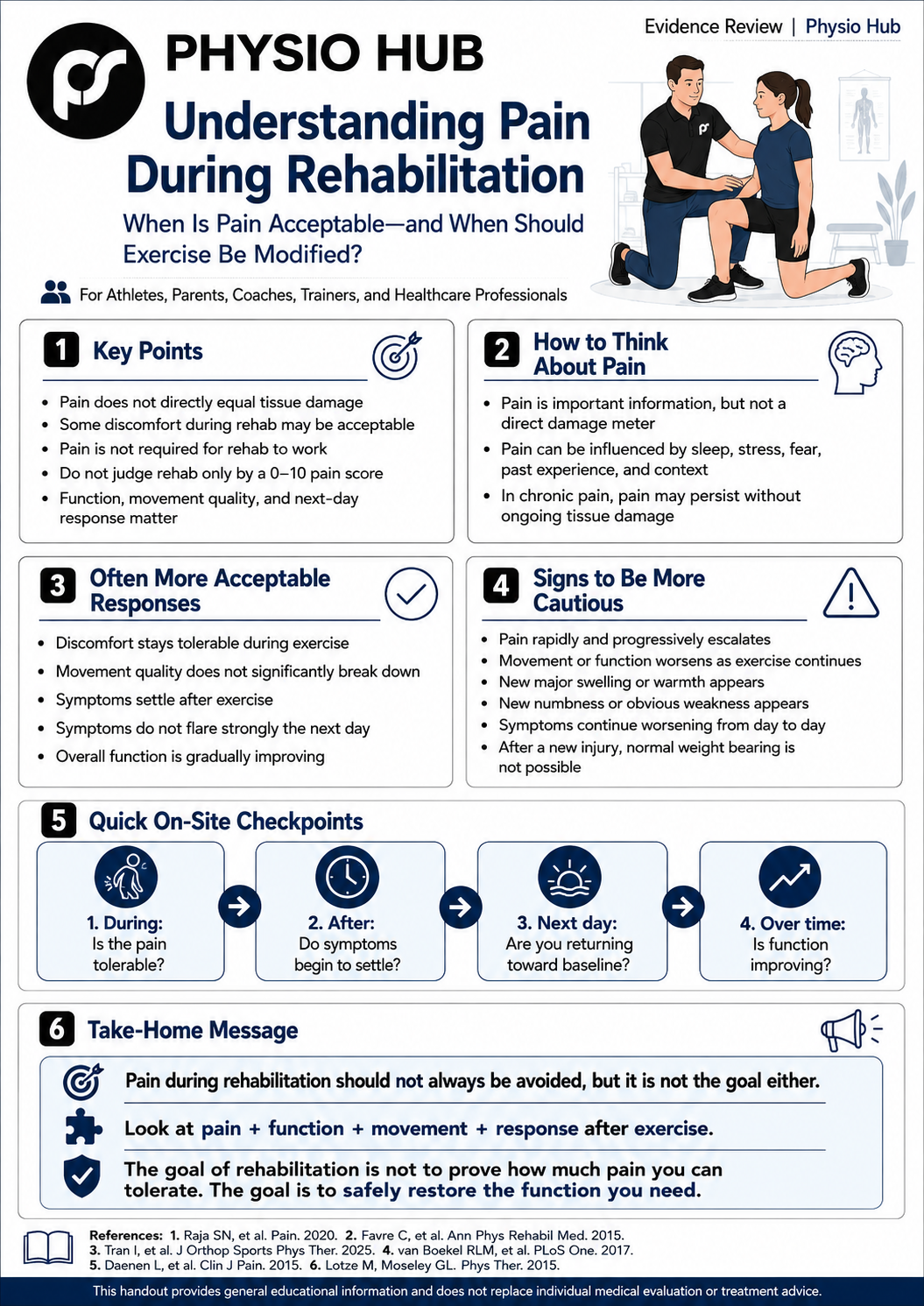
<PDF file>
Read More



< Reference >
- Raja SN, Carr DB, Cohen M, et al. The revised International Association for the Study of Pain definition of pain: concepts, challenges, and compromises. Pain. 2020;161(9):1976-1982. doi:10.1097/j.pain.0000000000001939.
- Favre C, Dériaz O, Hanon R, Luthi F. Care related pain in rehabilitation after orthopedic trauma: an exploratory study with qualitative data. Ann Phys Rehabil Med. 2015;58(3):132-138. doi:10.1016/j.rehab.2014.08.005.
- Tran I, Gibbs MT, Yu N, Powell JK, Smith BE, Jones MD. Effectiveness of painful versus nonpainful exercise on pain intensity, disability, and other patient-reported outcomes in adults with chronic musculoskeletal pain: an updated systematic review with meta-analysis. J Orthop Sports Phys Ther. 2025;55(8):1-11. doi:10.2519/jospt.2025.13253.
- van Boekel RLM, Vissers KCP, van der Sande R, Bronkhorst E, Lerou JGC, Steegers MAH. Moving beyond pain scores: multidimensional pain assessment is essential for adequate pain management after surgery. PLoS One. 2017;12(5):e0177345. doi:10.1371/journal.pone.0177345.
- Daenen L, Varkey E, Kellmann M, Nijs J. Exercise, not to exercise, or how to exercise in patients with chronic pain? Applying science to practice. Clin J Pain. 2015;31(2):108-114. doi:10.1097/AJP.0000000000000099.
- Lotze M, Moseley GL. Theoretical considerations for chronic pain rehabilitation. Phys Ther. 2015;95(9):1316-1320. doi:10.2522/ptj.20140581.
Stay Informed with Physio Hub
Unlock a world of knowledge with our expertly curated articles on fitness, rehabilitation, and health & diet. Stay ahead with the latest evidence-based insights and practical advice. Subscribe now to receive updates and never miss out on new content!