
How to Improve Terminal Knee Extension
A Practical Mobility + Quadriceps Activation Rehabilitation Program
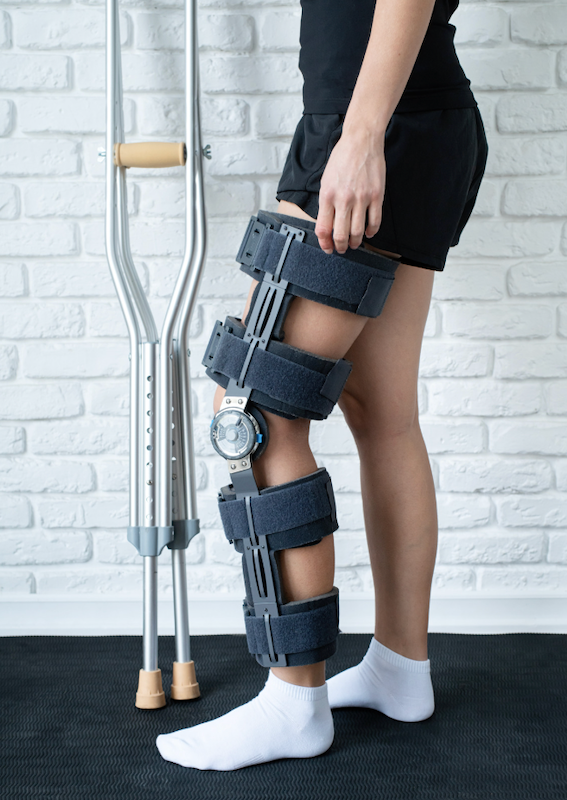
What Is Terminal Knee Extension, and Why Does It Matter?
Terminal knee extension (TKE) is the ability to fully straighten the knee and actively control the knee at end-range extension.
Loss of knee extension is common after knee injury or surgery. Importantly, it is not always caused by a mechanically stiff joint. Contributing factors can include:
- Arthrogenic muscle inhibition (AMI)
- Reduced quadriceps activation
- Hamstring contracture
- Pain
- Swelling
- Altered neuromuscular control¹⁻³
Delaloye et al described how many extension deficits following ACL injury or surgery can result from hamstring contracture and quadriceps inhibition rather than a true mechanical block.¹
Clinically, it is useful to distinguish:
Passive Extension
Can the knee physically reach full extension?
from
Active Extension
Can the patient actively contract the quadriceps and control the knee in full extension?
If passive extension is available but active extension is limited, repeatedly stretching the knee may be less important than restoring quadriceps activation and neuromuscular control.
Early restoration of full knee extension is particularly emphasized after ACL reconstruction because persistent extension loss is associated with quadriceps weakness, gait dysfunction, stiffness, and poorer rehabilitation outcomes.¹,²
How Can It Be Addressed?
Restore Passive Extension
When passive extension is limited, rehabilitation should first restore the available range.
Common strategies include:
- Low-load prolonged extension positioning
- Active-assisted knee flexion-extension
- Superior patellar mobilization when appropriate²
The goal is to repeatedly expose the knee to terminal extension without unnecessarily aggressive force.
Restore Quadriceps Activation
Full extension also requires the quadriceps to actively control the knee.
A commonly described strategy is to place the knee in an extended position and perform repeated quadriceps isometric contractions while observing proximal movement of the patella.¹
Neuromotor-treatment research also supports the concept that improving quadriceps neural activation may help reduce persistent extension deficit related to AMI.³
Integrate Extension Into Weight Bearing
Once passive motion and quadriceps activation improve, terminal extension needs to be incorporated into functional loading.
A practical progression may look like:
Quad Set → Active TKE → Standing TKE → Closed-Chain Loading → Walking
Closed-chain and weight-bearing exercise can then build quadriceps strength and reinforce the ability to use knee extension during functional activity.
Open-chain knee extension can also be useful for quadriceps strengthening. However, after ACL reconstruction, aggressive high-resistance loading near 40° to 0° early in rehabilitation should be progressed carefully because of ACL and patellofemoral loading considerations.⁴
What About Manual Therapy and Swelling?
Adjuncts may include:
- Superior patellar mobilization
- Cryotherapy
- Extension positioning
- Other strategies to reduce pain and swelling
These may help create an environment in which the quadriceps can activate more effectively.
The foundation, however, remains:
restore passive extension + restore active quadriceps control.
A true locked knee, a firm mechanical block, or a persistent extension deficit despite comprehensive rehabilitation warrants further assessment rather than simply adding more TKE exercises.¹,⁵
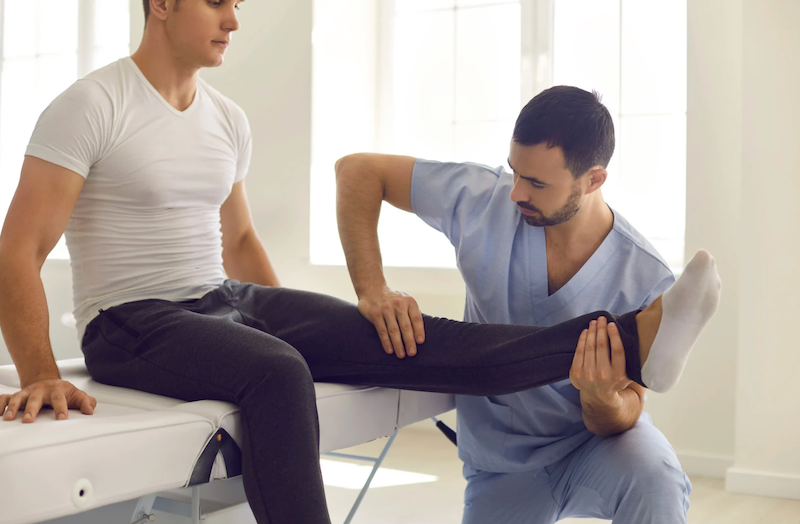
Simple Rehabilitation Program
- Low-Load Knee Extension Positioning
Support the heel and allow the knee to move toward terminal extension.
Goal: Restore passive knee extension.
- Quadriceps Set at Terminal Extension
Contract the quadriceps while the knee is positioned in extension and observe the patella moving proximally.
Goal: Improve quadriceps activation and reduce active extension lag.
- Active-Assisted Flexion to Extension
Move through knee flexion and return actively toward full extension.
Goal: Connect passive mobility with active movement.
- Standing Terminal Knee Extension
Use a resistance band or similar resistance and actively straighten the knee from slight flexion into terminal extension.
Goal: Develop active TKE in weight bearing.
- Closed-Chain Quadriceps Training
Examples:
- Weight shifting
- Mini squat
- Sit-to-stand
- Step-up
Goal: Improve quadriceps strength and use terminal extension during functional loading.
- Gait Practice
Practice achieving appropriate knee extension during stance instead of maintaining a persistently flexed-knee walking pattern.
Goal: Transfer TKE into function.
- Optional: Patellar Mobilization and Symptom Management
Add when mobility restriction, pain, or swelling warrants it.
- Reassess
Monitor:
- Passive extension
- Active extension
- Quadriceps lag
- Quadriceps activation
- Walking pattern
- Pain and swelling
- Functional movement
If passive extension is normal but active extension remains limited, place greater emphasis on quadriceps activation and motor control.
If passive extension remains restricted, mobility work should remain an important part of the program.
< Take-Home Message >
Improving terminal knee extension is not simply about “stretching the knee straight.”
A useful rehabilitation sequence is:
Restore Passive Extension
→ Reactivate the Quadriceps
→ Control Terminal Extension Actively
→ Use It During Weight Bearing and Gait
→ Reassess
A practical TKE program can therefore combine low-load extension positioning, quadriceps activation, active terminal knee extension, closed-chain strengthening, and functional gait practice, while adjusting the emphasis depending on whether the primary limitation is passive mobility or active quadriceps control.¹⁻⁴
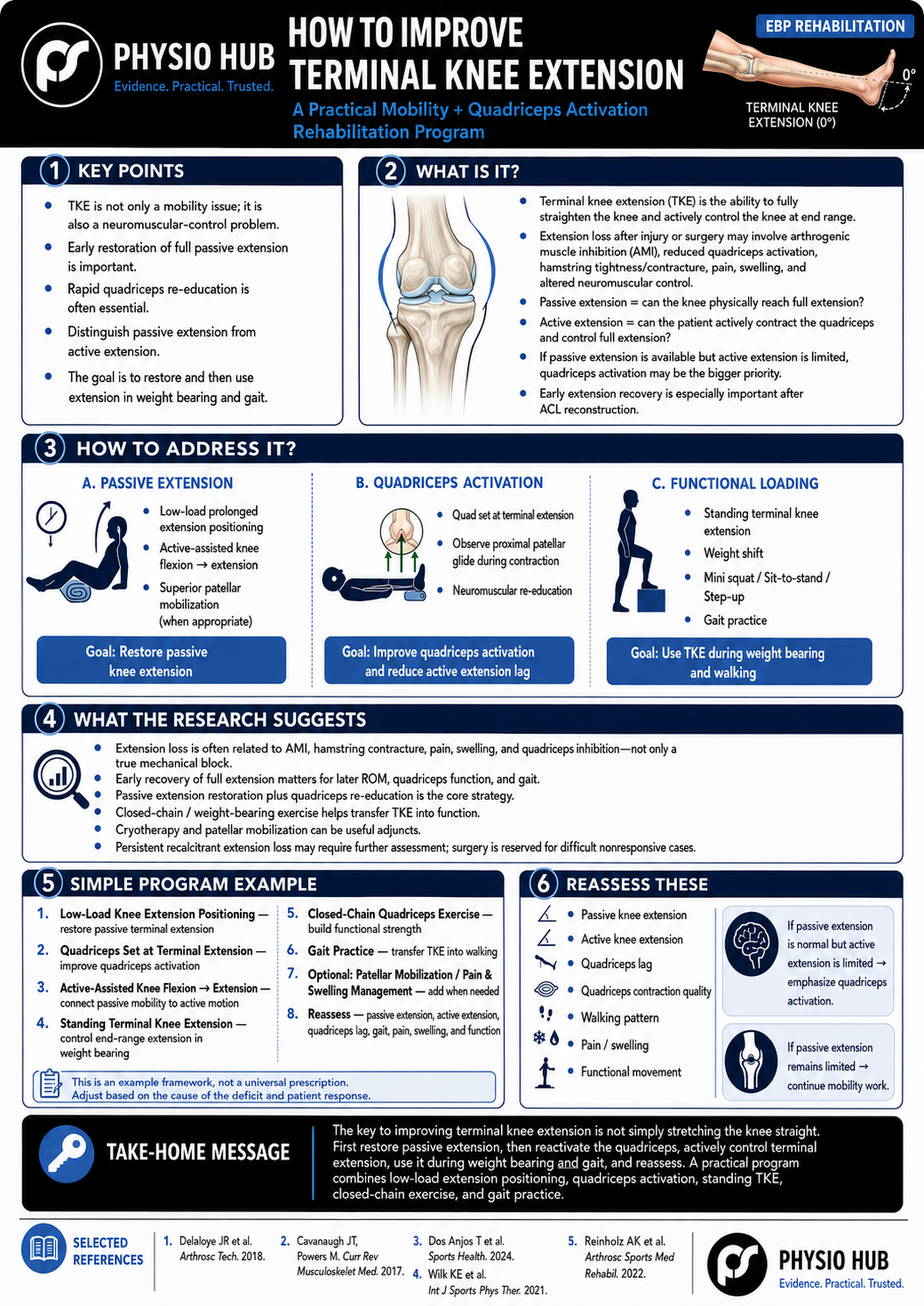
< PDF file>
< Reference >
- Delaloye JR, Murar J, González Sánchez M, et al. How to rapidly abolish knee extension deficit after injury or surgery: a practice-changing video pearl from the Scientific Anterior Cruciate Ligament Network International (SANTI) Study Group. Arthrosc Tech. 2018;7(6):e601-e605. doi:10.1016/j.eats.2018.02.006.
- Cavanaugh JT, Powers M. ACL rehabilitation progression: where are we now? Curr Rev Musculoskelet Med. 2017;10(3):289-296. doi:10.1007/s12178-017-9426-3.
- Dos Anjos T, Gabriel F, Dutra Vieira T, Hopper GP, Sonnery-Cottet B. Neuromotor treatment of arthrogenic muscle inhibition after knee injury or surgery. Sports Health. 2024;16(3):383-389. doi:10.1177/19417381231169285.
- Wilk KE, Arrigo CA, Bagwell MS, Finck AN. Considerations with open kinetic chain knee extension exercise following ACL reconstruction. Int J Sports Phys Ther. 2021;16(1):282-284. doi:10.26603/001c.18983.
- Reinholz AK, Song BM, Wilbur RR, et al. Arthroscopic posterior capsular release effectively reduces pain and restores terminal knee extension in cases of recalcitrant flexion contracture. Arthrosc Sports Med Rehabil. 2022;4(4):e1409-e1415. doi:10.1016/j.asmr.2022.04.030.