
Pull-Up
A Foundational Bodyweight Exercise for Upper-Body Pulling Strength and Shoulder-Girdle Control
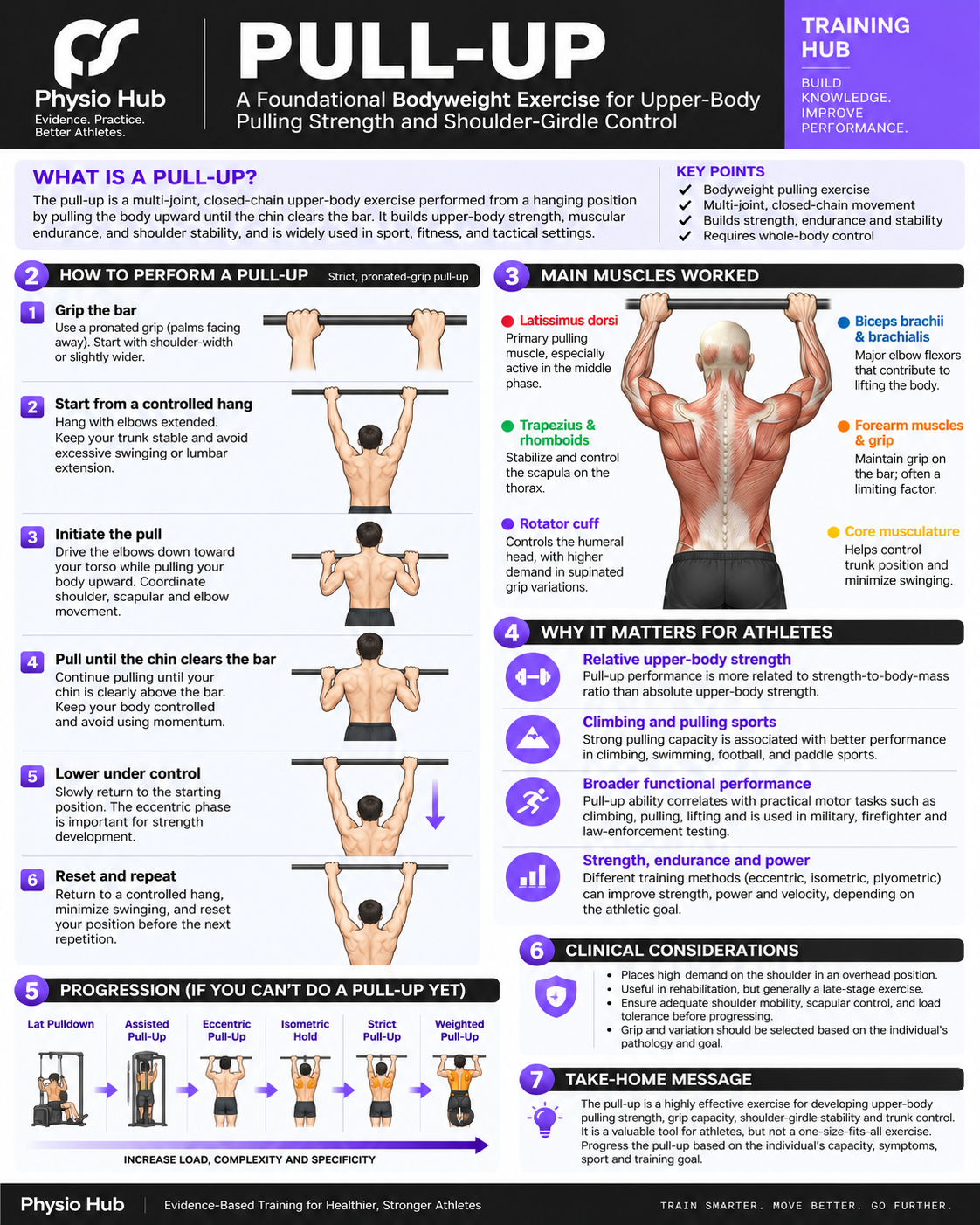
The Pull-Up is a multi-joint, closed-chain upper-body exercise in which the athlete suspends from an overhead bar and pulls the body upward against body weight.¹
It places substantial demands on the latissimus dorsi, biceps brachii, brachialis, and forearm musculature, while scapular stabilizers, rotator cuff muscles, and trunk musculature contribute to controlling the shoulder girdle and body throughout the movement.²˒³
The Pull-Up is therefore more than a “back exercise.”
It trains the athlete to control the entire body while producing substantial pulling force through fixed hands in an overhead position.
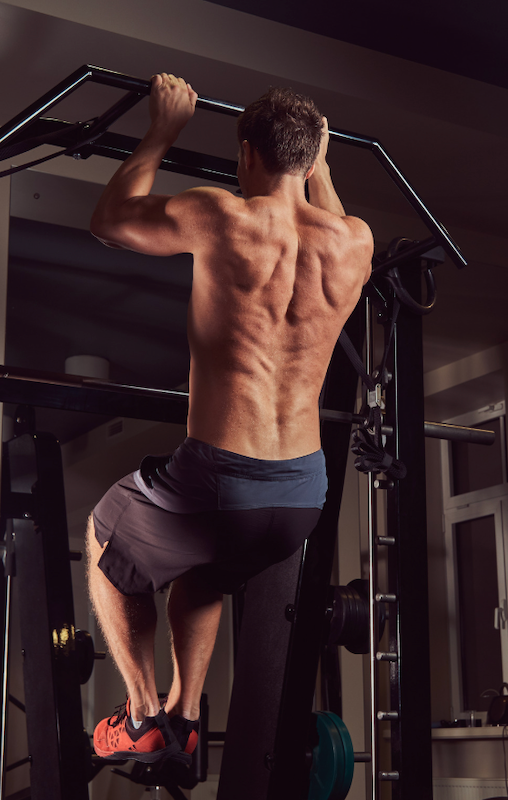
Exercise Overview
A standard strict Pull-Up begins from an overhead hang with a pronated grip.
The athlete:
- Starts with the elbows extended.
- Maintains control of the trunk and lower extremities.
- Pulls the body upward.
- Continues until the chin clears the bar.
- Lowers under control to the starting position.¹
Biomechanical analysis demonstrates that the exercise requires coordinated movement and alignment across the shoulders, elbows, trunk, and eventually even the lower extremities as fatigue increases.¹
For this article, Pull-Up refers primarily to the strict pronated-grip Pull-Up, rather than the chin-up or kipping Pull-Up.
How to Perform the Pull-Up
Step 1 | Grip the Bar
Use a pronated grip with the palms facing away.
A reasonable starting position is approximately shoulder width or slightly wider.
Grip width can be modified later according to the training goal.
Step 2 | Establish a Controlled Hang
Begin with the elbows extended and the body positioned beneath the bar.
Maintain enough trunk tension to limit unnecessary:
- Lumbar extension
- Rotation
- Leg swinging
- Side-to-side motion
The shoulder blades do not need to be forcefully “pinned down.”
Instead, maintain controlled scapulohumeral positioning in the overhead position.
Step 3 | Initiate the Pull
Begin pulling the body upward by driving the elbows generally down toward the torso.
The movement requires coordinated shoulder motion, scapular control, and elbow flexion.
Musculoskeletal modeling suggests that trapezius, infraspinatus, and brachialis contribute strongly early in the movement, while the latissimus dorsi and biceps become particularly important through the middle portion.³
Step 4 | Bring the Chin Above the Bar
Continue until the chin clearly passes the bar.¹
Avoid achieving the position by aggressively craning the neck forward.
The torso and lower extremities should remain controlled rather than using momentum to complete the repetition.
Step 5 | Lower Under Control
Slowly return toward the starting position.
Allow the elbows to progressively extend while controlling the shoulder girdle and trunk.
The eccentric phase is part of the exercise—not simply a passive drop.
Step 6 | Reset
Return to the controlled bottom position.
Minimize excessive swing before initiating the next repetition.
Biomechanical data show that compensatory lower-extremity motion can progressively increase with fatigue, reinforcing the value of stopping a set when movement quality meaningfully deteriorates.¹
What Muscles Does the Pull-Up Train?
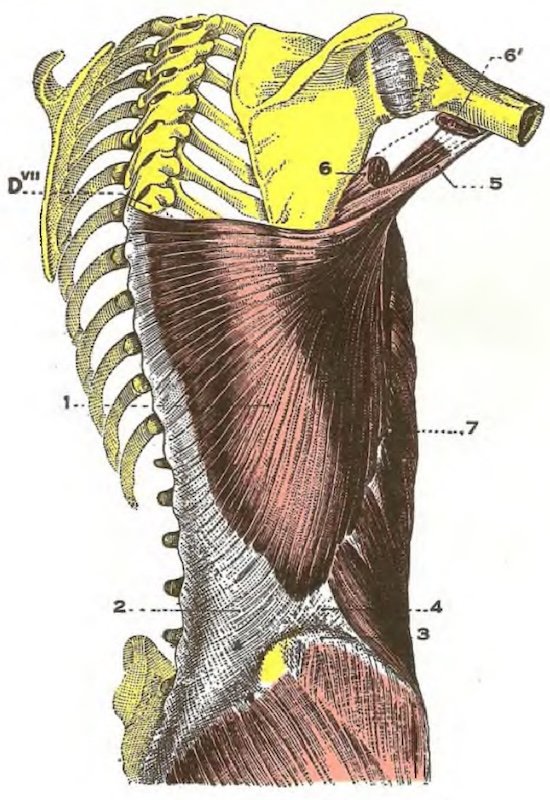
Latissimus Dorsi
The latissimus dorsi is one of the principal muscles responsible for producing the pulling action.
It contributes strongly to movement of the humerus relative to the trunk and is highly involved through the middle portion of the Pull-Up.³
Wide-grip Pull-Ups appear to place a relatively greater proportion of muscular demand on the latissimus dorsi and other back musculature.³
Biceps Brachii and Brachialis
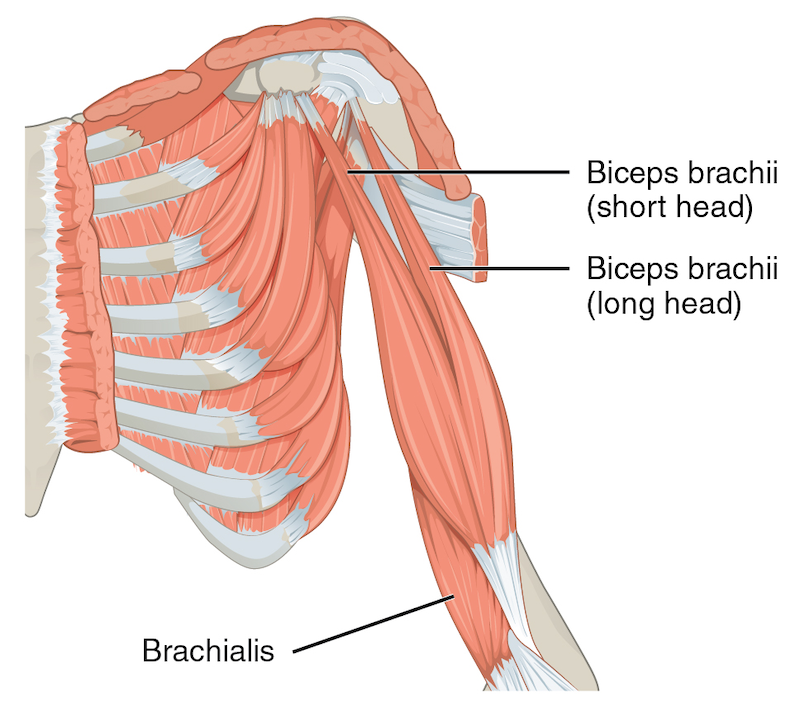
Substantial elbow flexion is required to elevate the body.
The biceps brachii and brachialis therefore make important contributions.
In one biomechanical model, the standard front pronated Pull-Up placed relatively greater emphasis on these muscles than wide- or reverse-grip variants.³
Forearms and Grip
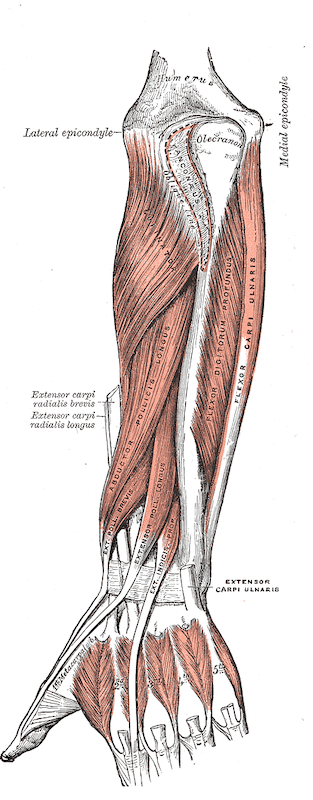
The athlete must support the entire body through the hands.
Grip capacity can therefore become a performance-limiting factor.
An 8-week study found that adding specific forearm training to Pull-Up training produced greater improvements in Pull-Up repetitions, grip strength, and dead-hang time than adding specific core training in physically inactive men.²
This highlights an important practical point:
Poor Pull-Up performance is not always simply a weak-back problem.
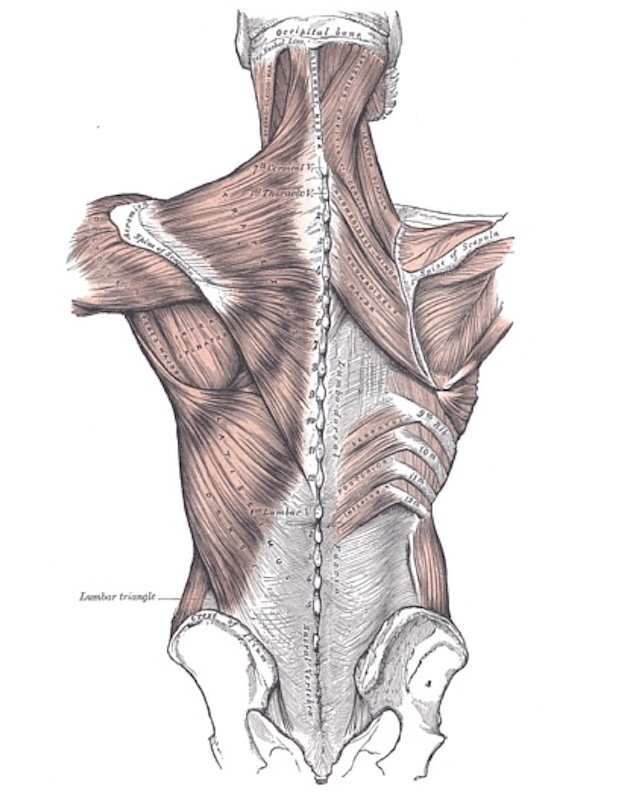
Scapular Stabilizers
The trapezius, rhomboids, serratus anterior, and other scapular muscles help position and control the scapula under substantial load.³
The fixed-hand nature of the Pull-Up creates a demanding closed-chain environment for shoulder-girdle stability.
Rotator Cuff
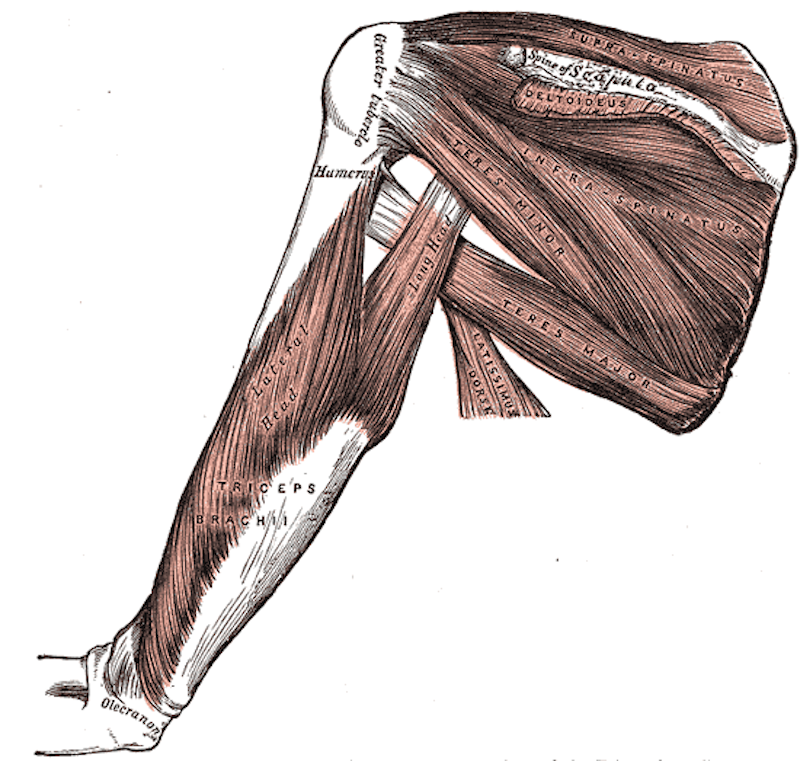
The rotator cuff contributes to glenohumeral control as the body moves through a large overhead range.
Grip selection influences this demand.
A musculoskeletal-modeling study found the greatest proportional rotator cuff loading during the reverse/supinated variant compared with standard front and wide pronated Pull-Ups.³
Core Musculature
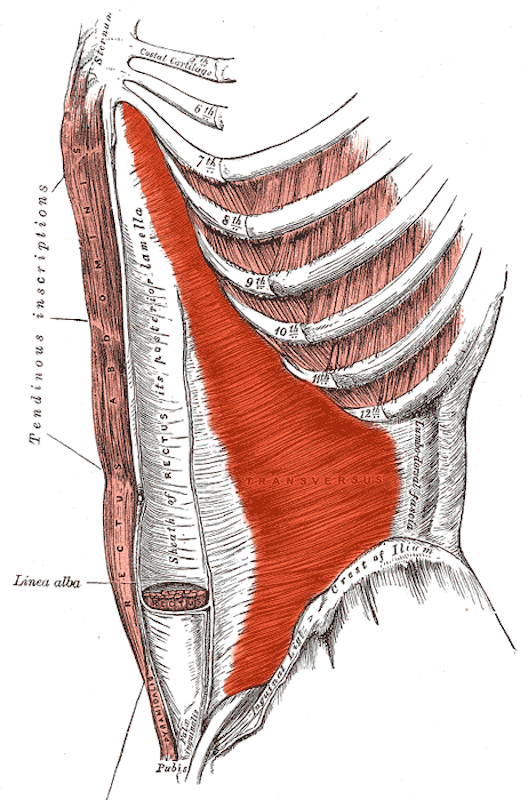
The trunk muscles help maintain alignment and minimize unwanted body swing.²˒¹⁰
The Pull-Up can therefore be considered both an:
upper-body pulling exercise and a suspended trunk-control exercise.
Clinical and Rehabilitation Relevance
Grip is not merely personal preference.
Musculoskeletal modeling found meaningful differences among common variations:³
Wide Pronated Grip
Relatively greater loading of the latissimus dorsi, trapezius, and rhomboid musculature.
Front Pronated Grip
Relatively greater biceps brachii and brachialis contribution.
Reverse / Supinated Grip
Greater proportional rotator cuff loading.
Therefore, the practical question is not:
“Which grip is best?”
It is:
“Which loading profile best matches the athlete’s current goal and tissue tolerance?”
Grip Selection Changes the Exercise
Observing squat performance can provide useful information regarding:
- Mobility
- Balance
- Movement strategy
- Asymmetry
- Load tolerance
Research in bodybuilders has demonstrated associations between broader functional-movement quality and Back Squat performance quality.¹⁰
However, squat appearance should not be treated as a stand-alone injury-prediction test.
Similarly, collegiate athletes who later sustained lower-extremity injury demonstrated lower relative Back Squat strength in one retrospective study, but population-specific cutoffs should not be generalized as universal injury thresholds.¹¹
What If the Athlete Cannot Perform a Pull-Up Yet?
The athlete does not need to repeatedly fail full bodyweight Pull-Ups.
A progression may include:
Lat Pulldown
↓
Assisted Pull-Up
↓
Eccentric Pull-Up
↓
Isometric Holds
↓
Strict Pull-Up
↓
Weighted or Explosive Pull-Up
Alternative pulling exercises can train many of the same major muscle groups while allowing resistance to be scaled appropriately.⁹⁻¹¹
Strict Pull-Up vs Kipping Pull-Up
A Kipping Pull-Up intentionally incorporates substantial trunk and lower-extremity movement to generate momentum.
Research demonstrates meaningful differences in kinematics and muscle-activation patterns between strict and kipping Pull-Ups.⁸
Kipping therefore may be appropriate as a whole-body repetitive sporting skill, but it should not be interpreted as identical to a strict Pull-Up when the goal is to evaluate or train upper-body pulling capacity.
Why It Matters for Athletes
Relative Upper-Body Strength
A major feature of the Pull-Up is that resistance is determined largely by the athlete’s own body mass.
In trained men, Pull-Up repetitions were negatively associated with body mass, lean mass, and fat mass and were not significantly related to absolute lat-pull 1RM.⁴
Performance on a lat-pull test loaded relative to body mass was much more closely related to Pull-Up performance.⁴
The Pull-Up therefore represents an excellent example of:
strength relative to body mass rather than absolute strength alone.
Pulling and Climbing Performance
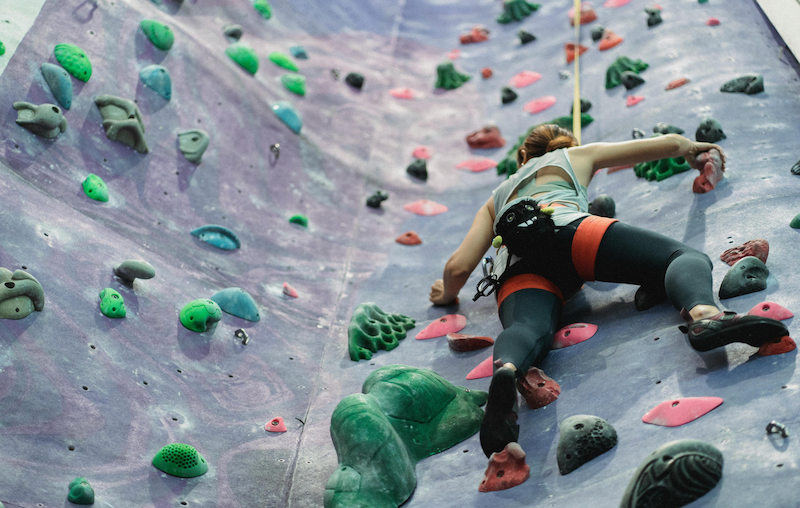
The exercise has particularly clear relevance to sports in which athletes must repeatedly pull or elevate their body.
In trained climbers, 5 weeks of eccentric, isometric, or plyometric Pull-Up training improved maximal strength, while the magnitude of velocity and power adaptation depended on the contraction method used.⁵
This reinforces the principle that training should match the required athletic quality:
Strength ≠ Endurance ≠ Power.
Practical Progression
Lat Pulldown / Assisted Pull-Up
↓
Dead Hang + Scapular Control
↓
Eccentric Pull-Up
↓
Strict Pull-Up
↓
Higher-Repetition Pull-Up
↓
Weighted Pull-Up
↓
Explosive / Sport-Specific Pulling
Once an athlete can perform strict repetitions, progression should match the objective:
Strength → add resistance
Endurance → increase quality volume
Power → increase movement velocity
Sport transfer → integrate sport-specific pulling demands
< Take-Home Message >
The Pull-Up is a high-demand bodyweight exercise that develops upper-body pulling strength, grip capacity, shoulder-girdle stability, and trunk control.
Its major contributors include the:
latissimus dorsi, biceps brachii, brachialis, and forearm musculature, with the scapular stabilizers, rotator cuff, and trunk muscles playing important supporting roles.²˒³
For athletes, one of its defining features is that performance reflects relative strength: the athlete must move his or her own body mass rather than simply move an external resistance.⁴
The Pull-Up is therefore a valuable exercise, but not a one-size-fits-all exercise.
Grip, loading, assistance, repetition target, and movement speed should be selected according to the athlete’s capacity, symptoms, sport, and training goal.
The goal is not merely to:
“do more Pull-Ups.”
It is to develop the pulling strength and shoulder control required for the athlete’s actual functional and sporting demands.
< PDF file>
< Reference >
- Garavaglia L, Romanò J, Lazzari F, Pittaccio S. Biomechanical characterisation of the pull-up exercise. Sport Sci Health. 2024;20:221-234. doi:10.1007/s11332-023-01097-1.
- Sepehri Rahnama H, Ganji S, Vadasz K, Prokai J. Comparative effects of core versus forearm training on pull-up repetition performance in physically inactive males. Sports (Basel). 2025;13(12):433. doi:10.3390/sports13120433.
- Urbanczyk CA, Prinold JAI, Reilly P, Bull AMJ. Avoiding high-risk rotator cuff loading: muscle force during three pull-up techniques. Scand J Med Sci Sports. 2020;30(11):2205-2214. doi:10.1111/sms.13780.
- Sánchez-Moreno M, Pareja-Blanco F, Díaz-Cueli D, González-Badillo JJ. Determinant factors of pull-up performance in trained athletes. J Sports Med Phys Fitness. 2016;56(7-8):825-833.
- Vigouroux L, Devise M. Pull-Up performance is affected differently by the muscle contraction regimens practiced during training among climbers. Bioengineering (Basel). 2024;11(1):85. doi:10.3390/bioengineering11010085.
- Wright AA, Hegedus EJ, Tarara DT, Ray SC, Dischiavi SL. Exercise prescription for overhead athletes with shoulder pathology: a systematic review with best evidence synthesis. Br J Sports Med. 2018;52(4):231-237. doi:10.1136/bjsports-2016-096915.
- Borms D, Ackerman I, Smets P, Van den Berge G, Cools AM. Biceps disorder rehabilitation for the athlete: a continuum of moderate- to high-load exercises. Am J Sports Med. 2017;45(3):642-650. doi:10.1177/0363546516674190.
- Dinunzio C, Porter N, Van Scoy J, Cordice D, McCulloch RS. Alterations in kinematics and muscle activation patterns with the addition of a kipping action during a pull-up activity. Sports Biomech. 2019;18(6):622-635. doi:10.1080/14763141.2018.1452971.
- Li Q, Yan J, Qiao M, et al. Eight-week lat pull-down resistance training with joint instability leads to superior pull-up endurance performance and reduced antagonist coactivation in recreationally active male college students. Eur J Sport Sci. 2025;25(1):e12243. doi:10.1002/ejsc.12243.
- Hewit JK, Jaffe DA, Crowder T. A comparison of muscle activation during the pull-up and three alternative pulling exercises. J Phys Fit Treat Sports. 2018;5(4):555669. doi:10.19080/JPFMTS.2018.05.555669.
- Lorenzetti S, Dayer R, Plüss M, List R. Pulling exercises for strength training and rehabilitation: movements and loading conditions. J Funct Morphol Kinesiol. 2017;2(3):33. doi:10.3390/jfmk2030033.