
Back Squat
A Foundational Compound Exercise for Lower-Body Strength and Athletic Force Production
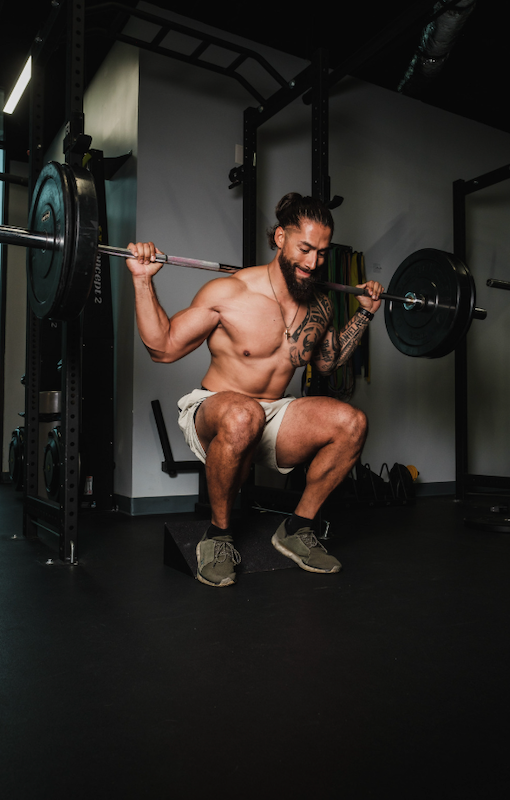
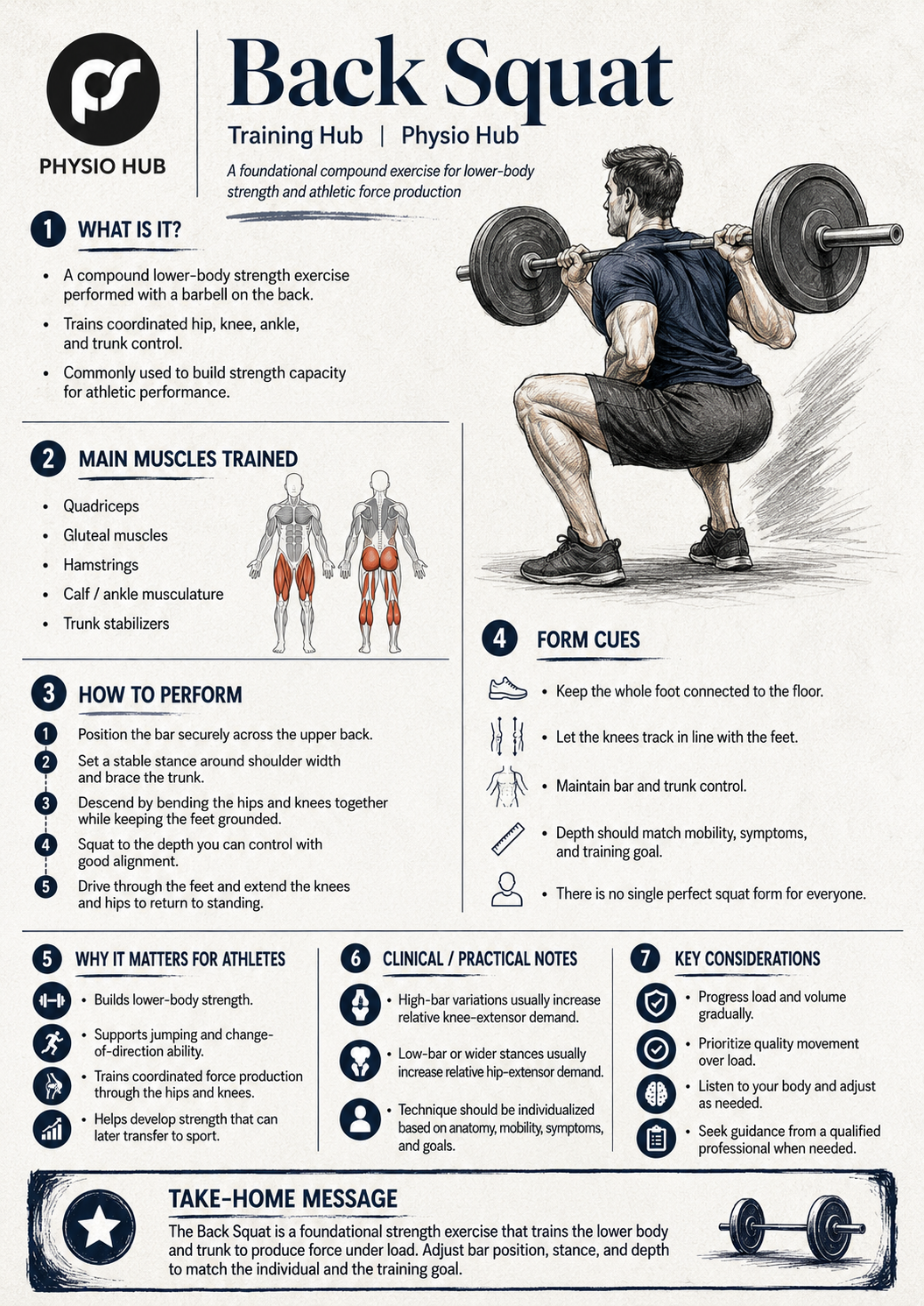
The Back Squat is a multijoint resistance exercise performed with a barbell positioned across the posterior shoulder region while the athlete coordinates motion at the hips, knees, ankles, and trunk to descend and return to standing.¹˒²
It places substantial demands on the quadriceps and gluteal muscles, while the hamstrings, calf musculature, and trunk stabilizers also contribute to the movement. Rather than isolating one muscle, the Back Squat trains the lower extremities and trunk to produce and control force as an integrated system.¹
Exercise Overview
During the descending phase of a Back Squat, the hips, knees, and ankles flex while the athlete controls the external load.
During the ascending phase, coordinated hip and knee extension returns the athlete to standing.
The movement therefore integrates:
Hip + Knee + Ankle + Trunk Control
under progressively loadable resistance.
This is one reason free-weight squats remain widely used in strength and conditioning: they provide a scalable method of developing lower-extremity force-producing capacity that can support many athletic tasks.¹
How to Perform the Back Squat
Many technically valid Back Squat styles exist.
The following represents a general high-bar Back Squat setup, not a single mandatory technique for every athlete.
Step 1 | Position the Bar
Step under the bar and position it securely across the upper trapezius region.
Create sufficient upper-back tension to keep the bar stable.
Unrack the bar and take the minimum number of controlled steps necessary to establish the stance.
High Bar vs Low Bar
Bar position changes the mechanics of the squat.
A high-bar/narrower-stance strategy tends to create relatively greater knee-extensor demands, whereas low-bar and wider-stance variations tend to shift a larger proportion of the total joint moment toward the hips.³
Step 2 | Establish the Stance
Begin approximately around shoulder width, then adjust based on the athlete’s anatomy and comfort.
Allow the feet to turn outward enough that the knees can move naturally over the feet.
There is no universally optimal stance width.
Wider stances alter both sagittal- and frontal-plane hip and knee kinetics and generally increase the hip-to-knee extension-moment relationship.³˒⁴
Step 3 | Brace the Trunk
Before descending, create sufficient trunk stiffness to control the bar and pelvis.
The purpose of bracing is not simply to “squeeze the abs as hard as possible.”
The athlete needs enough trunk stiffness to maintain control under the selected load while still executing the movement effectively.
Step 4 | Descend
Flex the hips and knees together while allowing the ankles to dorsiflex.
Maintain:
- Stable foot contact
- Controlled knee alignment
- Balanced left-to-right loading
- Stable bar position
- Appropriate trunk control
The knees do not need to remain behind the toes.
Changing tibial and trunk position changes the distribution of joint moments, meaning that different squat strategies can be intentionally selected for different clinical or training goals.²
Step 5 | Reach the Appropriate Depth
Descend to the depth that matches the athlete’s:
mobility + symptoms + training goal + ability to maintain control.
Parallel or deeper squats are frequently used in strength training when tolerated.
A randomized training study found that full-depth squat training produced greater neuromuscular and functional adaptations than half- or quarter-squat training across several outcomes.⁵
That finding does not mean every athlete must squat to maximal depth.
Depth is a programming variable, not a universal rule.
Step 6 | Ascend
Drive through the feet and extend the knees and hips together.
Maintain control of the:
- Trunk
- Pelvis
- Knees
- Bar path
until returning to a stable standing position.
Then reset before beginning the next repetition.
Key Technique Principle
There is no single visually identical “perfect squat” for every person.
Trunk inclination, stance width, foot rotation, tibial position, and squat depth all influence joint loading and muscular demands.²
The better question is:
Does this squat strategy match the athlete’s anatomy, symptoms, goals, and loading capacity?
What Muscles Does the Back Squat Train?
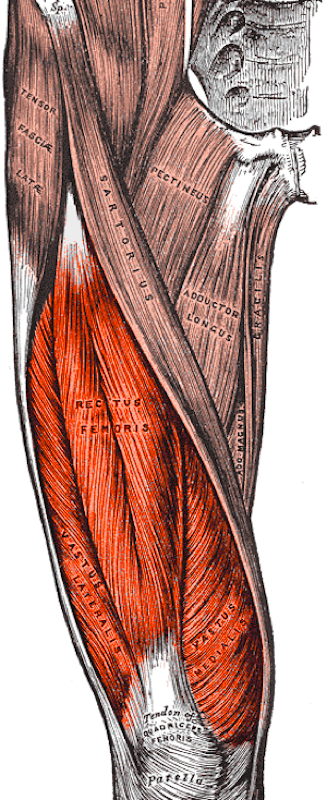
Quadriceps
The quadriceps provide substantial knee-extension torque during the ascent and eccentrically control knee flexion during the descent.
More upright, high-bar and relatively narrower-stance strategies can increase the relative knee-extensor contribution.³
Gluteal Muscles
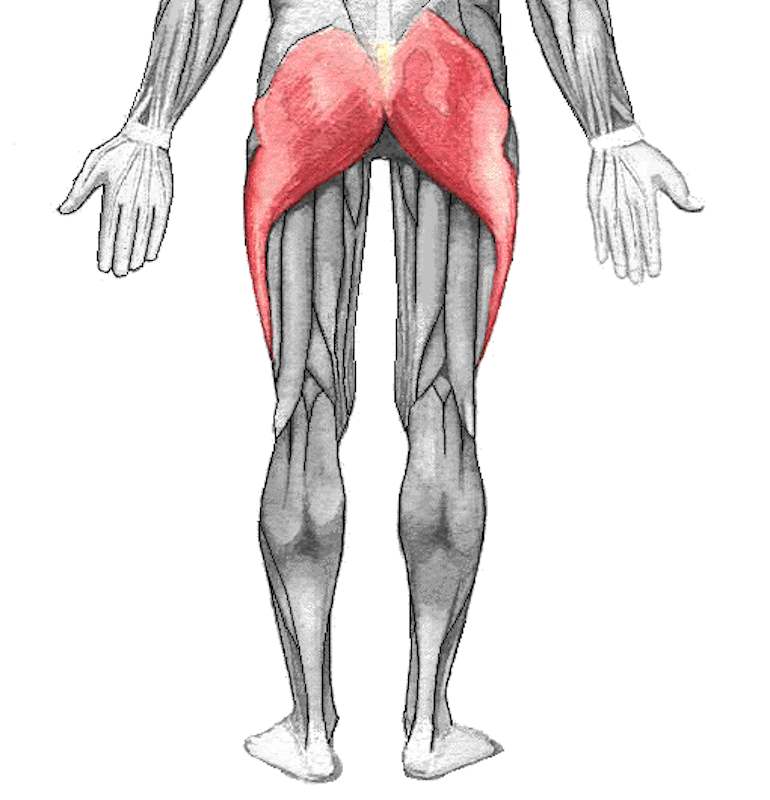
The gluteal muscles—particularly the gluteus maximus—contribute strongly to hip extension during the ascent.
Variations that increase hip flexion moment or shift loading toward the hip can increase the relative demand placed on the hip extensors.²⁻⁴
Hamstrings
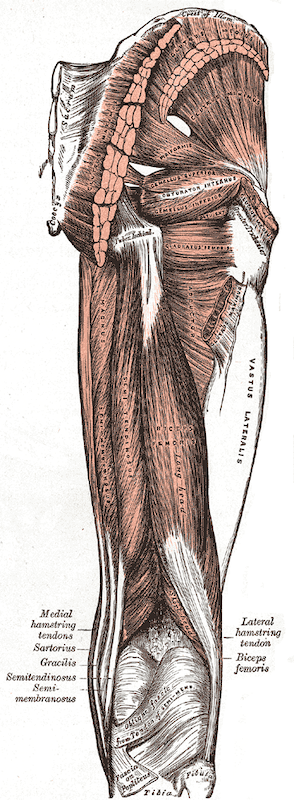
The hamstrings contribute to hip and knee control and participate in stabilizing the lower extremity during squatting.
However, the Back Squat should not be viewed as a highly selective hamstring exercise in the same way as a Nordic Hamstring Curl or isolated knee-flexion exercise.
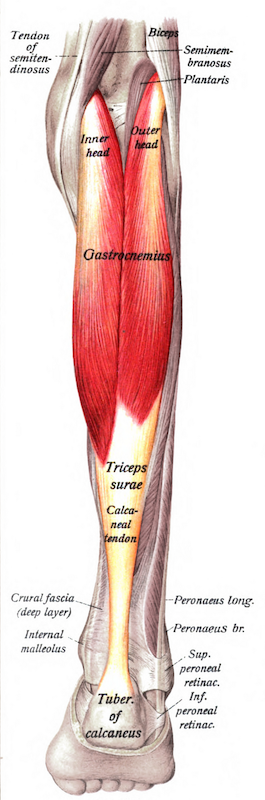
Calf and Ankle Musculature
The ankle plantar-flexor complex and surrounding musculature contribute to controlling ankle position and the interaction between the foot and ground.
Ankle mobility and footwear can influence squat kinematics, including available dorsiflexion.⁶˒⁷
Trunk Musculature
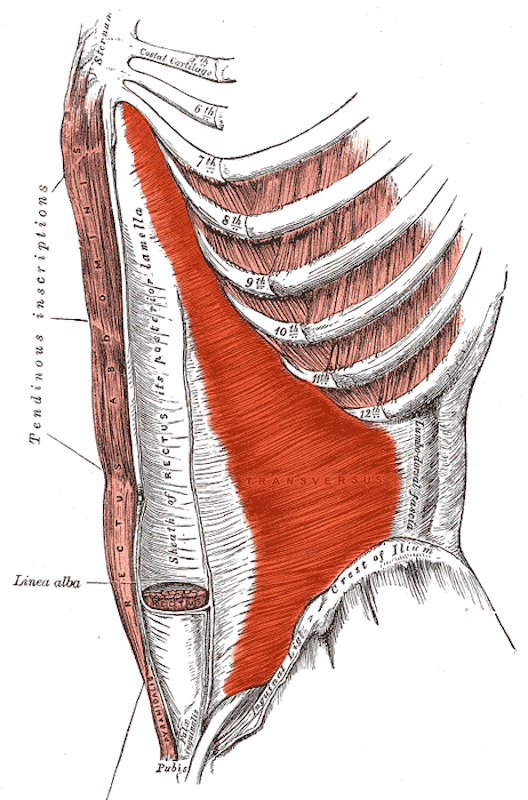
The spinal extensors and abdominal musculature help control trunk position against the external moment created by the barbell.
The Back Squat is therefore both a:
lower-extremity strength exercise and a loaded trunk-control task.
Clinical and Rehabilitation Relevance
One of the Back Squat’s major clinical advantages is its modifiability.
Changing the squat can intentionally redistribute mechanical demand.
A more upright strategy can relatively emphasize the knee extensors.
A greater forward trunk inclination, low-bar position, or wider stance can increase the relative hip-extensor demand.²⁻⁴
This allows clinicians and coaches to treat the squat as a load-distribution tool, not simply one fixed exercise.
Can the Back Squat Be Used as an Assessment?
Observing squat performance can provide useful information regarding:
- Mobility
- Balance
- Movement strategy
- Asymmetry
- Load tolerance
Research in bodybuilders has demonstrated associations between broader functional-movement quality and Back Squat performance quality.¹⁰
However, squat appearance should not be treated as a stand-alone injury-prediction test.
Similarly, collegiate athletes who later sustained lower-extremity injury demonstrated lower relative Back Squat strength in one retrospective study, but population-specific cutoffs should not be generalized as universal injury thresholds.¹¹
Individual Anatomy Matters
Anthropometry and mobility influence how people squat.
Research has examined relationships between ankle dorsiflexion, lumbopelvic movement, lower-limb morphology, squat depth, and performance.¹²˒¹³
Therefore, two athletes can perform technically effective squats while displaying different:
- Stance widths
- Toe angles
- Trunk inclinations
- Squat depths
The goal is not to force every athlete into identical geometry.
Why It Matters for Athletes
Develops Lower-Body Strength
The clearest training adaptation from Back Squat training is improved lower-extremity strength.
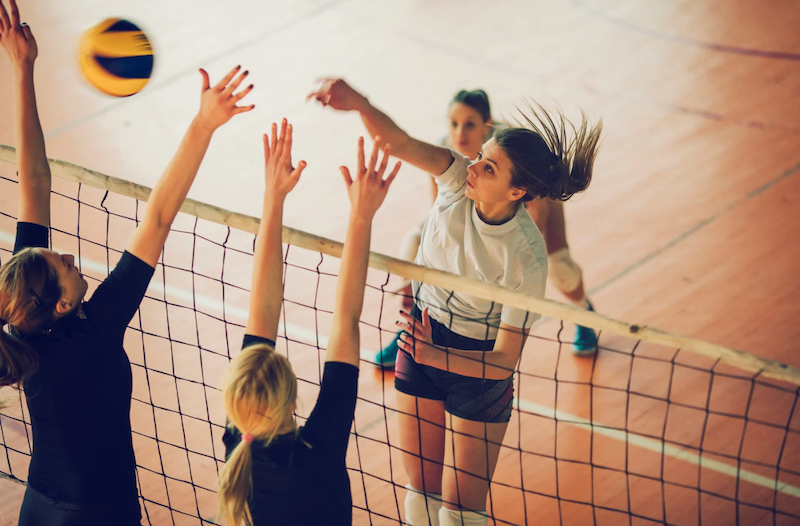
Free-weight squatting is widely used in sports because increasing force-producing capacity can support the physical qualities underlying jumping, acceleration, and change of direction.¹
Jump and Agility Performance
In female high-school soccer players, six weeks of in-season Back Squat training improved:
- Back Squat strength
- Vertical jump
- Broad jump
- Ball-kicking distance
- Pro-agility performance⁸
However, the same study found no improvement in 36.6-m sprint performance.
This is an important reminder:
Getting stronger in the Back Squat does not automatically improve every athletic skill.
Training Transfer Is Specific
Another study in adolescent female soccer players found improvements following both Back Squat and Hip Thrust training, but the pattern of transfer differed between exercises.⁹
Strength exercises therefore develop capacity, while sprinting, jumping, cutting, and sport-specific training are still needed to express that capacity effectively.
Practical Progression
Bodyweight Squat
↓
Goblet Squat
↓
Light High-Bar Back Squat
↓
Progressively Loaded Back Squat
↓
Heavy / Velocity-Specific Squatting
↓
Jumping, Sprinting, Cutting, and Sport-Specific Training
The Back Squat develops strength capacity.
Athletic training still needs to teach the athlete to express that capacity at the velocity, direction, and coordination demands of sport.
< Take-Home Message >
The Back Squat is a foundational compound exercise that develops the ability to produce force through the hips, knees, ankles, and trunk under external load.¹˒²
It places major demands on the quadriceps and gluteal muscles, while the hamstrings, ankle musculature, and trunk stabilizers contribute to the integrated movement.
For athletes, Back Squat training can improve lower-body strength and support qualities such as jumping and change-of-direction performance, but improvements do not automatically transfer to every sport-specific outcome.⁸˒⁹
Most importantly, there is no single Back Squat technique that is universally optimal.
**Bar position, stance, depth, trunk angle, mobility, load, and the athlete’s individual anatomy all influence the exercise.**²⁻⁴˒¹²
The goal is not simply to produce a “perfect-looking squat.”
It is to use the squat to safely and progressively build the strength and force-producing capacity that the athlete ultimately needs to express in sport.
< PDF file>
< Reference >
- Stone MH, Hornsby WG, Mizuguchi S, Sato K, Gahreman D, Duca M, et al. The use of free weight squats in sports: a narrative review—squatting movements, adaptation, and sports performance: physiological. J Strength Cond Res. 2024;38(8):1494-1508. doi:10.1519/JSC.0000000000004838.
- Straub RK, Powers CM. A biomechanical review of the squat exercise: implications for clinical practice. Int J Sports Phys Ther. 2024;19(4):490-501. doi:10.26603/001c.94600.
- Larsen S, Kristiansen E, Helms E, van den Tillaar R. Effects of stance width and barbell placement on kinematics, kinetics, and myoelectric activity in back squats. Front Sports Act Living. 2021;3:719013. doi:10.3389/fspor.2021.719013.
- Lahti J, Hegyi A, Vigotsky AD, Ahtiainen JP. Effects of barbell back squat stance width on sagittal and frontal hip and knee kinetics. Scand J Med Sci Sports. 2019;29(1):44-54. doi:10.1111/sms.13305.
- Pallarés JG, Cava AM, Courel-Ibáñez J, González-Badillo JJ, Morán-Navarro R. Full squat produces greater neuromuscular and functional adaptations and lower pain than partial squats after prolonged resistance training. Eur J Sport Sci. 2020;20(1):115-124. doi:10.1080/17461391.2019.1612952.
- Berglund L, Öhberg F, Strömbäck E, Papacosta D. Are anthropometric measures, range of motion, or movement control tests associated with lumbopelvic flexion during barbell back squats? Int J Sports Phys Ther. 2024;19(9):1097-1107. doi:10.26603/001c.122637.
- Arlettaz ME, Dorsch LN, Sganga M, Booth ND, Farabello JS. Kinematic variations in the barbell back squat under different footwear conditions in female college athletes. J Sports Med Phys Fitness. 2024;64(3):287-292. doi:10.23736/S0022-4707.23.15378-3.
- Millar NA, Colenso-Semple LM, Lockie RG, Marttinen RHJ, Galpin AJ. In-season hip thrust vs. back squat training in female high school soccer players. Int J Exerc Sci. 2020;13(4):49-61. doi:10.70252/UELS8581.
- González-García J, Morencos E, Balsalobre-Fernández C, Cuéllar-Rayo Á, Romero-Moraleda B. Effects of 7-week hip thrust versus back squat resistance training on performance in adolescent female soccer players. Sports (Basel). 2019;7(4):80. doi:10.3390/sports7040080.
- Iljinaitė V, Šiupšinskas L, Berškienė K. The quality of functional movements and the back squat in amateur and professional bodybuilders. Int J Sports Phys Ther. 2024;19(11):1455-1464. doi:10.26603/001c.124998.
- Case MJ, Knudson DV, Downey DL. Barbell squat relative strength as an identifier for lower extremity injury in collegiate athletes. J Strength Cond Res. 2020;34(5):1249-1253. doi:10.1519/JSC.0000000000003554.
- Knopfli C, Achermann B, Oberhofer K, Lorenzetti SR. First insights in the relationship between lower limb anatomy and back squat performance in resistance-trained males and females. Bioengineering (Basel). 2023;10(7):865. doi:10.3390/bioengineering10070865.
- Enes A, Oneda G, Leonel DF, et al. The effects of squat variations on strength and quadriceps hypertrophy adaptations in recreationally trained females. Eur J Sport Sci. 2024;24(1):6-15. doi:10.1002/ejsc.12042.