
Infraspinatus
A Primary External Rotator and Dynamic Shoulder Stabilizer for Overhead Athletes
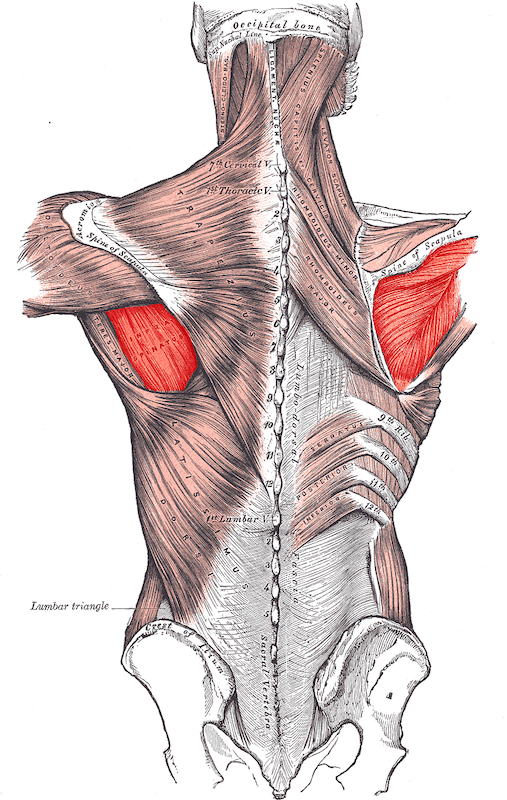
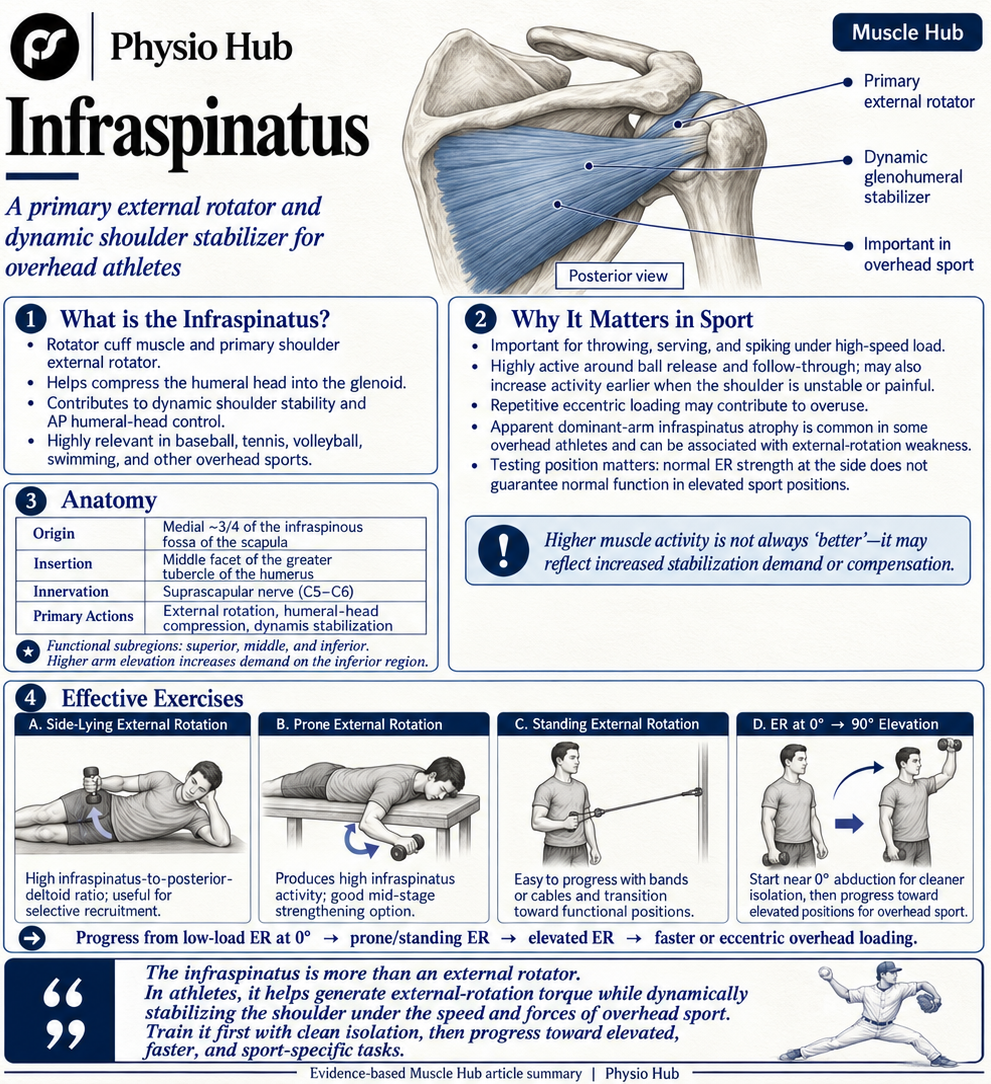
The infraspinatus is one of the four rotator cuff muscles and serves two major roles: it produces glenohumeral external rotation torque and helps dynamically stabilize the humeral head within the glenoid.¹˒²
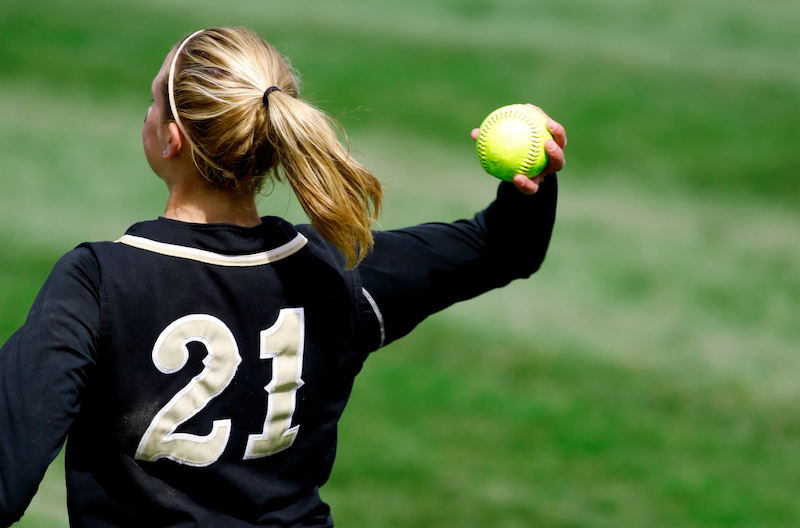
These functions become particularly important in baseball, tennis, volleyball, swimming, and other overhead sports, where athletes must control the humeral head while the arm moves at high speed. Baseball pitchers with shoulder instability have demonstrated substantially greater infraspinatus activity during the acceleration phase than pitchers without the same instability findings, suggesting that the muscle may work harder when additional dynamic stabilization is required.³
Function and Sports Relevance
External Rotation and Dynamic Stability
The most obvious action of the infraspinatus is:
shoulder external rotation.
However, its athletic function extends beyond simply rotating the arm.
As part of the rotator cuff, the infraspinatus contributes to compression of the humeral head into the glenoid. It also provides a posterior force that contributes to anteroposterior force balance around the glenohumeral joint.¹
In other words, the infraspinatus is both a:
movement producer and joint stabilizer.
Throwing and Overhead Sport
During throwing, the shoulder experiences extremely high rotational velocities.
The posterior rotator cuff must help control the humeral head while generating and absorbing substantial forces throughout the throwing cycle.
In baseball pitchers demonstrating a shoulder “slipping” phenomenon, infraspinatus activation during acceleration averaged approximately 59.5% MVC compared with 33.0% MVC in pitchers without slipping.³
Higher activity should not automatically be interpreted as better function—it may reflect an increased stabilization requirement or compensation for instability.
Infraspinatus Atrophy in Overhead Athletes
In a study of 153 male professional tennis players, visually apparent dominant-arm infraspinatus atrophy was observed in 60.1% of the athletes and was associated with reduced external-rotation strength.⁴
Importantly, this was visually identified apparent atrophy rather than imaging-confirmed muscle-volume loss, so the finding should not automatically be interpreted as pathology.
Nevertheless, obvious asymmetry in an overhead athlete provides a reason to assess external-rotation strength and endurance.
Similar clinical relevance has been reported in volleyball. Elite volleyball players with infraspinatus atrophy demonstrated deficits in strength and proprioception that improved following an 8-week specific external-rotator strengthening program.⁵
Testing Position Matters
External-rotation strength is not a single universal quality.
Research in baseball athletes has shown that isolated shoulder-rotation testing and more functional Athletic Shoulder Test positions produce different neuromuscular activation patterns.¹²
Therefore:
normal external-rotation strength at the side does not necessarily guarantee normal function in an overhead athletic position.
Assessment and rehabilitation may need to progress from neutral positions toward elevated and sport-specific positions.
Anatomy of the Infraspinatus
Origin
The infraspinatus originates primarily from the:
**medial approximately three-fourths of the infraspinous fossa of the scapula.**¹
Insertion
It inserts onto the:
**middle facet of the greater tubercle of the humerus.**¹
The supraspinatus inserts superiorly and the teres minor inferiorly.
Innervation
The muscle is innervated by the:
**suprascapular nerve, primarily C5-C6.**¹
Primary Actions
The infraspinatus contributes to:
- Glenohumeral external rotation
- Compression of the humeral head into the glenoid
- Dynamic shoulder stability
- Anteroposterior control of the humeral head¹˒²
The Infraspinatus Has Functional Subregions
The infraspinatus should not necessarily be viewed as one homogeneous muscle.
Anatomical and EMG research supports distinct:
- Superior
- Middle
- Inferior
regions with different recruitment patterns.²˒⁶
Fine-wire EMG research found that inferior infraspinatus activity was greater during external rotation at 90° of scaption than at 0° elevation, while the superior region remained highly active in lower-elevation positions.⁶
This means that exercise position can change which portion of the muscle receives the greatest challenge.
Effective Exercises for the Infraspinatus
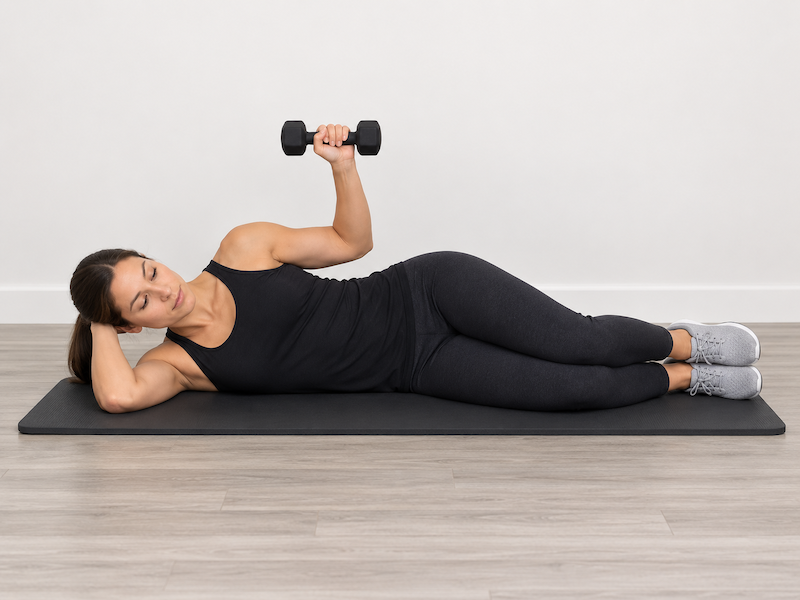
Exercise 1 | Side-Lying External Rotation
Side-Lying External Rotation is particularly useful when the goal is relatively selective infraspinatus recruitment.
In a 2025 comparison of external-rotation exercises, side-lying ER produced the highest infraspinatus-to-posterior-deltoid activation ratio.⁸
This makes it an excellent option during early and intermediate rehabilitation when the athlete needs to develop rotator cuff control without excessive posterior-deltoid contribution.
A practical setup includes the elbow flexed approximately 90°, the arm near the side, controlled external rotation, and resistance low enough to maintain clean movement.
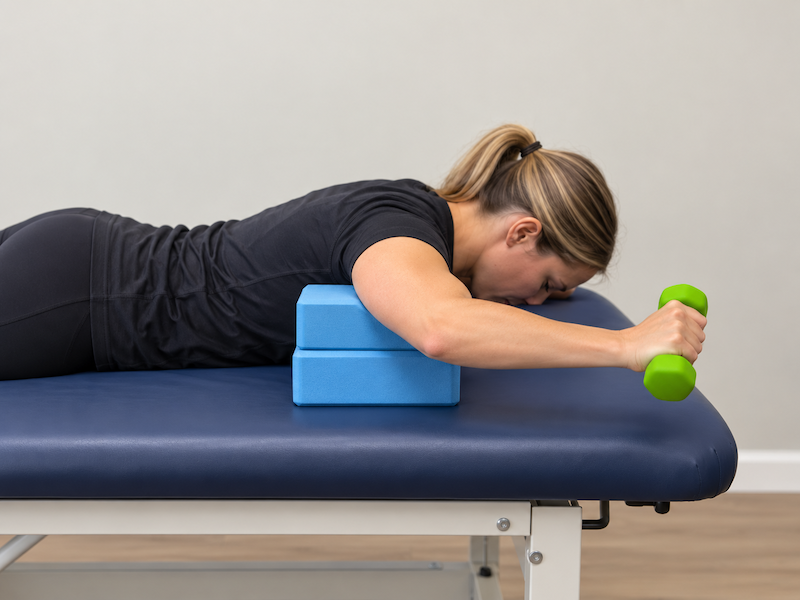
Exercise 2 | Prone External Rotation
Prone External Rotation is another strong option.
Kim and colleagues found that both Prone External Rotation and Standing External Rotation produced relatively high infraspinatus activity and favorable infraspinatus-to-posterior-deltoid ratios compared with the other positions they tested.⁷
Increasing resistance increased infraspinatus activity, but it also increased posterior-deltoid activity and reduced selectivity.
Therefore, low-to-moderate resistance may be preferable when selective infraspinatus recruitment is the goal.
Exercise 3 | External Rotation at 0° → Elevated External Rotation
The angle of shoulder elevation changes the exercise.
Ryan and colleagues found that increasing abduction reduced the infraspinatus-to-posterior-deltoid activation ratio; therefore, external rotation near 0° of abduction was preferable when infraspinatus isolation was the primary objective.⁹
However, athletes eventually need more than isolation.
The inferior infraspinatus becomes more active at elevated positions such as 90° of scaption, making elevated external rotation useful later in rehabilitation when preparing an athlete for throwing, serving, or spiking.⁶
A logical progression is therefore:
ER at 0° → moderate elevation → ER around 90° in sport-relevant planes.
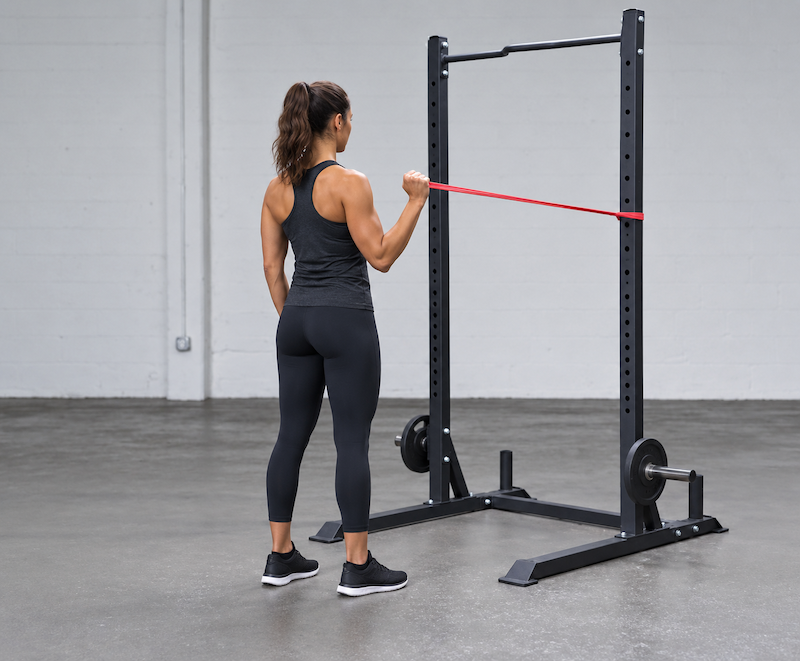
Does Low-Load Training Work?
Low load does not necessarily mean ineffective.
Matsumura and colleagues reported that 8 weeks of low-intensity, slow-movement external-rotation training increased infraspinatus cross-sectional area by approximately 7.3%.¹⁰
Interestingly, measured external-rotation strength did not significantly increase.
This highlights an important point:
hypertrophy and strength adaptation are not identical outcomes.
Low-load slow training may therefore have value when joint stress needs to be limited, but athletes ultimately require progression toward greater force, speed, and sport-specific loading.
From Isolation to Sport
A randomized trial in male volleyball players with glenohumeral internal-rotation deficit found that a TheraBand-based throwing exercise program improved measures including external-rotator strength, rotational strength balance, and joint-position sense.¹¹
This illustrates why late-stage infraspinatus training should not remain limited to isolated external rotation.
Once adequate strength is established, athletes need to train the shoulder through the angles, velocities, eccentric demands, and kinetic-chain patterns required by their sport.
Practical Progression
Side-Lying ER / Low-Load ER at 0°
↓
Prone ER / Standing ER
↓
Moderate-Load External Rotation
↓
External Rotation at 45°-90° Elevation
↓
Higher-Speed / Eccentric External-Rotation Loading
↓
Throwing, Serving, Spiking, or Other Sport-Specific Tasks
The progression moves from:
Isolation → Strength → Elevated Position → Speed/Eccentric Control → Sport.
< Take-Home Message >
The infraspinatus is much more than an external rotator.
For athletes, it generates **external-rotation torque while dynamically controlling the humeral head during high-speed shoulder movement.**¹⁻³
Side-Lying External Rotation is especially useful for selective activation, while Prone and Standing External Rotation can provide strong infraspinatus recruitment.⁷˒⁸ External rotation near 0° abduction is useful when isolation is the priority, whereas elevated positions become increasingly important as the athlete progresses toward overhead sport.⁶˒⁹
The ultimate goal is not simply to create a:
“strong infraspinatus.”
It is to develop an infraspinatus that can work with the rest of the rotator cuff, scapular musculature, trunk, and kinetic chain to stabilize the shoulder under the speed and forces of sport.
< PDF file>
< Reference >
- Williams JM, Sinkler MA, Obremskey W. Anatomy, Shoulder and Upper Limb, Infraspinatus Muscle. In: StatPearls [Internet]. StatPearls Publishing; 2026. Updated August 8, 2023.
- Cavanaugh E, Arcot Santillan A, Hoshikawa K, Giambini H. Subregions of the rotator cuff muscles present distinct anatomy, biomechanics, and function. Sports (Basel). 2024;12(12):349. doi:10.3390/sports12120349.
- Kotoshiba S, Urabe Y, Hara M, et al. The infraspinatus muscle activity during pitching motion in baseball players with shoulder instability. JSES Int. 2021;5(3):512-518. doi:10.1016/j.jseint.2020.12.013.
- Ellenbecker TS, Dines DM, Renstrom PA, Windler GS. Visual observation of apparent infraspinatus muscle atrophy in male professional tennis players. Orthop J Sports Med. 2020;8(10):2325967120958834. doi:10.1177/2325967120958834.
- Salles JI, Guimarães JM, Filho GM, Morrissey D. Effect of a specific exercise strategy on strength and proprioception in volleyball players with infraspinatus muscle atrophy. Scand J Med Sci Sports. 2018;28(9):2093-2099. doi:10.1111/sms.13216.
- Whittaker RL, Alenabi T, Kim SY, Dickerson CR. Regional electromyography of the infraspinatus and supraspinatus muscles during standing isometric external rotation exercises. Sports Health. 2022;14(5):725-732. doi:10.1177/19417381211043849.
- Kim TG, Ma R, Yu IY. A study of effective exercise methods and resistance intensity for selective strengthening of the infraspinatus muscle. J Back Musculoskelet Rehabil. 2025;38(2):304-313. doi:10.1177/10538127241298546.
- Soylu C, Atalay ES, Haksever B, Demir P, Seyhan S, Bıyıklı T. Selective activation of the infraspinatus during external rotation exercises in participants with rounded shoulder posture: comparison of three common exercises and muscle architecture-based exercise. Medicina (Kaunas). 2025;61(2):203. doi:10.3390/medicina61020203.
- Ryan G, Johnston H, Moreside J. Infraspinatus isolation during external rotation exercise at varying degrees of abduction. J Sport Rehabil. 2018;27(4):334-339. doi:10.1123/jsr.2016-0217.
- Matsumura A, Tateuchi H, Nakamura M, Ichihashi N. Effect of 8-week shoulder external rotation exercise with low intensity and slow movement on infraspinatus. Phys Ther Res. 2023;26(2):58-64. doi:10.1298/ptr.E10227.
- Moradi M, Hadadnezhad M, Letafatkar A, Khosrokiani Z. Efficacy of throwing exercise with TheraBand in male volleyball players with shoulder internal rotation deficit: a randomized controlled trial. BMC Musculoskelet Disord. 2020;21:376. doi:10.1186/s12891-020-03414-y.
- Ashworth B, Hank M, Khaiyat O, et al. Muscle activity relationships during isometric shoulder internal and external rotation using the ForceFrame dynamometer and athletic shoulder tests in baseball athletes. Front Physiol. 2025;16:1632248. doi:10.3389/fphys.2025.1632248.