
Serratus Anterior
A Key Scapular Stabilizer for Overhead Athletic Performance
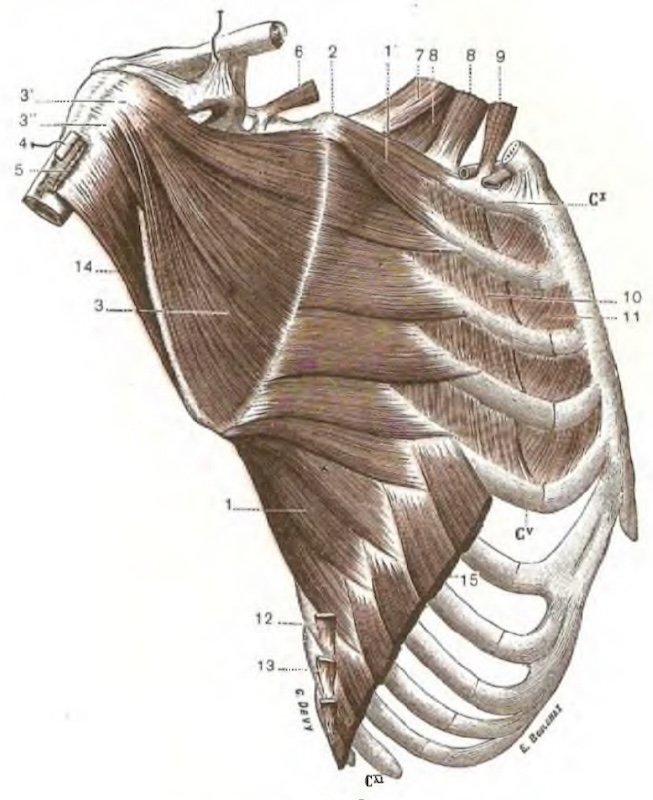
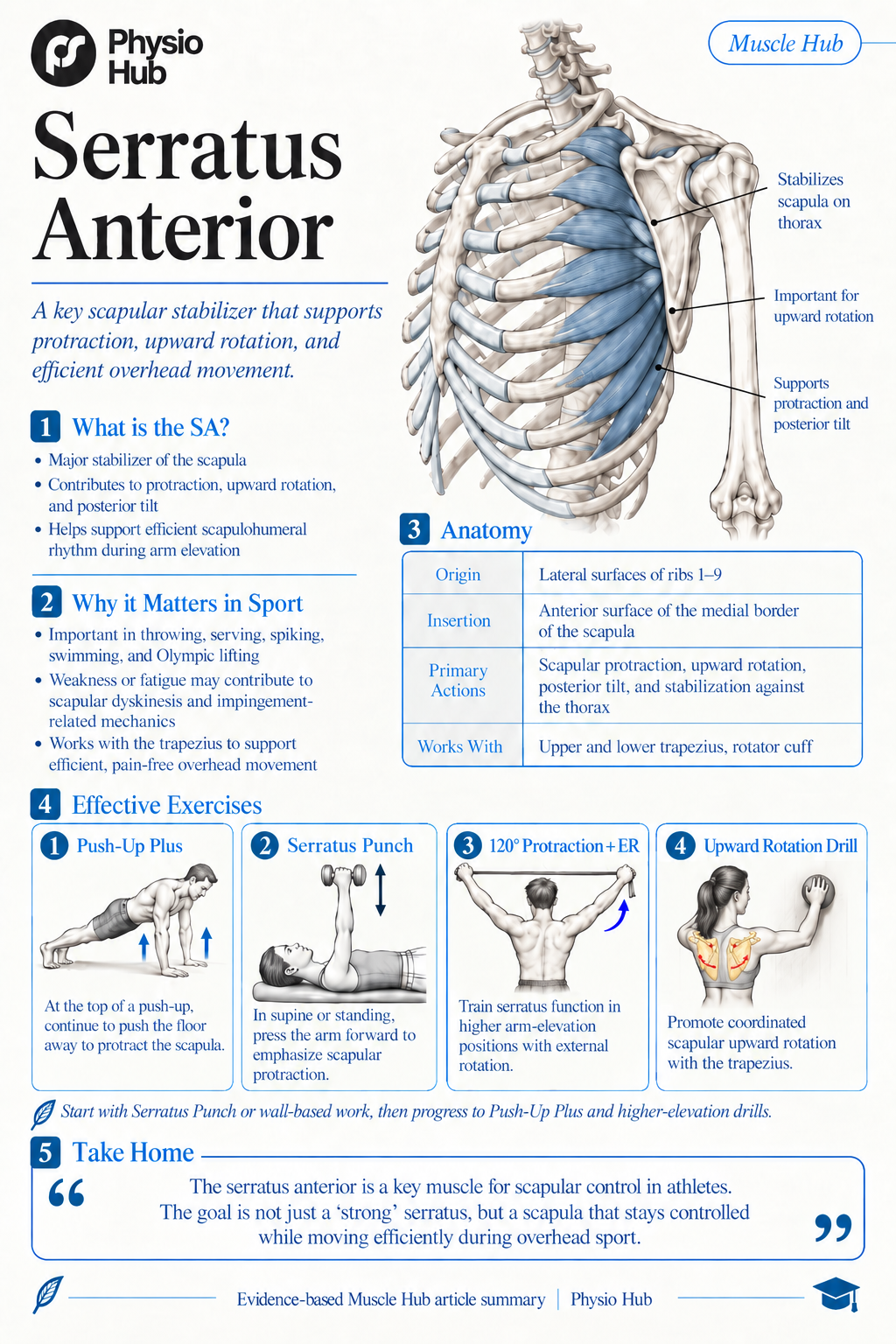
The serratus anterior (SA) is a major scapular stabilizer responsible for controlling scapular protraction, upward rotation, posterior tilt, and stability against the thorax during upper-extremity movement.¹˒²
For baseball players, volleyball players, swimmers, tennis players, weightlifters, and other overhead athletes, these functions are essential because efficient arm elevation requires coordinated movement between the humerus and scapula.
The serratus anterior therefore does much more than simply “push the shoulder blade forward.” It helps create a stable but mobile platform from which the arm can produce and transfer force.
Function and Sports Relevance
During arm elevation, the scapula must upwardly rotate and posteriorly tilt while remaining appropriately controlled against the thorax.
The serratus anterior is one of the primary muscles responsible for this process and works with the trapezius as part of a force couple that produces and controls scapular upward rotation.¹˒²
Overhead Athletes
Throwing, serving, spiking, and overhead lifting expose the shoulder complex to repeated high-speed and high-force movements.
When serratus anterior function is insufficient, scapular mechanics may change and other muscles may compensate.
For this reason, rehabilitation programs for overhead athletes often attempt to achieve sufficient serratus anterior recruitment without unnecessary dominance of muscles such as the upper trapezius.²˒³
This does not mean upper trapezius activation is inherently undesirable. The upper trapezius is also an important upward rotator of the scapula.
The objective is appropriate coordination, not isolation of one “good” muscle while suppressing another “bad” muscle.
Fatigue Changes Scapular Mechanics
Experimental fatigue of the serratus anterior has been shown to decrease scapular posterior tilt and increase internal rotation during higher angles of arm elevation.⁴
Other fatigue research has demonstrated changes in both scapular kinematics and the recruitment of surrounding shoulder muscles after selective serratus anterior fatigue.⁵
This suggests that serratus anterior endurance may be particularly relevant for athletes performing repeated overhead movements.
Serratus Anterior and Scapular Dyskinesis
Reduced serratus anterior strength or activation may contribute to altered scapular positioning and movement, but scapular dyskinesis should not be considered a single-muscle problem.¹˒⁶
Scapular motion is influenced by multiple factors, including:
- Serratus anterior and trapezius function
- Glenohumeral mobility
- Thoracic position
- Pain
- Neuromuscular control
- Sport-specific adaptations
Therefore:
“Scapular winging = weak serratus anterior”
is generally too simplistic.
Assessment should consider the athlete’s symptoms, movement strategy, sport, and overall shoulder function.
Anatomy
Origin
The serratus anterior originates primarily from the:
**lateral surfaces of ribs 1 through 9.**¹
Its broad attachment along the rib cage allows the muscle to influence the scapula across a large range of shoulder positions.
Insertion
The serratus anterior inserts along the:
**anterior surface of the medial border of the scapula.**¹
Because the muscle lies between the scapula and rib cage, it is anatomically well positioned to maintain scapular contact with the thorax while controlling scapular movement.
Primary Actions
Major actions of the serratus anterior include:
- Scapular protraction
- Scapular upward rotation
- Contribution to posterior tilt
- Stabilization of the scapula against the thorax¹˒⁴
Its role becomes increasingly important as the arm is elevated, and serratus anterior strength has been associated with scapular positioning at greater humeral-elevation angles.⁶
Why Does This Matter for Athletes?
The scapula should not simply be held still during sport.
During throwing or other overhead movements, it must provide:
stability while simultaneously allowing movement.
The serratus anterior helps keep the scapula controlled against the thorax while allowing the upward rotation and posterior tilt required for arm elevation.
For an athlete, the goal is therefore not:
“Pin the shoulder blades back.”
Instead, the goal is:
Allow the scapula to move appropriately while remaining controlled throughout the athletic task.

Effective Exercises for
the Serratus Anterior
Among the most evidence-supported options are:
- Push-Up Plus
- Serratus Punch
- Scapular Protraction at Higher Arm Elevation
Exercise selection should depend on the athlete’s symptoms, strength, stage of rehabilitation, and sport-specific demands rather than EMG activity alone.
Exercise 1 | Push-Up Plus
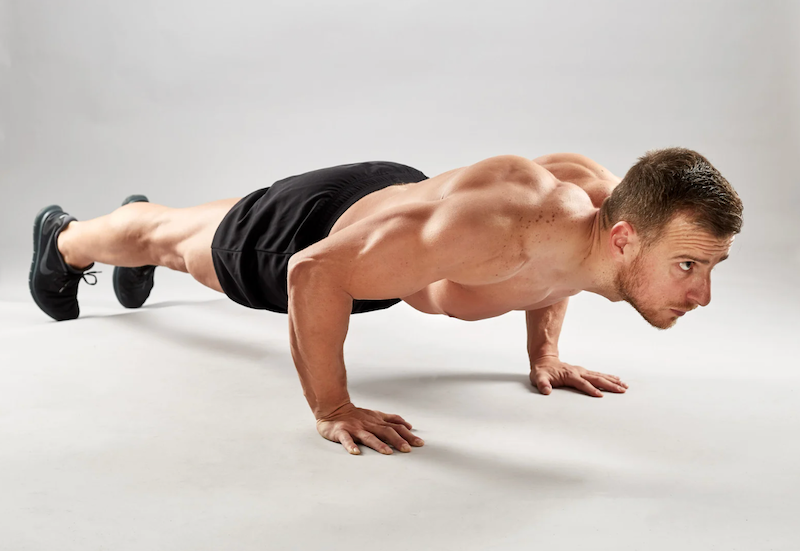
The Push-Up Plus is one of the most extensively studied serratus anterior exercises.
After reaching the top of a push-up with the elbows extended, the athlete continues pushing the floor away, allowing the scapulae to protract around the rib cage.
Why Is It Effective?
A systematic review and meta-analysis involving 19 studies and 356 participants found that Push-Up Plus variations produce high serratus anterior activity.²
A favorable serratus anterior-to-upper trapezius activation pattern was generally observed when the exercise was performed:
- On a stable surface
- With the elbows fully extended
- With approximately shoulder-width hand placement
- Around 110° to 120° of shoulder flexion²
Importantly, adding instability is not automatically better.
Systematic-review evidence indicates that unstable surfaces do not consistently increase serratus anterior activity and may instead increase upper trapezius recruitment.²˒⁷
Exercise 2 | Serratus Punch
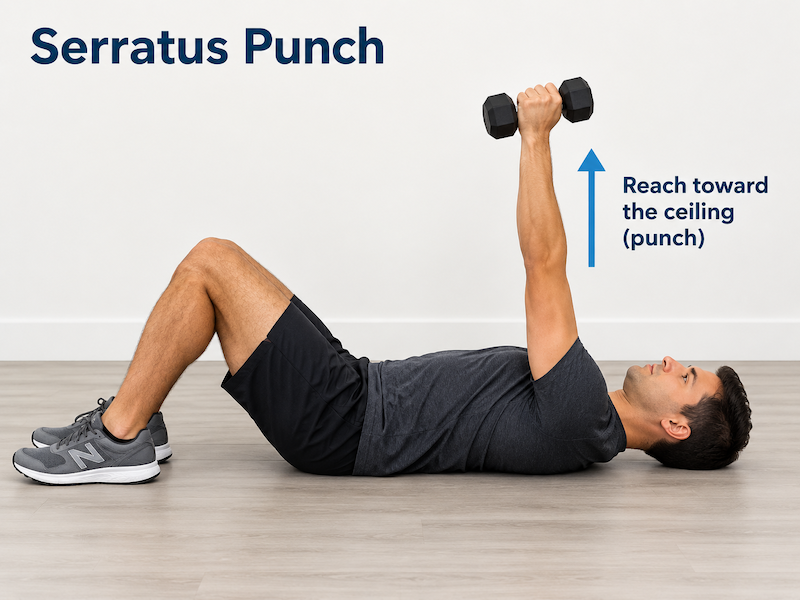
The Serratus Punch is typically performed supine or standing with the arm elevated while the athlete actively protracts the scapula without bending the elbow.
It is particularly useful when the goal is early motor control or relatively selective serratus anterior recruitment.
Castelein and colleagues found that the Serratus Punch produced strong serratus anterior recruitment while providing a favorable pattern relative to pectoralis minor activity compared with Push-Up Plus variations.⁸
It can therefore serve as an effective early-stage exercise before progressing toward heavier closed-chain loading.
Exercise 3 | 120° Scapular Protraction With External Rotation
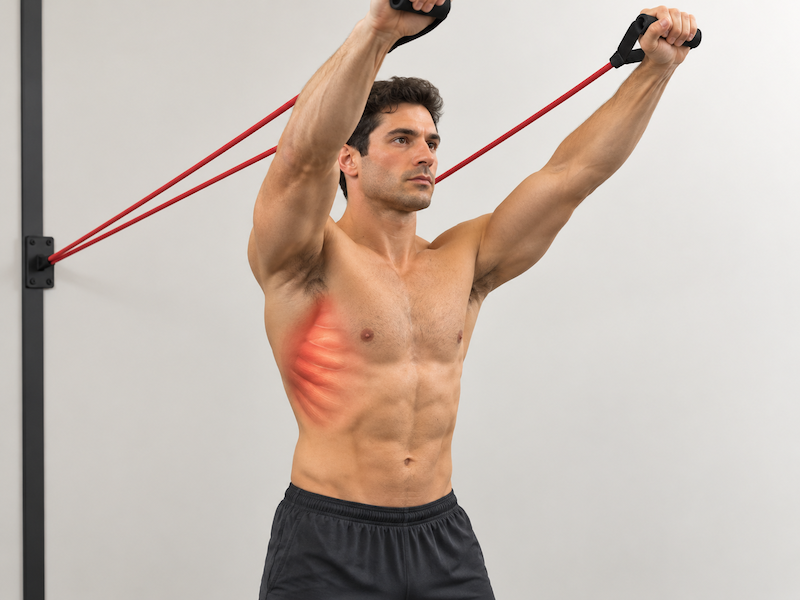
The position of the arm affects serratus anterior recruitment.
Ijiri and colleagues compared scapular protraction at 90° and 120° of shoulder flexion and found greater activation of the middle and lower serratus anterior when external rotation was added, with particularly high activity during standing protraction at approximately 120° of elevation with external rotation.⁹
This is especially relevant to overhead athletes.
Eventually, serratus anterior training should not remain limited to low arm positions. The athlete needs to control the scapula in the elevated positions required during throwing, serving, spiking, and overhead lifting.
Practical Progression
A simple progression may look like:
Serratus Punch / Wall-Based Protraction
↓
Incline Push-Up Plus
↓
Floor Push-Up Plus
↓
120° Protraction / Scapular Upward-Rotation Exercise
↓
Integrated Kinetic-Chain Exercises
↓
Throwing, Serving, Spiking, or Overhead Lifting
Scapular upward-rotation exercises can produce substantial serratus anterior activation,¹⁰ while multijoint and kinetic-chain variations provide a way to progress toward more integrated athletic movement.¹¹˒¹²
However, a higher EMG value does not automatically make an exercise superior.
The best exercise is the one that provides an appropriate stimulus while matching the athlete’s symptoms, movement quality, loading tolerance, and sport-specific goal.
< Take-Home Message >
The serratus anterior is a major scapular stabilizer that contributes to protraction, upward rotation, posterior tilt, and control of the scapula against the thorax.¹
For overhead athletes, its role is not simply to keep the shoulder blade “stable.”
The scapula needs to be stable enough to transfer force but mobile enough to move appropriately with the arm.
The Push-Up Plus is one of the best-supported exercises for generating substantial serratus anterior activation, while the Serratus Punch provides a useful option for more selective early-stage training. As the athlete progresses, training should include elevated-arm positions and eventually whole-body kinetic-chain movements.²˒⁸˒⁹˒¹²
The ultimate goal is not simply to develop a “strong serratus.”
It is to develop a serratus anterior that works effectively with the trapezius, rotator cuff, trunk, and lower extremities to control the scapula during athletic movement.
< PDF file>
< Reference >
- Neumann DA, Camargo PR. Kinesiologic considerations for targeting activation of scapulothoracic muscles—part 1: serratus anterior. Braz J Phys Ther. 2019;23(6):459-466. doi:10.1016/j.bjpt.2019.01.008.
- Kang FJ, Ou HL, Lin KY, Lin JJ. Serratus anterior and upper trapezius electromyographic analysis of the push-up plus exercise: a systematic review and meta-analysis. J Athl Train. 2019;54(11):1156-1164. doi:10.4085/1062-6050-237-18.
- Kang E, Lim C, Lim H. Comparisons of shoulder muscle activity and muscle activity ratio during serratus anterior exercise between CrossFit practitioners with/without shoulder impingement syndrome. J Kor Phys Ther. 2023;35(6):167-176. doi:10.18857/jkpt.2023.35.6.167.
- Harrison N, Garrett WZ, Timmons MK. Serratus anterior fatigue reduces scapular posterior tilt and external rotation during arm elevation. J Sport Rehabil. 2021;30(8):1151-1157. doi:10.1123/jsr.2021-0010.
- Umehara J, Kusano K, Nakamura M, et al. Scapular kinematic and shoulder muscle activity alterations after serratus anterior muscle fatigue. J Shoulder Elbow Surg. 2018;27(7):1205-1213. doi:10.1016/j.jse.2018.01.009.
- Micoogullari M, Uygur SF, Yosmaoglu HB. Effect of scapular stabilizer muscles strength on scapular position. Sports Health. 2023;15(3):349-356. doi:10.1177/19417381231155192.
- Mendez-Rebolledo G, Morales-Verdugo J, Orozco-Chavez I, Habechian FAP, Padilla EL, Berral de la Rosa FJ. Optimal activation ratio of the scapular muscles in closed kinetic chain shoulder exercises: a systematic review. J Back Musculoskelet Rehabil. 2021;34(1):3-16. doi:10.3233/BMR-191771.
- Castelein B, Cagnie B, Parlevliet T, Cools A. Serratus anterior or pectoralis minor: which muscle has the upper hand during protraction exercises? Man Ther. 2016;22:158-164. doi:10.1016/j.math.2015.12.002.
- Ijiri T, Urabe Y, Maeda N, Sasadai J, Suzuki T. Shoulder muscle activation during scapular protraction exercise with arm rotation. J Back Musculoskelet Rehabil. 2022;35(1):75-83. doi:10.3233/BMR-200180.
- Kim JH, Hwang UJ, Jung SH, Gwak GT, Kwon OY. Comparison of serratus anterior muscle activity between serratus anterior strengthening exercises and scapular upward rotation exercise. Phys Ther Korea. 2017;24(4):29-37. doi:10.12674/ptk.2017.24.4.029.
- Adachi G, Oshikawa T, Akuzawa H, Kaneoka K. Muscle activity during scapular muscle exercises with multijoint compound movement: analysis using fine-wire and surface electrodes. Orthop J Sports Med. 2022;10(11):23259671221132194. doi:10.1177/23259671221132194.
- Borms D, Maenhout A, Cools AM. Incorporation of the kinetic chain into shoulder-elevation exercises: does it affect scapular muscle activity? J Athl Train. 2020;55(4):343-349. doi:10.4085/1062-6050-136-19.