
How to Improve Vertical Jump Height
A Practical Strength + Plyometric + Jump-Specific Training Program
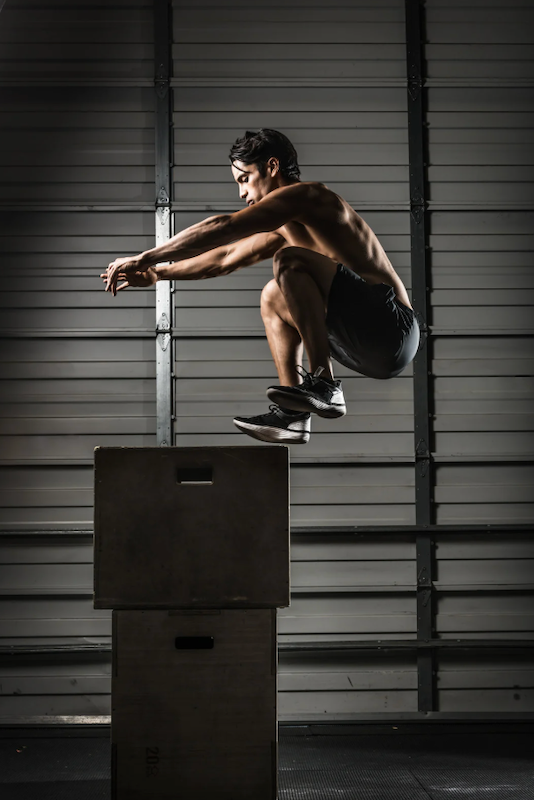
What Is Vertical Jump Performance, and Why Does It Matter in Sports?
Vertical jumping requires the athlete to produce a large amount of force against the ground within a short period of time.
It is particularly relevant for actions such as:
- Rebounding and shot blocking in basketball
- Spiking and blocking in volleyball
- Heading in soccer
- Jumping events in track and field
Jump performance is influenced by multiple qualities:
Strength — the ability to produce force
Power / rapid force production — the ability to produce force quickly
Stretch-shortening-cycle ability — rapidly absorbing and reusing force
Jump-specific coordination — expressing those qualities during the actual jump
A 2025 systematic review and meta-analysis found that resistance, plyometric, and complex training all improve vertical-jump performance. Resistance exercise produced particularly large improvements in stationary vertical jumping, whereas complex training produced the greatest improvement in countermovement jump height.¹ A 2026 network meta-analysis similarly identified complex resistance-plus-plyometric training as a particularly effective option for countermovement-jump development.²
How Can Vertical Jump Height Be Improved?
Build Lower-Body Strength
The athlete first needs sufficient force-producing capacity.
Practical exercises may include:
- Squat
- Deadlift / Romanian Deadlift
- Split Squat
- Calf Raise
No single lift has to be considered mandatory. The larger principle is to develop enough lower-extremity force capacity to provide a foundation for jumping.
Resistance training alone can meaningfully improve vertical-jump performance and ranked particularly highly for stationary jump performance in the 2025 meta-analysis.¹
Add Plyometric Training
Strength alone does not fully train the ability to use force rapidly.
Plyometric options include:
- Pogo Jump
- Squat Jump
- Countermovement Jump
- Drop Jump
- Repeated Jump
- Single-Leg Jump
Plyometric training has a positive effect on vertical-jump performance across athletic populations. Meta-analytic evidence in volleyball players found meaningful improvements without evidence that very high training frequency or excessive jump volume was necessary.⁵ A separate meta-analysis in female athletes also found improvements in countermovement-jump performance.⁶
Combine Strength and Plyometrics
For most athletes, one of the strongest general approaches is:
Resistance Training + Plyometric Training
A practical example is pairing a strength exercise with a mechanically related explosive task:
Squat → Countermovement Jump
In female basketball players, both plyometric and combined training improved jumping, but a program combining full squats with repeated jumping produced larger improvements and better preserved force production.³
Similarly, in elite long jump athletes, 8 weeks of combined strength and plyometric training improved countermovement-jump height, vertical stiffness, and elastic-energy utilization beyond changes seen with strength training alone.⁴
Train the Type of Jump You Want to Improve
Plyometric adaptations are task-specific.
In basketball players, knee-flexed plyometric training improved squat-jump and countermovement-jump performance, whereas more knee-extended plyometrics preferentially improved drop-jump performance.⁷
Therefore, an athlete wanting to improve a countermovement jump should actually practice countermovement jumping.
The final progression should also reflect the sport:
- Volleyball → Approach Jump
- Basketball → Rebound / Block Jump
- Soccer → Header Jump
- Track & Field → Event-specific takeoff
Include Bilateral and Unilateral Jumping
The literature does not establish that unilateral plyometrics are universally superior, but a systematic scoping review found several studies favoring unilateral training and others supporting a combination of unilateral and bilateral approaches.⁸
For athletes who jump from both one and two legs, including both is a practical approach.
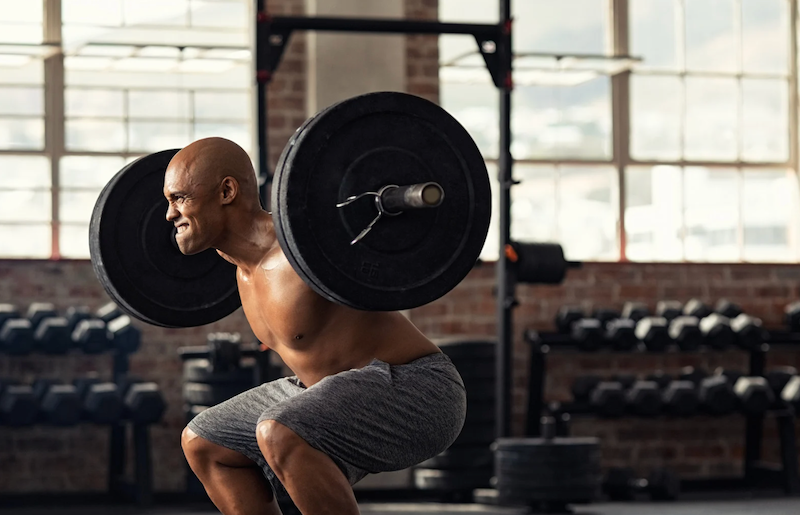
Simple Vertical Jump Training Program
- Squat
Goal: Build lower-body force production.
- Romanian Deadlift
Goal: Develop hip-extensor and posterior-chain strength.
- Split Squat
Goal: Develop unilateral lower-extremity strength.
- Calf Raise
Goal: Build plantarflexor force capacity for takeoff.
- Countermovement Jump
Goal: Practice maximal vertical-jump performance with a countermovement.
- Squat Jump
Goal: Develop explosive concentric force production.
- Pogo Jump
Goal: Develop rapid ankle-dominant stretch-shortening-cycle ability.
- Drop Jump
Goal: Develop fast force absorption and reactive force production.
- Single-Leg Jump
Goal: Develop unilateral jumping power.
- Complex Strength + Jump Pair
Examples:
Squat → Countermovement Jump
or
Split Squat → Single-Leg Jump
Goal: Integrate strength and explosive jump training.
- Sport-Specific Vertical Jump
Examples:
- Volleyball Approach Jump
- Basketball Rebound Jump
- Basketball Block Jump
- Soccer Header Jump
- Event-Specific Takeoff
Goal: Transfer improved physical qualities to the athlete’s actual sport.
The broader progression is:
Build Strength
→ Develop Plyometric Capacity
→ Combine Strength and Explosive Work
→ Practice the Target Jump
→ Transfer It to Sport
Plyometric interventions lasting approximately 8-12 weeks are commonly effective, while some evidence suggests longer programs may produce greater adaptation.⁵,⁶ A 15-week combined resistance-and-plyometric program improved vertical-jump height by 8.8% in adolescent female volleyball players.⁹
< Take-Home Message >
Improving vertical-jump height does not mean simply performing more jumps.
The most evidence-aligned general strategy is:
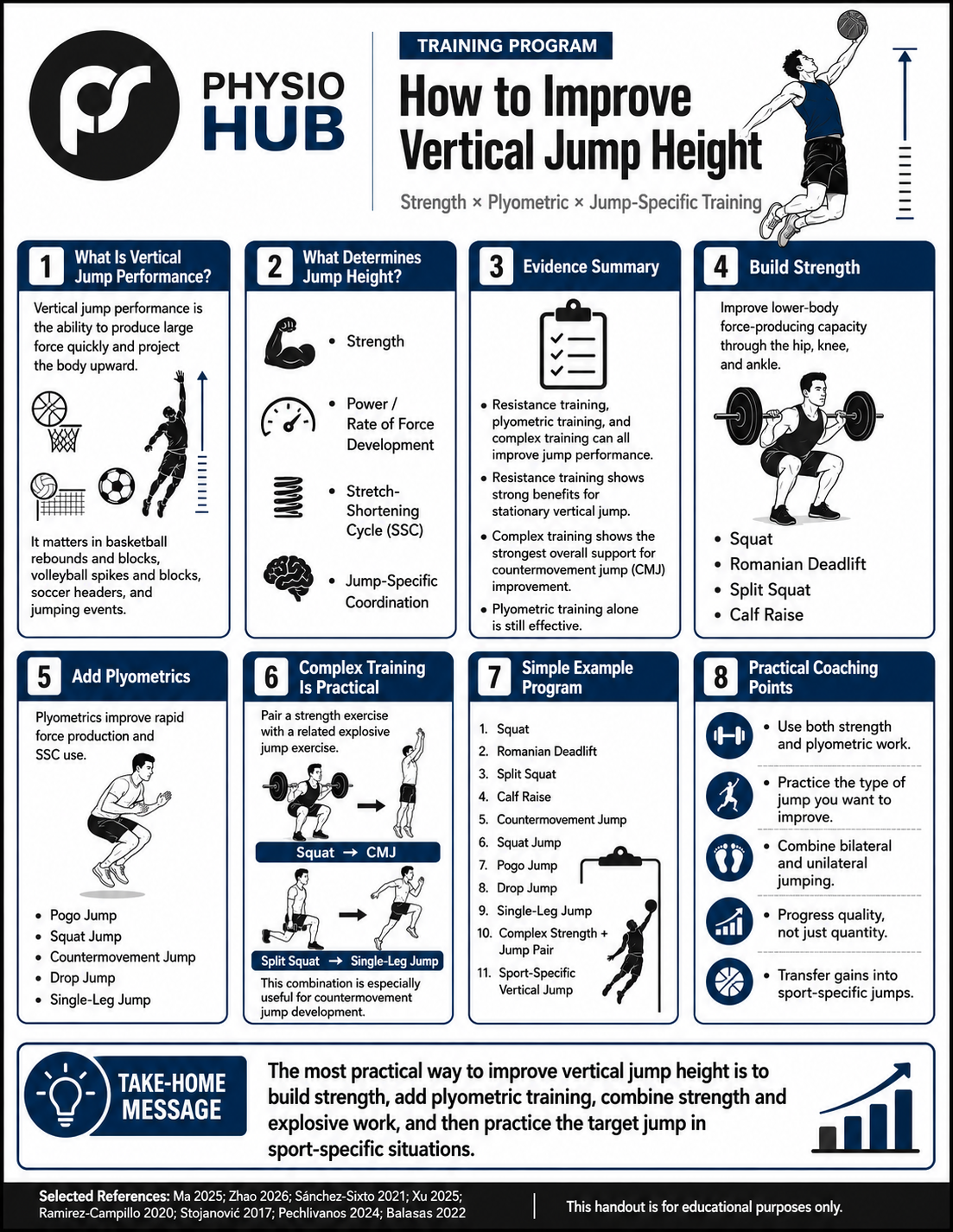
Strength → Plyometrics → Combined Training → Jump-Specific Practice → Sport Transfer
Resistance training builds the force foundation, plyometrics train rapid force production and stretch-shortening-cycle performance, and jump-specific practice helps transfer those adaptations into the exact movement the athlete wants to improve.
For countermovement-jump performance in particular, **combining resistance and plyometric training currently has some of the strongest overall support.**¹⁻⁴
< PDF file>
< Reference >
- Ma S, Xu Y, Xu S. Effects of physical training programs on healthy athletes’ vertical jump height: a systematic review with meta-analysis. J Sports Sci Med. 2025;24(2):236-257. doi:10.52082/jssm.2025.236.
- Zhao C, Zhu Y, Zhang Y. Effects of combined resistance and plyometric training modalities on vertical jump and sprint: a systematic review and network meta-analysis. BMC Sports Sci Med Rehabil. 2026;18:82. doi:10.1186/s13102-026-01531-0.
- Sánchez-Sixto A, Harrison AJ, Floría P. Effects of plyometric vs. combined plyometric training on vertical jump biomechanics in female basketball players. J Hum Kinet. 2021;77:25-35. doi:10.2478/hukin-2021-0009.
- Xu Z, Sun J, Gu J, Yu L. Effects of 8 weeks of combined strength and plyometric training on lower limb vertical stiffness and jump performance in elite long jump athletes. Front Physiol. 2025;16:1692254. doi:10.3389/fphys.2025.1692254.
- Ramirez-Campillo R, Andrade DC, Nikolaidis PT, et al. Effects of plyometric jump training on vertical jump height of volleyball players: a systematic review with meta-analysis of randomized-controlled trials. J Sports Sci Med. 2020;19(3):489-499.
- Stojanović E, Ristić V, McMaster DT, Milanović Z. Effect of plyometric training on vertical jump performance in female athletes: a systematic review and meta-analysis. Sports Med. 2017;47(5):975-986. doi:10.1007/s40279-016-0634-6.
- Pechlivanos RG, Amiridis IG, Anastasiadis N, et al. Effects of plyometric training techniques on vertical jump performance of basketball players. Eur J Sport Sci. 2024;24(6):682-692. doi:10.1002/ejsc.12097.
- Dudagoitia Barrio E, Thapa RK, Villanueva-Flores F, et al. Plyometric jump training exercise optimization for maximizing human performance: a systematic scoping review and identification of gaps in the existing literature. Sports (Basel). 2023;11(8):150. doi:10.3390/sports11080150.
- Balasas DG, Kellis S, Christoulas K, Bampouras TM. An off-season plyometric and resistance training programme to improve vertical jump height in adolescent female volleyball players. J Sci Sport Exerc. 2022;4(3):213-220. doi:10.1007/s42978-021-00136-y.