
How to Improve Posterior Shoulder Tightness
A Practical Stretching + Strengthening Rehabilitation Program
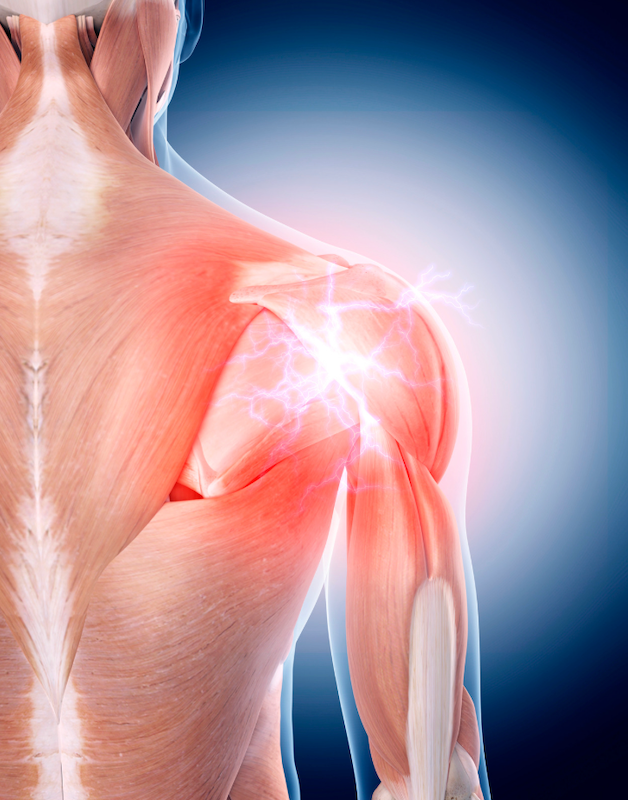
What Is Posterior Shoulder Tightness, and Why Does It Matter?
Posterior shoulder tightness refers to restriction of the tissues on the back of the shoulder and commonly presents as reduced **glenohumeral internal rotation and/or horizontal adduction.**¹,²
Although the term “posterior capsule tightness” is frequently used, the limitation is not necessarily caused by the joint capsule alone. The posterior rotator cuff, posterior deltoid, and other posterior shoulder tissues may also contribute.²,⁶
Posterior shoulder tightness is particularly relevant in overhead athletes such as baseball, volleyball, and tennis players.
However, reduced internal rotation by itself is not necessarily pathological. Sport-related adaptations can create normal side-to-side differences in overhead athletes.
Posterior shoulder tightness becomes more clinically meaningful when the mobility restriction is associated with factors such as:
- Loss of internal rotation
- Reduced horizontal adduction
- Meaningful side-to-side asymmetry
- Shoulder pain
- Difficulty with throwing or overhead activity
How Can It Be Addressed?
Posterior Shoulder Stretching
Stretching currently has the strongest direct evidence for improving posterior shoulder tightness.
The two most commonly supported options are:
- Modified Cross-Body Stretch
- Modified Sleeper Stretch
Systematic-review evidence supports cross-body stretching for immediate and short-term improvements in posterior shoulder mobility, while both modified cross-body and modified sleeper stretches have demonstrated improvements in internal rotation and related outcomes. No single technique has consistently demonstrated clear superiority.¹⁻³
Scapular stabilization during stretching may help reduce compensatory scapular movement and better direct the stretch toward the posterior shoulder tissues.
Strengthening
Mobility is only one part of rehabilitation.
Once motion is available, the athlete should also be able to control and produce force through that available range.
External-rotator strengthening has been studied as part of a specific multimodal program consisting of:
**Posterior mobilization + External-rotator strengthening + Posterior capsule stretching.**⁴
This approach improved some measures related to posterior capsule tightness compared with nonspecific treatment.⁴
The evidence should not be interpreted to mean that strengthening itself “lengthens the posterior capsule.” A more practical framework is:
Stretching → restores mobility
Strengthening → develops strength and control within that mobility
Manual Therapy
Manual treatment may also be used as an adjunct.
Possible options include:
- Posterior glenohumeral mobilization
- Muscle energy techniques
A systematic review found that clinician-assisted interventions can improve shoulder ROM, although much of the evidence involves immediate or short-term outcomes and does not establish long-term superiority.⁵ Posterior glenohumeral mobilization and sleeper stretching have both produced short-term improvements in internal rotation and horizontal adduction.⁶
Manual therapy should therefore be viewed as an optional addition rather than the foundation of the program.
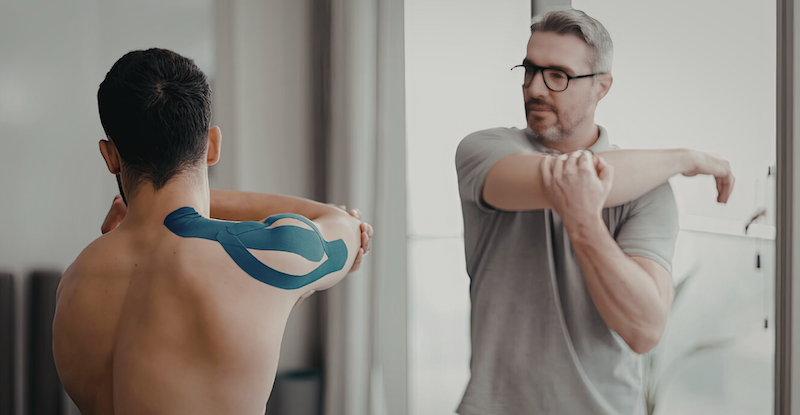
Simple Rehabilitation Program
The following provides a practical example program for posterior shoulder tightness.
- Modified Cross-Body Stretch
Stabilize the scapula while bringing the arm across the body.
Goal: Improve posterior shoulder mobility and horizontal adduction.
- Modified Sleeper Stretch
Use a controlled side-lying position while limiting excessive scapular movement.
Goal: Improve shoulder internal-rotation mobility.
Either stretch can be used as the primary mobility exercise, or both may be incorporated if they are comfortable and appropriate.¹⁻³
- Shoulder External Rotation Strengthening
Examples:
- Band External Rotation
- Side-Lying External Rotation
Goal: Improve rotator-cuff strength and control through the available shoulder range.
- Posterior Glenohumeral Mobilization
Clinician-assisted / Optional
Posterior joint mobilization may be added when appropriate.
Goal: Assist improvements in internal rotation and horizontal-adduction mobility.
- Reassess
Monitor changes in:
- Internal rotation
- Horizontal adduction
- Pain
- Overhead movement
- Throwing or sport-specific function
If range of motion improves but symptoms or function do not, posterior shoulder tightness may not be the primary limitation.
< Take-Home Message >
The strongest direct evidence for improving posterior shoulder tightness supports posterior shoulder stretching, particularly modified cross-body and modified sleeper stretching.¹⁻³
For rehabilitation, however, mobility should not be the only goal.
A useful practical framework is:
Stretch → Restore Mobility
Strengthen → Control the New Range
Reassess → Determine Whether Function Improved
Therefore, a simple program combining posterior shoulder stretching + external-rotator strengthening, with manual therapy added when appropriate, is a reasonable evidence-based approach for improving posterior shoulder tightness.³⁻⁶
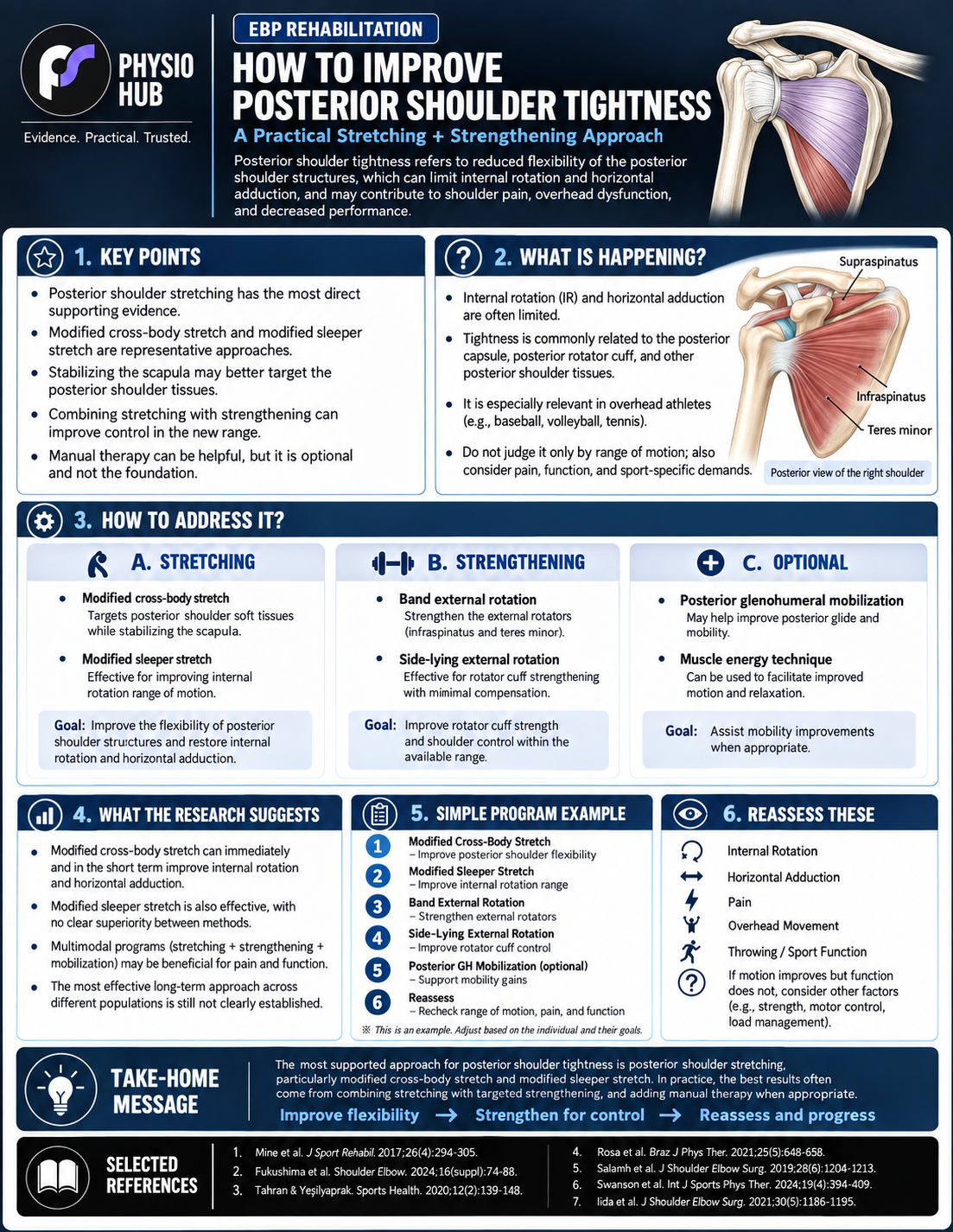
< PDF file>
< Reference >
- Mine K, Nakayama T, Milanese S, Grimmer K. Effectiveness of stretching on posterior shoulder tightness and glenohumeral internal-rotation deficit: a systematic review of randomized controlled trials. J Sport Rehabil. 2017;26(4):294-305. doi:10.1123/jsr.2015-0172
- Fukushima Y, Avilineni M, Kao M, et al. An evidence-informed rehabilitation management framework for posterior shoulder tightness: a scoping review. Shoulder Elbow. 2024;16(1 suppl):74-88. doi:10.1177/17585732231193166
- Tahran Ö, Yeşilyaprak SS. Effects of modified posterior shoulder stretching exercises on shoulder mobility, pain, and dysfunction in patients with subacromial impingement syndrome. Sports Health. 2020;12(2):139-148. doi:10.1177/1941738119900532
- Rosa DP, Borstad JD, Ferreira JK, Gava V, Santos RV, Camargo PR. Comparison of specific and non-specific treatment approaches for individuals with posterior capsule tightness and shoulder impingement symptoms: a randomized controlled trial. Braz J Phys Ther. 2021;25(5):648-658. doi:10.1016/j.bjpt.2021.04.003
- Salamh PA, Liu X, Hanney WJ, Sprague PA, Kolber MJ. The efficacy and fidelity of clinical interventions used to reduce posterior shoulder tightness: a systematic review with meta-analysis. J Shoulder Elbow Surg. 2019;28(6):1204-1213. doi:10.1016/j.jse.2018.12.006
- Swanson BT, Hagenbruch M, Lapaan B, Skipalskiy K. Combined effects of glenohumeral mobilization, stretching, and thoracic manipulation on shoulder internal rotation range of motion. Int J Sports Phys Ther. 2024;19(4):394-409. doi:10.26603/001c.95040
- Iida N, Taniguchi K, Watanabe K, et al. Effective stretching positions for the posterior shoulder capsule as determined by shear wave elastography. J Shoulder Elbow Surg. 2021;30(5):1186-1195. doi:10.1016/j.jse.2020.08.021
- Türksan HE, Yeşilyaprak SS, Erduran M, Özcan C. Novel posterior shoulder stretching with rapid eccentric contraction and static stretching in patients with subacromial pain syndrome: a randomized trial. Sports Health. 2024;16(3):315-326. doi:10.1177/19417381231181127